Author Archives: keeneshort

Unknown's avatar

About keeneshort

I am a writer in Southern Indiana.

The Novel That Wasn’t (But Will Be)

library-books-2The last time I wrote anything for NaNoWriMo this year was November 8. After November 9, I mysteriously lost interest in a genre-bending crime-western about four elderly women who witness a murder and can only recall the gritty details of a bad acid trip they had together in their college days in the late 1960s.
I still have that overwhelming disinterest now, as I apply for more graduate schools in the humanities, an area continually asked to justify its existence to university administrators who want higher salaries for themselves at the expense of faculty and student budgets. We’re constructed as the enemy, put on watchlists by paranoid Internet users, and made to be reminded that our pursuit of art is a waste of time in a fastpacedgrabitall economy. What good is an MFA to a post-apocalyptic society struggling to save the last bee colony? What good is a genre-bending novel to a pipeline oil leak? In a few years, will we even be publishing novels?

So I put it aside. I was also busy studying and teaching. I want to enjoy the rest of my education; I don’t know if I’ll have an opportunity to enjoy it again. It’s a lot of work for little, if any, profit. I’m lucky I have no student debts, but every time I look at the news, I can’t help but feel that I’ve squandered my education for a pursuit that now only exists to sustain itself. The power of the written word has betrayed us. The written, texted, tweeted word can be undeniably a lie, and people still believe it. Meanwhile, if a poem goes viral, it only reaches the people who already love it.

I still have the urge to write, though. I enjoy it, when I manage to find the time and peace. Even this meager blog is satisfying. It’s work, pleasurable work, but it can’t exist only for me. The most successful writer, as I’ve heard, is the one who can write a story and put it in a drawer forever. Until I reach that level of inner peace, I need an audience. Maybe this post will reach someone who needs it, or at least enjoys it. Probably not. I want to be realistic about my prospects, but the pleasure I derive from writing propels me forward through this muddy, hopeless, disgusting month.

I’ll get back to my novel soon. I don’t think a genre-bending novel will make a difference, but if I ever stop writing, the anti-intellectuals win. If they want me to justify my existence as a writer, reader, and academic, I’ll have to give them one hell of a novel full of well-written dynamic characters and compassionate portrayals of inner conflicts and meticulous attention to the beauty of environmental and historical landscapes. I’d rather write hopelessly than not at all.

-jk

Nobody Actually Has Time to Write a Novel (But We Do It Anyway)

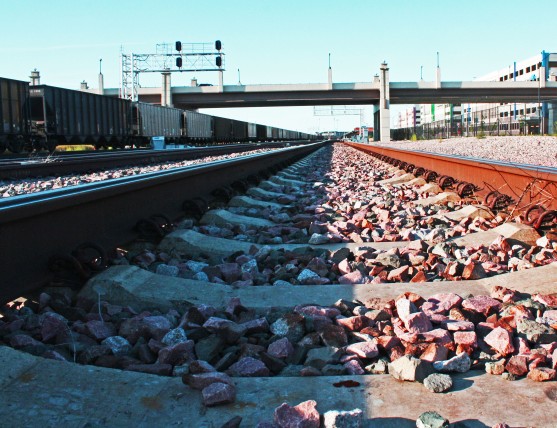
train-1November 1 kicked off the beginning of National Novel Writing Month, or NaNoWriMo, the long-standing tradition in which writers and readers alike decide to write a novel (or 50,000 words at least) during the month of November. The idea isn’t to have a novel finished by December 1, but to have written enough of a first draft of a novel (or memoir or novella even) to build on during the next year, something to return to and tinker with at a more casual, realistic pace.
Writing at a bout 1600 words a day, writers might finish. Most don’t. I’ve only finished once, and I was a very sleepless college freshman, full of ideas and not much else. Now, I’m a graduate student in English. Now, I’m full of ideas and stress, and not much else. I have deadlines to meet, books to read, authors to research, research to catch up on, and workshop material to write. I have classes to teach and a full 13 credit hours of graduate coursework to focus on, as well as graduate applications and a brand new hip flask to make proper use of. Do I really want to add the pressure of a novel to that?

The answer, of course, is no. But I’m doing it anyway. I don’t expect to finish, even if I write during all of Thanksgiving break. Even when I inevitably don’t meet the standard 50,000 words, I’ll still have a novel draft to tinker with in 2017. Like many writers across the globe, I’m enjoying more ambition than I can justify having, and the companionship of fellow writers struggling near me.

So, to my fellow November-long novelists, I wish you luck and sudden bouts of free time. Say goodbye to your loved ones and the prospect of having clean dishes. It’s noveling season.

-jk

Before Wounded Knee

wounded-knee-massacre

Photograph of civilians collecting the dead at Wounded Knee.

The Wounded Knee Massacre of December 29, 1890 is widely considered the end of military hostilities between the U.S. government and Native American Indian tribes. The Standing Rock protest today, however, is building up in similar ways to the Wounded Knee Massacre, and although there are key differences, it seems that the relationship between the U.S. government and American indigenous peoples has remained largely the same since 1890.

In 1888, a Paiute man named Wovoka began a religious movement centering around the Ghost Dance. Wovoka’s movement asserted that the Messiah would return as a Native American Indian and the continent would be freed from pioneering and settler oppression, and the Ghost Dance would usher in the Messiah’s return. The movement quickly swept across Native American communities, reaching the Dakotas by summer of 1890.

Followers of Wovoka such as Arnold Short Bull, brought the Ghost Dance to the Lakota Pine Ridge Indian Reservation during a drought and amid numerous treaty violations, which included reduced food rations for the reservation and white settlement on land designated for Lakota use. The Ghost Dance accompanied federally sanctioned violence, starvation, and a small environmental disaster. The U.S. government was suspicious of the Ghost Dance as early as May of 1890, and continued to treat it as a militaristic threat rather than a religious movement. On October 30, an agent for the Pine Ridge office of the Bureau of Indian Affairs wrote a letter to the BIA commissioner indicating that, in his view after observing the Ghost Dance,

“. . . the only remedy for this matter is the use of the military, and until this is done, you need not expect any progress from these people; on the other hand, you will be made to realize that they are tearing down more in a day than the government can build up in a month” (Royer 65).

Here, the BIA acted as an observation tool for the U.S. government, keeping track of Native American Indians forced onto reservations with little water and food. A religious spectacle became a mode of unity, an expression of organization, which the government deemed, without question, a threat. Earlier, BIA commissioner R. V. Belt wrote in a letter dated October 17, 1890, that the Pine Ridge Agency should inform those

“. . . engaged in encouraging the Ghost Dance and other like demoralizing conduct, and inciting and fomenting dissatisfaction and discontent among the peaceably disposed Indians that [the Secretary of the Interior John Noble] is greatly displeased with their conduct” (Belt 75).

Belt went on to describe the Ghost Dance as “bad advice and evil,” and that the Secretary of the Interior will “exert whatever influence he may have over any of the Indians to turn their backs upon the medicine men who are seeking to divert the Indians from the ways of civilization” (75-76). There was a connection of correspondence linking BIA agents at Pine Ridge to the White House expressing anxiety about the Ghost Dance. These agents wanted “peaceably disposed Indians” who did not express discontent.

But all evidence suggests that they had every reason to express discontent. They were surviving a genocide, forced onto difficult land after military engagements against them, after numerous other massacres and battles. It seems that BIA agents and the U.S. government associated Native American discontent with militaristic hostility, conflating the two, because to the U.S., the moment a tribe became vocal, the moment its members made themselves visible, they challenged the established systematic erasure of an indigenous population and the colonial narrative of European settlement on an otherwise unpeopled land rich with untapped resources.

The Ghost Dance as a religious practice did not emphasize military struggle or armed combat. On October 31, Short Bull gave a sermon to his followers, referring mostly to the coming of the Messiah and mentioning combat only once, when he said,

“You must not be afraid of anything. The guns are the only things we are afraid of, but they belong to our Father in Heaven. He will see they do no harm. Whatever white men tell you, do not listen to them. My relations, this is all” (Sitting Bull 65).

Anxieties over Native Americans not listening to those attempting to defeat, control, indoctrinate, and relocate them culminated in the military’s arrival in November at Pine Ridge, to keep the peace. Following Royer’s suggestions, the military became a remedy to stop the Ghost Dancers from breaking down what the U.S. government had built up. Cavalry divisions arrived at Pine Ridge, forcing surrender and disarmament. On December 29, in the process of disarming a few Ghost Dancers, a rifle went off, and soldiers panicked after being informed that an armed insurrection would take place. Fueled by fear and rumors, soldiers fired at the Ghost Dancers, and a massacre ensued. There were casualties on all sides as some Ghost Dancers attempted to defend themselves. Estimates vary, but up to 300 Lakota were killed, most of them unarmed, many of them children.

The logic leading up to the massacre might be difficult to track, but was built on a number of assumptions. First, that Native Americans practicing a large, organized demonstration was the equivalent of cultural and military dissent, or in other words, a problem. Second, that the only way to “solve” the problem was through the use of military force. Third, that expressing dissatisfaction with an understandably bad situation was unacceptable.

One of the defining features of the 21st century is the blurring of police and military forces. In a post-9/11 surveillance state in which citizens and combatants are considered difficult to distinguish from one another, the police and military begin to serve similar functions. While this fact has become more obvious in recent years, and while there have been many instances in the U.S. in which the state treated its citizens as combatants, this has always been the case for Native Americans. Since the founding of the United States, Native Americans have always been designated a threat to westward expansion simply by their presence, their visibility, their voice. Historically, soldiers keeping peace and soldiers engaged in combat have served the same purpose for the U.S. when engaging its indigenous population.

I’m not a proponent of the notion that history repeats itself; I find it too simple. However, the events surrounding the Standing Rock protest are eerily similar to those that led up to the Wounded Knee Massacre: Native American Indians express discontent over treaty violations, land abuse, and environmental disasters, and as a reaction, a militarized police force steps in. Tensions have already resulted in violence against protestors and the arrest of journalists for covering the events. Contexts may be different, but the logical framework the U.S. uses to understand and address the protest remains almost identical to how the U.S. addressed and understood the Ghost Dance. Whether or not there will be another massacre remains to be seen.

Coleman, William S. E. Voices of Wounded Knee. University of Nebraska Press (2000).

Wounded Knee Massacre,” Encyclopedia of the Great Plains, 2011. Accessed October 30, 2016.

Apparently I’ve Been Blogging for Three Years

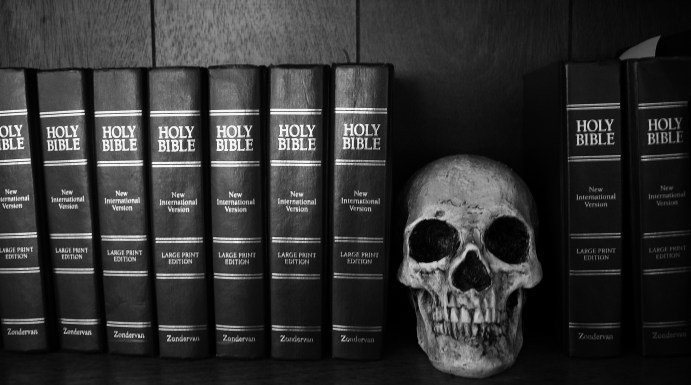
all-skull-and-bibles

A photo I took exactly three years ago.

I don’t tend to celebrate anniversaries. I don’t actively celebrate my birthday and I ignore my country’s independence day. But WordPress insists on reminding me that I started this blog three years ago, and I may as well mark the occasion.

Since my last blogiversary, I’ve attended a rad academic conference in Albuquerque, had poems, a short story, and a nonfiction essay published, and visited multiple national parks. I’ve completed a draft of my creative writing Master’s Thesis, a collection of interconnected short historical fiction stories (is there a more pretentious phrase? If so, I’ll find it), as well as poetry collections and essays. My writing has improved (I think), and I’ve developed a better understanding of literature.

I’ve also been in Nebraska for over a year, and my relocation here has started to set in. I’m finding a community in Lincoln. I’m forming connections with friends and colleagues. Sadly, I may be leaving again for another graduate program. Once again, I’ve decided to apply to graduate programs to pursue either a PhD or MFA program, and once again, I have no idea where I’ll be living a year from now.

But wherever I am, I’ll at least have a blog. It may not be much, but if I leave my friends, colleagues, and relations, if I leave them all behind for another new start in another state and another program, I’ll still have this little journal of my affairs. It may not be much, but it can be a grounding ritual, or a way to kill time. In either case, I enjoy it.

Wherever I am, wherever I will be, wherever I’ve come from, here’s to three years of fairly sporadic blogging. Cheers, peace, and until another autumn.

Peace,

-jk

Useful Tips for Making Time to Write

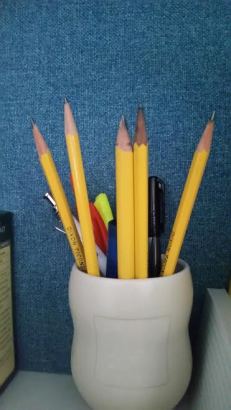
make-timeStephen King once suggested that aspiring writers carve out time to write every single day, which probably works for wealthy retired people like him. For the rest of us proles trying to be writers, carving out time to write can be a challenge. There are, however, numerous ways one can make time to write.

  1. Give up sleep. Talk to your doctor to let her know that you no longer require the recommended seven to eight hours of sleep; four or three or two should be sufficient. That’s what coffee is for, right? If your doctor protests, just let her know that she can have a free signed copy of your fantastic novel-in-progress, American Noun, once you finally get it written.
  2. If sleep is too difficult to give up, try giving up on friends. Thanks to social media, dropping off the face of the Earth has become quite easy. Delete your Facebook, Instagram, Twitter, Pinterest, Bumble, Thorax, PurpleDeth, and whatever other social media you have. No more notifications from you will quickly let your friends know that you are now and always have been an illusion. No more friends, no more distractions! Now get writing!
  3. If you somehow need friends and sleep, another way to make time is to quit your job. Many aspiring artists have done it. You can call it breaking out of the system, but we all know it’s to make time to write. After a month or so, you can consider more tenable versions of giving up on a well-paying job to pursue your dream, like getting an MFA in something or volunteering with the Green Party.
  4. If you’re the kind of loser who needs sleep, friends, and a job, another way to make time to write is to literally create time. For many writers, this is the most realistic option. Build a time machine (instructions are on Wikipedia) and spend a day writing, then go back twenty-four hours and respend that day working with friends and sleeping. You’ll have a novel in no time, but the problem is that, to the rest of us, you will age twice as fast.
  5. Making time to write is difficult, and you may have to give up a few things: regular TV, some social events, a few good meals. The important thing is to not give up on writing, if you really, really want to write. You can’t have it all, but the parties you get invited to after publication will make up for it.

-jk

Getting Over the Beats

on-the-road

“We’re all golden sunflowers inside, bae.” -Allen Ginsberg, probably

In high school, I took a creative writing elective, and the teacher assigned numerous Beat Generation authors. We read sections of Dharma Bums and “Howl” and numerous Jack Kerouac poems. It turns out that the influence of the Beats on a youngboredsmallwhitemale is that he starts wearing black button-up shirts and fantasizing about expensive liquor. After reading On the Road the following summer, I spent a great deal of time fantasizing about drinking absinthe on road trips through the desert at night while listening to something called bop. I bought used jazz records that I listened to once, maybe twice.

I thought about rebelling, but I was convinced that the key to rebellion was originality, and just about everything had been done before. I learned the value of originality from the Beats, who were apparently the very first people to realize that dharma and karma fall under the category of “hip.” I learned more from various articles summarizing the Beat Generation that I found online to save time, and it was there that I discovered how powerful single  arbitrary out-of-context half-cited quotes can be, even with no subsequent explanation. I thought about growing out my hair, learning how to sculpt with metal, driving a motorcycle, making out with trees, but they had all been done before.

As time went on, I encountered other writers and poets who influenced me in more nuanced, healthier ways. Had I kept up with my Beat fixation, I might have grown up to the kind of person who uses Kerouac quotes to make myself feel better about spending fifteen dollars on one local IPA at a bar I frequent only because the regular server is an aspiring country saxophonist named Cynthia. Or I could have become the kind of teacher who wears skinny dungarees and Pink Floyd T-shirts with holes in the front and sits on the desk telling his students that Jesus and Steinbeck were both Zen masters who shared some sweet flashbacks to one another.

I still dig the Beats sometimes, but that scene has passed. I’m still not sure what kind of writer I am, but I can’t be a Beat, or any other writer from the past. It’s better to write for and from the present. I’ve almost entirely moved on, man.

-jk

Writing With the Season

graveyard-walkI can’t tell you why I enjoy autumn as much as I do. Apart from the many holidays and the associated consumerism, I enjoy the aesthetic this time of year imposes on parts of the country. In my hometown of Flagstaff, AZ, the leaves on the aspen trees turn whole sides of Mount Elden a new, shocked shade of yellow. In my new home in Lincoln, NE, the season is just as magnificent, minus the mountain. It’s darker and windier every morning as I walk to campus. The nights are cool and toasty.

As a child, I once took a stapler to the woods and tried to “fix” the falling leaves. I was too young to understand the relationship between seasons and change. I liked the color green, and I was mortified that things could curl, turn red and yellow like infections, and fall to the ground. The pine needles, too, browned and plummeted. Before I could begin stapling the leaves back to the branches that I thought (wrongly) I’d be tall enough to reach, I wondered if maybe this change was good. If maybe it was supposed to happen. Maybe the leaves, like fingernails, would grow back to replace what has gone.

Now, I’ve come to prefer orange, red, yellow, and gold, but I still have trust issues with nature. I feel on edge watching it change, wanting it to be the same, but I can do nothing to stop the leaves from falling.

Autumn must be a good season for writers. I associate it with writing, at least. I associate these months with ghost stories and tall tales, and the existential crisis of trying to be static in a changing world. I associate the season with staying inside writing poems while eating pie or writing a novel every November. I want to celebrate the season, when I can, by writing, walking, and sharing. I enjoy the mystery, even the uncertainty. It’s a time to lean on the edge of our seats to see how the narrative will unfold.

Maybe autumn isn’t for everybody, but it suits me. I’m learning to enjoy the change.

-jk


Filling Office Hours

officeYou sit down at your desk awaiting students with questions. Some have already sent you emails with one concern or another; they have questions and it’s your job to answer them in office hours. So you wait.

You check your email; nothing. In looking at your schedule, you see you have readings, papers, and writing to do. You begin one project casually, expecting students to pop in. You’ve done that countless times to other professors, after all.

You finish your first project and check your email; nothing. Good. More time to write. You write. You write some more. You look up, and there’s a student, but she’s looking for another professor and is lost. You feel smugly accomplished as an educator for helping a lost student find the answer to her question (room 345, third floor, past the weird-smelling book case).

You revise an essay, check your email, and find yourself interested in the political spam in your inbox. You sign some petitions, feeling less accomplished than when you saved that student’s career that one time half an hour ago. No, ten minutes. Has it really only been ten minutes since?

You begin a new writing project and look up, just in case. Yes, you are happy you have this time to get things done, but what if your students have questions? What if they didn’t understand the assignments? What if their email just isn’t working? You want to be a good instructor; you want to be accessible. It’s the first part of your teaching statement, and you want to be like those other professors you had who were so available, so accessible, to save your life with their marvelous answers.

This time you simultaneously check your email and your syllabus to see if you listed the correct office hours and room number. Yes. Students can access it. You keep writing.

No students come by. Soon your office hours are done and you have completed all your work for the next week, plus submitted an essay to a literary magazine. Before heading out for lunch, you check your email one more time to find you have a new email from a student inquiring about the first paper’s requirements. Finally, you think, relaxing back in your seat, the work can begin.

-jk

The Next Morning

game 1UNL is empty as I walk through it early in the morning. The overcast sky dulls the stadium’s shadow. The sun is smothered and wind blows garbage around empty parking lots, sidewalks, concrete corners in the university maze. Red beer cups flounder down an overpass, and greasy napkins mingle with cardboard signs. Tongues of red licorice are flattened onto the sidewalk. A cap drowns in the mud.

Yesterday began with an earthquake in the morning, shaking me from my bed. Rain poured throughout the day over throngs of fans, and fireworks boomed like tanks around me. The streets were full. The streets were alive. Today, they are empty. I feel like I’ve walked onto the set of a zombie movie filmed in faded tones. There are no fans around the next morning. There is only the left-behind collage of plastic and paper and half-eaten food, and of course the alcohol.

Somewhere in the detriment is a cross, a necklace that fell from a fan. Or maybe it was torn, or fell from a pocket. It’s just another post-game testament to football’s force here. The stadium rises like a temple; didn’t some messiah once point to a football stadium and declare that not one brick will be left standing? Didn’t some messiah once bless a team to win the next game? The stadium looks unused, run-down after rain and the mass of fans. Nothing could keep them away.

I wonder where the heroes have all gone to. I grew up witnessing people ruin sports for me through doping scandals, gambling, dog-fighting, domestic violence. I learned the consequences of commodifying people, the exploitative measures taken to earn a profit, the cost of products sold. Who cleans up the mess? Who loses a parking lot in exchange for more playing space? Whose funding gets cut? There must have been heroes here and there, some legendary folks who made the sport an art and not a business. But for me, they departed a generation ago and live only in history, and it is just an empty stadium surrounded by trash right now. Trash, and one small piece of jewelry that I leave where I found it. It’s not mine to move. It’s not mine to rearrange. I leave it as it is.

-jk