Category Archives: Writing

“Don’t be a writer. Be writing.” -William Faulkner

Writing With the Season

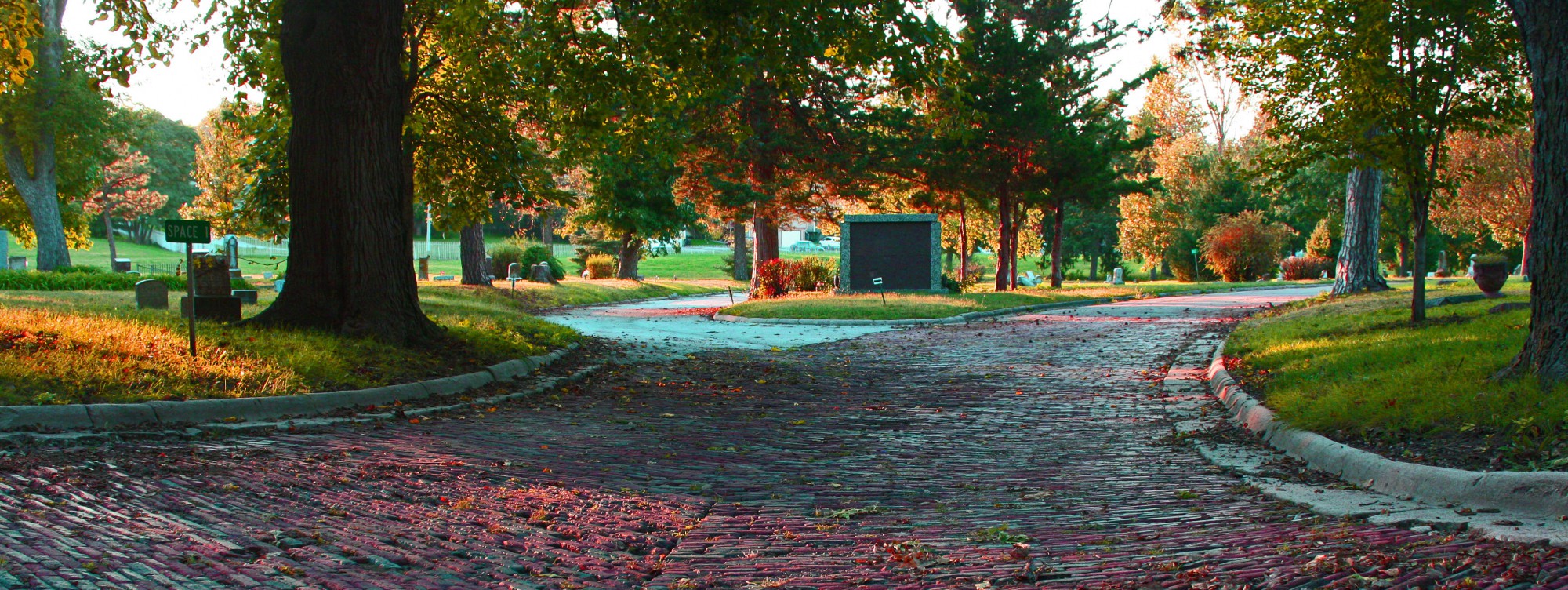
graveyard-walkI can’t tell you why I enjoy autumn as much as I do. Apart from the many holidays and the associated consumerism, I enjoy the aesthetic this time of year imposes on parts of the country. In my hometown of Flagstaff, AZ, the leaves on the aspen trees turn whole sides of Mount Elden a new, shocked shade of yellow. In my new home in Lincoln, NE, the season is just as magnificent, minus the mountain. It’s darker and windier every morning as I walk to campus. The nights are cool and toasty.

As a child, I once took a stapler to the woods and tried to “fix” the falling leaves. I was too young to understand the relationship between seasons and change. I liked the color green, and I was mortified that things could curl, turn red and yellow like infections, and fall to the ground. The pine needles, too, browned and plummeted. Before I could begin stapling the leaves back to the branches that I thought (wrongly) I’d be tall enough to reach, I wondered if maybe this change was good. If maybe it was supposed to happen. Maybe the leaves, like fingernails, would grow back to replace what has gone.

Now, I’ve come to prefer orange, red, yellow, and gold, but I still have trust issues with nature. I feel on edge watching it change, wanting it to be the same, but I can do nothing to stop the leaves from falling.

Autumn must be a good season for writers. I associate it with writing, at least. I associate these months with ghost stories and tall tales, and the existential crisis of trying to be static in a changing world. I associate the season with staying inside writing poems while eating pie or writing a novel every November. I want to celebrate the season, when I can, by writing, walking, and sharing. I enjoy the mystery, even the uncertainty. It’s a time to lean on the edge of our seats to see how the narrative will unfold.

Maybe autumn isn’t for everybody, but it suits me. I’m learning to enjoy the change.

-jk


Filling Office Hours

officeYou sit down at your desk awaiting students with questions. Some have already sent you emails with one concern or another; they have questions and it’s your job to answer them in office hours. So you wait.

You check your email; nothing. In looking at your schedule, you see you have readings, papers, and writing to do. You begin one project casually, expecting students to pop in. You’ve done that countless times to other professors, after all.

You finish your first project and check your email; nothing. Good. More time to write. You write. You write some more. You look up, and there’s a student, but she’s looking for another professor and is lost. You feel smugly accomplished as an educator for helping a lost student find the answer to her question (room 345, third floor, past the weird-smelling book case).

You revise an essay, check your email, and find yourself interested in the political spam in your inbox. You sign some petitions, feeling less accomplished than when you saved that student’s career that one time half an hour ago. No, ten minutes. Has it really only been ten minutes since?

You begin a new writing project and look up, just in case. Yes, you are happy you have this time to get things done, but what if your students have questions? What if they didn’t understand the assignments? What if their email just isn’t working? You want to be a good instructor; you want to be accessible. It’s the first part of your teaching statement, and you want to be like those other professors you had who were so available, so accessible, to save your life with their marvelous answers.

This time you simultaneously check your email and your syllabus to see if you listed the correct office hours and room number. Yes. Students can access it. You keep writing.

No students come by. Soon your office hours are done and you have completed all your work for the next week, plus submitted an essay to a literary magazine. Before heading out for lunch, you check your email one more time to find you have a new email from a student inquiring about the first paper’s requirements. Finally, you think, relaxing back in your seat, the work can begin.

-jk

The Next Morning

game 1UNL is empty as I walk through it early in the morning. The overcast sky dulls the stadium’s shadow. The sun is smothered and wind blows garbage around empty parking lots, sidewalks, concrete corners in the university maze. Red beer cups flounder down an overpass, and greasy napkins mingle with cardboard signs. Tongues of red licorice are flattened onto the sidewalk. A cap drowns in the mud.
Yesterday began with an earthquake in the morning, shaking me from my bed. Rain poured throughout the day over throngs of fans, and fireworks boomed like tanks around me. The streets were full. The streets were alive. Today, they are empty. I feel like I’ve walked onto the set of a zombie movie filmed in faded tones. There are no fans around the next morning. There is only the left-behind collage of plastic and paper and half-eaten food, and of course the alcohol.

Somewhere in the detriment is a cross, a necklace that fell from a fan. Or maybe it was torn, or fell from a pocket. It’s just another post-game testament to football’s force here. The stadium rises like a temple; didn’t some messiah once point to a football stadium and declare that not one brick will be left standing? Didn’t some messiah once bless a team to win the next game? The stadium looks unused, run-down after rain and the mass of fans. Nothing could keep them away.

I wonder where the heroes have all gone to. I grew up witnessing people ruin sports for me through doping scandals, gambling, dog-fighting, domestic violence. I learned the consequences of commodifying people, the exploitative measures taken to earn a profit, the cost of products sold. Who cleans up the mess? Who loses a parking lot in exchange for more playing space? Whose funding gets cut? There must have been heroes here and there, some legendary folks who made the sport an art and not a business. But for me, they departed a generation ago and live only in history, and it is just an empty stadium surrounded by trash right now. Trash, and one small piece of jewelry that I leave where I found it. It’s not mine to move. It’s not mine to rearrange. I leave it as it is.

-jk

Running Into Foucault at the Supermarket

cash stash

So there you are at the supermarket deciding whether or not it’s a macaroni and cheese week or more of a spaghetti week, and you turn a corner and there he is, Michel Foucault, judging wine in the wine section. You stare for a moment; his basket is mostly bread and wine and a pair of binoculars, and then he sees you, and it’s too late. He’s going to ask you if you’ve read his books yet. There’s no escaping it. You smile, he smiles. You ask him about the wine. He’s polite enough when you tell him no, not yet, but it’s in your reading list, you promise. You apologize, so he’s probably not hurt. Right?

It doesn’t help that Jacques Derrida is backing up the cash register with all his cheese cakes. He asks you how it’s going, but reads more into your answer of “fine” than you thought he would. You smile and ask him how Bourdieu is, but Derrida just keeps going on and on about how Foucault ruined his dinner party, and he’s throwing another one this evening with a book signing and everything, and you’re welcome to come of course, and you say no, so he guesses correctly that the subtext of “no” is actually “I’m so sorry but I still haven’t gotten to your work, please forgive me for being the skunk-flavored latte that I am.” You buy your spaghetti in silence.

You drop by the bank on your way home. While waiting in line you get bored, so you get on Tinder, and then there he is, Foucault, looking all smug in his first picture. Casually, you read his bio, which is the most Foucault you’ve actually read. “French writer and critic up for whatever. Let’s be visible together.” Your only common interest is wine; you swipe left after a moment’s hesitation.

You make it home, put away the spaghetti, and start working on your laundry. At the laundromat, you see Foucault again, leaning over a table with a pile of dark clothes, some of them folded. He is on his phone, his thumbs padding on the screen furiously. He doesn’t see you, thank God. You dump your clothes into a machine fast, cram in the quarters, and realize you’re one short. You turn around; Foucault is gone, clothes and all.

You should have said hello; he might have spared you a quarter. You begin crawling on the floor to look for a quarter someone might have dropped. You try, perhaps desperately, to remember where you left Foucault’s book on your shelf, with your unread Freud or your unread Butler. Sometime you’ll get to it all, but you are still short by a quarter. You think, “You will always be short a quarter,” but can’t remember if that’s existentialism or postmodernism or something else altogether. Either way, you are now covered in dust and you still don’t have a quarter. Like always.

-jk


In the Tradition of Poems for Dogs

IMG_0128

Recently, I read Andre Alexis’s novel Fifteen Dogs. Among the many delightful things in the novel (that it starts with the gods Hermes and Apollo in a bar in modern-day Toronto, that the characters are mostly sentient dogs, that it’s filled with excellent descriptions and dog-drama) is that one of its main dog characters, Prince, becomes a poet who uses a unique poetic form intended to make sense to both humans and dogs.

The French poet Francois Caradec invented this form of poetry for dogs, and Alexis lends him credit for its invention. The form requires the sound of a dog’s name to be embedded in the poem. In this way, dogs will hear their name if the poem is read aloud, and respond in their dogly way by wagging their tails and analyzing the poem from a critical dog studies perspective.

An example from the novel, for the dog named Prince, is as follows:

“Longing to be sprayed (the green snake
writhing in his master’s hand),
back and forth into that stream–
jump, rinse: coat slick with soap” (Alexis 81)

The name Prince can be heard in the words “jump, rinse,” and supposedly a dog named Prince will hear it in the poem. The rest, apparently, will be the usual human nonsense Prince is used to hearing by now.

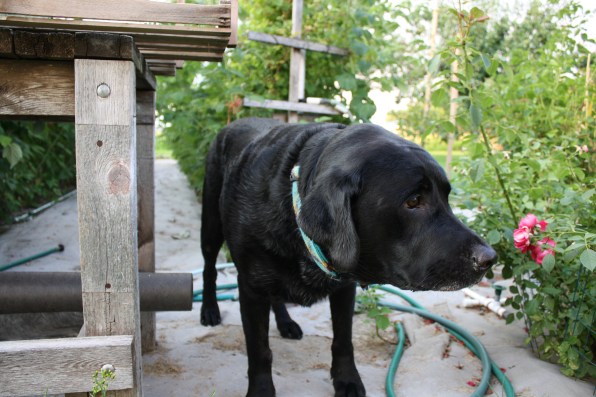
I wrote a poem in this form for my own dog, Pete, who has seasonal allergies and enjoys scratching his face on various surfaces, including people:

Rough carpet scratches
snatch up every face-itch
on the floor, sensations
to make easy sleep. Eat, sniff, dream
until the next itch, then scratch.

Do you have a dog? A pet? Write them a poem and see what they think.

-jk

Alexis, Andre. Fifteen Dogs. Toronto: Coach House Books, 2015

Graduate School, Season Two

teapotAmong the many things coming this Fall is the second season of me being in Graduate School. This next year looks promising, and I’m looking forward to the goofy Nebraska antics, the creative writing classes I’ll be taking, and finally teaching a class on my own.

I hope the next year of Graduate School corrects some of the mistakes of last season. For example, the protagonist last year came off as exceedingly pretentious, especially in his attitude toward the setting. The protagonist spent too much time complaining about the Midwest, and while the “missing home narrative” was compelling, it got old quickly. I for one hope the main character does more than sit around making bad jokes about the prairies.

The next season will most likely see more of the main character trying to get published, and the audience will enjoy the conflict between devotion to graduate studies versus the effort it takes to write, read, submit, and convince literary magazines to publish his work. Many of last season’s episodes focused on various low-stakes self-contained stories that take place in the protagonist’s apartment or the English department, which is why I hope Graduate School will venture out a little more this season. As a show with a whole city for a setting, it’s strange that so much of it uses only two interior buildings to shoot in.

The show has many strange components: the romance plots are all backstory, the drama is all internal, there’s very little dialogue, and the protagonist doesn’t seem to have changed in the first season, at least not in ways the audience would hope for. Where’s his arc?

The real question is whether or not Graduate School will go on for a third season, or if the show will wrap up with the protagonist just getting a Master’s Degree and stopping his college pursuits after that. Future years of Graduate School could be quite worthwhile, but without major character development, this could be Graduate School’s last year. In any case, I look forward to the season premier, and I hope the coming year will be, at the very least, entertaining.

-jk

From Coffee Shops to Mountaintops

Macy's

For a too-short time this summer, I’m on a pilgrimage to my hometown of Flagstaff, Arizona. Here, I’ve been working on a collection of short stories that will become my Master’s Thesis in less than a year (no pressure), because I won’t have much time to write come Fall when I’ll take four graduate classes, teach two classes, hold office hours, and try to get published. Flagstaff is a nice place to be productive. It’s also a nice place to be useless.

This month, I’ve been scurrying from one Flagstaff coffee shop (many in gentrified neighborhoods, admittedly) to the next. Maybe sitting all day in Macy’s or Firecreek or Steep (technically a tea house) is a bit of a yuppee activity, but for many writers it’s an easy solution. Coffee shops induce productivity with comfortable spaces, lots of light, energetic music, and socially acceptable drugs like caffeine. They remove us from crammed apartments, English departments, and work places; they spark quiet, collective inspiration. I’ve also enjoyed the aggressively supportive environments that seem to define the West, where even complete strangers encourage you to keep going and pursue your dreams, even if they’re strange and uncomfortable. My writing has been very productive.

But there was another pilgrimage I needed. Yesterday, after writing and reading stories in Firecreek all morning, I took the afternoon to hike up Mount Elden. I did not take anything to write with, and although I’m a strong advocate for making art in the wilderness (alone or with friends), I wanted a more complete silence. I wanted the overwhelming smell of bark and dust and dew. When I return to Nebraska, I’ll have to find the same solitude in the prairies, out on the range.

Mountaintop

From the mountainside where I stopped to rest, the only thing I could hear were crickets and the distant whistle of a train. There was no traffic; there was no music; sometimes a bird chirped, or a deer fluttered through the forest below the steep cliff’s edge. I was not alone, but I was alone from people, and from myself.

It was windy, almost cold, but closer to the sun I felt warm. It was peaceful to be nobody for a while, to be free of the need to be someone. The pressure to be someone these days, the millennial fixation with making something of oneself, being a successful talented individual with a totally unique, self-owned identity, is sometimes too much.

Sometimes I’d rather sit on a mountaintop and be useless. No fast pace. No updates. No news. No one to impress. Just one more organism in an ecosystem finding, at last, its place therein: a lone and unimportant creature in a society of deer, coyote, foxes, crows, ponderosa, a cityscape of boulders and greenery.

-jk

The Tunnels

Brick wall triptych 1.jpg

The English department at my Alma mater, Northern Arizona University, has released a cool new student literary journal called The Tunnels, and I’m pleased to announce that I have two pieces published in its inaugural issue: a poem, “List of Lists,” and a creative nonfiction essay, “Between Brick Walls.” The first was written after a First Friday Art Walk; the second is about photography, forest fires, and climate change. Both pieces are part of my never-ending love affair with Flagstaff, AZ. However, I mostly want to advertise the journal as a whole.

Two wonderful and talented professors, one in creative writing and one in literature, are the journal’s editors and creators, but it is heavily student-run. Last year, I was a reader for its earlier iteration, JURCE. The Tunnels is an academic and literary journal, and features literary criticism as well. One of my friends has a paper on one of Isaac Asimov’s stories; another friend of mine has a paper on Luigi’s Mansion. The whole journal is an excellent collection of literature and criticism, and a lovely reminder of how many people from Flagstaff and NAU have inspired and continue to inspire me. It also makes me excited for future editions.

So feel free to take a gander at this hip new journal, and I hope you enjoy it!

-jk

P.S. I listened to “Paper Moon” by Chic Gamine while writing the poem and “She Got Lost in the Observatory” by Motionless while writing the essay, to get in the right writing mood.

One More Final Poem

In a blogging tradition going back to the early 1840s, every April 30th I post one of the poems I wrote in the preceding thirty days to mark the end of National Poetry Month. Unfortunately, because I’m a grad student, I had to spend most of my time writing research papers (all about Canada), and did not reach my goal of thirty poems. But I don’t want to skip this beloved tradition, so I wrote one more final poem this morning. It’s the first thing I’ve written in two weeks not about Canada.

GalwayAfter Galway Kinnell

“We lie close,
as if having waked
in bodies of glory.” -Galway Kinnell, “The Last River”

I ignore the news of floods and wind this morning
in favor of another kind of news, certainly not gospel
but written with another kind of good news,
this aged copy of Body Rags I haven’t read in years.

A more clinical approach to wandering bodies might be useful today;
I could take on a diagnostic demeanor to dissect
the way bodies fall in motion beyond my control,
spinning down a river with fickle rapids
knocking back and forth, back and forth,
away and towards a rumbling unknowing,
but Galway keeps winking at me from the page
to find the glory in the body. Maybe

that’s all there is to us: we are meandering
collages of bone, blood, stretched tissue

and bird-shy nerves emailing sensations to one another,
quietly demanding more sunlight on skin, more rivers to listen to,
more poetry to see in the clouds, all these furtive microselves

gossiping to each other the full extent of the body’s glories
back and forth, back and forth. How else does good news spread?

I hold onto this dying copy of Body Rags
tracing my fingers down the pages, like deep beaches
with thin blue streaks where a friend underlined her favorite lines.
Maybe there’s enough gloriousness to go on here,
some secret, hushed process of bliss that saturates
when I’m closer to the sunniest people I know,

but even my god-obsessed metaphors go overboard,
so here I stop to underline my own favorite line with blue ink,
adding one more river to the desert-tan pages
rocky with broken sentences.

-jk

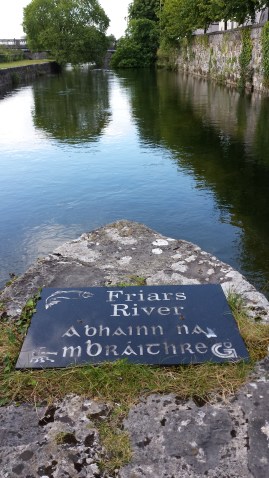
Copyright, Keene Short 2016. Photo: I asked Lost Compass Photography for a photo of Galway Kinnell, but those dorks gave me a photo of Galway, Ireland, which is why the senior photographer isn’t getting his twenty bucks.