Tag Archives: Writing

Having Blogged for Four Years

Arboretum

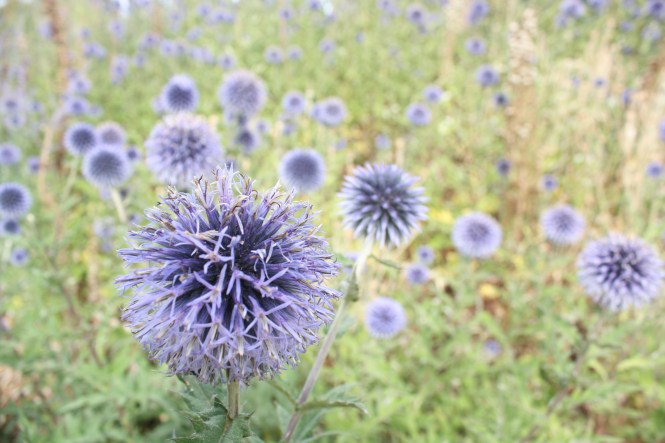
Photo taken at the University of Idaho Arboretum and Botanical Garden

. . . I wonder if this is the only anniversary in my life that matters. I started this blog four years ago. Hopefully, the quality of posts has improved just as the quality of the world has diminished.

I’m knee-deep in the first semester in my third college program, this time an MFA in creative nonfiction. Since October 27, 2016, I have started a blog series about the Russian Revolution, had one essay published and one short story published, finished my Master’s degree in English, and moved from Nebraska to Idaho. I’ve also started writing for the Idaho MFA blog, reading nonfiction submissions for Fugue, and volunteering as an editorial assistant for Western American Literature. My literary life has expanded substantially in a year, and yet I’m still ambitious. I have writing and reading to finish, journals to curate, places to visit, sweeping political generalizations to make.

This has been a rough year for the country and the planet. Regardless, I will blog away into oblivion. Here’s to another year.

-jk

Writing Lamentation, Writing Celebration

Close Acorn“I dote on myself, there is that lot of me and all so luscious,/Each moment and whatever happens thrills me with joy,/I cannot tell how my ankles bend, nor whence the cause of my faintest wish,/Nor the cause of the friendship I emit, nor the cause of the friendship I take again.” -Walt Whitman, “Song of Myself,” Leaves of Grass

Recently, one of my nonfiction professors mentioned that, if the tone and texture of writing can be divided into either writing of lamentation or writing of celebration, my writing style tends toward lamentation. She said, unlike Whitman’s celebratory exaltation, my writing texture is more like Emerson’s, brooding and internal.

To me, this makes sense: my writing broods. Maybe that’s why my stand-up comedy special The Writer of Lamentations has done so poorly on Netflix. It’s not that I avoid celebration. I try (and often fail) to celebrate others. I try to support my friends and praise their successes as much as possible, but this celebration rarely enters my writing. Instead, my writing fixates on losses.

More and more, I write about the environment, the west, and disparate interests like history and music, and I think my essays do, in fact, have a sense of lamentation: for places that will soon no longer be, for talents I used to have, for wars that I never fought in, and for friends who have shaped and continue to shape me, even in their absence. Despite my best efforts, friends come and go. I lament being unable to continue being shaped by them, and departure starts to feel normal and they have their lives. Thank goodness they have their lives. And still, I brood.

And what does it mean to celebrate? A friend and colleague of mine shared a poem by Abu al-Qasim al-Shabi called “The Will of Life” about embracing “the love of life,” an active, rather than passive, task. Even in the midst of what is worth lamenting, there is room for celebration. This makes me think of Prior in Angels in America refusing to be a prophet, telling the angels he wants more life: “We can’t just stop. We’re not rocks. Progress, migration, motion is modernity, it’s animate. It’s what living things do. We desire. Even if all we desire is stillness, it’s still desire for. . . . It’s so much not enough. It’s so inadequate. But still: Bless me anyway. I want more life.”

It’s been almost a year since I saw Angels in America with friends whom I miss dearly. I will admit that I desire, and I often desire stillness. I don’t want to celebrate myself the way Whitman does, but lamentation requires life in memory, the shadow of what was and could be. It is an act of wanting, but it is always active, not passive. To lament is to recognize that life, friendship, love, the burning world will never be enough, will always be inadequate, but to want to celebrate it anyway. Can there be lamentation without celebration, even in possibility? I write for the past while stuck in the present, constantly spiraling headlong into whatever disaster the future holds, one after another.

I want more life, and I want to mourn life for all that it is, all that it isn’t, all that it used to be. Someone should. Life requires lamentation as much as celebration, but the opposite holds true. To lament is to want, but to want without striving toward celebration misses the point completely.

-jk

Short Story Published in Waxwing

on-the-roadI’m honored to have my short story “Scouting Locations” published in Issue XIII of Waxwing, one of my favorite literary journals. It’s one of several historical fiction stories that made up my MA thesis at UNL. It’s about old Hollywood, among other things. But before you read it, you should read the other excellent work featured in Waxwing.

-jk

Fall in Another City

Campus 2.jpgI’m still getting to know Moscow, Idaho. I’ve only been here since August, but it takes me a while to reconfigure myself to new surroundings. I adapt slowly and cling to what is familiar: campus aesthetics, coffee shops, quiet mornings for writing.

The last time I moved, I went from Flagstaff, Arizona, to Lincoln, Nebraska, and it took me about a year to adjust. It took me a year to feel grounded in the place, in the people, like I wasn’t a transplant from the Southwest to the Midwest. Now that I live in the Pacific Northwest, I feel like a double transplant in yet another variation on the west, a west that I want to write down in the long, laborious tradition of writing about places. Do I need to be a tourist or a resident? I’ve gone from deserts to plains to this stranger place called the Palouse, a valley of vast wheat fields and pine trees.

I am not, yet, a tumbleweed, a person with “roaming proclivities.” But I still feel detached from so many places, so up-in-the-air right now. I wish I had spent more than two years with my friends in Nebraska before uprooting myself again. I wonder how long I’ll be in Idaho before I’m again uprooted.

I am still very much a westerner, but after only two moves, I feel scattered. I vote in Arizona, I made strong connections in Nebraska, and now I’m a writer in Idaho. The one constant has been the university as a setting, like a monastic system in which I orient myself toward the library, the English building, and the nearest coffee shop. Campuses are large and sometimes quiet. This is true of Flagstaff, Lincoln, and now Moscow. I like old campuses, brick buildings, planned and structured squares of nature for viewing purposes. In other words, the constant for me is finding places to work, the one thing I hope I am never uprooted from. If and when I move again, I hope there is a quiet campus wherever I go.


-jk


Essay Published in Atticus Review

buffalo parkI’m honored to announce that my essay, “Buffalo Park,” is featured online in Atticus Review. Feel free to read it, but also read the other nonfiction essays, short stories, and poetry featured in Atticus as well. This essay has been published one year to the day that I first submitted it to my graduate nonfiction workshop at UNL. I’m grateful, as always, for the feedback my peers and professor offered me about the essay last September. This is also the essay I used as a writing sample for my application to the University of Idaho’s MFA program. With a little luck and a lot of work, I might have a few more publications on the way.

-jk

Grad School Reboot

booksIn May, Grad School ended with an undramatic series finale in which the protagonist received his degree, went to a few low-key parties, then went home. The writers worked a possible spinoff involving Idaho into the plot, and this Fall that spinoff will appear as a reboot of Grad School, starring the previous series’ main character and, as far as the writers know, nobody else.

In the era of rebooted shows, many of which ended several decades ago, a reboot of Grad School is only the next logical step. In the upcoming Season One/Three, the protagonist will attend an MFA program in Idaho’s panhandle, the only untapped part of the Pacific Northwest not used by modern television’s fascination with the region, ranging from Portlandia to Twin Peaks to Northern Exposure to Twin Peaks: The Return. Critics wonder if Idaho’s panhandle qualifies as the PNW, and many more critics wonder if Idaho even qualifies as a state rather than several disunited principalities ruled by various Mormons, libertarians, and seventeen armed lumberjacks from Montana, all of whom are named Slim. Our protagonist will have at least three seasons to figure this out.

The reboot’s narrative arcs will be predictably similar to those of its first two seasons in Nebraska: the protagonist will take classes, teach classes, and spend most nights grading, reading, and writing. Most episodes will begin with him walking to campus and end with him walking home. Critics wonder if the show can sustain itself for the intended three seasons of Grad School: MFA, but hope that the introduction of more creative writers will create more quirky dialogue and probably melodrama. The show could also do with more humor and lightheartedness to balance the protagonist’s late-season arc toward nihilistic cynicism, and some critics are even expecting a full-fledged comedy to emerge. But one can only hope.

-jk


Writing in the Rain

Rio de FlagI may not be jumping around like Gene Kelly in the rain (writing while dancing is ill-advised, and I would know, because I’ve lost four laptops that way). But I do like writing when it rains.

Growing up, I usually had plenty of free time during summer and Arizona’s monsoon season. In college, I took summer classes during the rainy months, and spent a lot of time indoors next to a window, writing. I associate rain with writing, and I enjoy desert rainstorms. The temperature drops, and the moisture makes everything smell more vibrant, the pine trees and shrubs and soil. Even an overcast sky makes me want to write, even if what I end up writing is terrible.

It’s safe to stay inside when it rains. Overcast skies mean lightning. In the Midwest, rain can sometimes mean tornadoes and flooding, and in Arizona the monsoons always accompany flash flooding, to the point that Arizona even passed a so-called Stupid Motorist Law, which requires drivers who enter flooded areas to pay for the cost of being rescued. I can’t write about rain like it’s a benevolent god when the opposite is equally true. Rain can destroy. But having grown up in a state that, in a few years, will have no water at all has made me appreciate the rain in all its destructive beauty. Noah had the better apocalypse. Drought is not the end I would choose, but it’s what I’ve been dealt.

Rain also feels safer to me, somehow. A swollen, grey-haired overcast sky stretching from horizon to horizon feels like a second roof over the roof over my head. I can hide behind rain curtains, like I’m waiting to go on stage and give a speech or monologue or stand-up routine. It precipitates anticipation, motivates me to prepare for something, but I never find out what. So I prepare by writing, and after the clouds dissipate, I wait for it to rain again.

-jk

Welcome to the University of Hell; Here’s Your Parking Pass

ParkingOn behalf of Satan and his minions and CEOs and several charitable people who donated buildings to us, we would like to welcome you, personally, to the University of Hell.

You’ll find your freshman orientation packets in your complimentary tote bag, along with two coupons for two free meals in the Hell Union. The cost of the tote bag and coupons will be included in your student fees, which will be calculated in total for you at the beginning of Finals Week. You will also find information about parking, which will become much easier with our new Henry Kissinger Bill Gates Memorial Super Tennis Parking Lot, located on south-east campus near the Ninth Circle Dorm. This year, parking passes are $786, which will also be included in your student fees. For those who don’t have a car, you’ll be glad to help pay for the parking passes of your fellow peers, or else.

The University of Hell is honored to serve our new students. Our Beelzebub Administration Center is located in the middle of campus, at the suggestion of UH graduate Jeremy Bentham, and our administrators are always open for questions, suggestions, and even concerns during their office hours from 3:00 AM to 3:15 AM every fifth Tuesday of the month. Feel free to direct all questions regarding student fees, parking, jobs, recreation, and housing to one of our 4,000 departmental administration management directors (we call them the DAMD for short). You’ll be paying for their salaries and Satan’s swimming pool of virgins’ blood with your student fees, so don’t be afraid to take advantage of their time.

Please feel free to tour our new Adam Smith Institute for Pharmaceutical Studies, or the recently constructed Brett Favre School of English Literature and Mass Entertainment, or our Walt Disney School of Criminal Justice and Gender Studies located next to the Pit of Eternal Fire, where football practice is held.

If any of our guests today find a lack of toilet paper, please do not be alarmed. We are working on a new system in which students pay for the necessary quantity of toilet paper with their student ID cards, and their student accounts are then charged for the toilet paper they use on the spot. If students lose their ID card for any reason and are unable to pay for toilet paper, they will be reminded that it is useful to carry their class syllabi with them at all times in the event of an emergency.

The University of Hell values you. Ever since its founding by Satan, who received his Hotel and Restaurant Management degree from Yale, UH has prided itself in the quantity of its students. We are here to help you help us, and we want to help you in doing so.

From all of us here at Hell, welcome to higher education.

-jk

Playlist For a Novel

Flagstaff Mars HillI’m writing a novel this summer, or at least until the semester starts. Without divulging too much, it’s a crime novel, which is a return to my literary roots. I grew up reading detective fiction by Rex Stout, Agatha Christie, Colin Dexter, and others. The novel is (unsurprisingly) set in Flagstaff, Arizona, and mixes fictional and historic criminal cases.

Like most writers, I listen to music when I write. It blocks out distractions and helps put me into whatever mood I need to be in to write, which for me changes from story to story. I try to create a certain atmosphere for myself when I write, something that suits the tone, plot, characters, and setting I’m writing about. For most short stories and essays, I listen to one or two tracks on repeat, usually folk music or classical. A novel, though, is different. I need numerous moods for the story’s numerous characters. So I created a playlist catered to the overlapping atmospheres I want to write in.

The songs in this playlist work together eclectically. Some songs suit a specific character (“The Boxer” and “Hollywood Forever Cemetery Sings”) while others suit the plot (“No Man Knows My Destiny” and “Runaway”). For a crime novel, I want mostly minor keys and acoustic sounds, with strategically surreal lyrics (crimey music, in other words). More than anything, I want to feel immersed into the fictional world I’m working in, a sense of a world that is closed in, identifiable, and aesthetically comprehensive.

My novel playlist is as follows:

“19th Nervous Breakdown” by The Rolling Stones

Hollywood Forever Cemetery Sings” by Father John Misty

La Llorona” by Sofia Rei

“When I’m Small” by Phantogram

“Sorcerer” by Junction

“The Battle of Evermore” by Led Zeppelin

“Tam Lin” by Fairport Convention

Bye Bye Macadam” by Rone

“The Boxer” by Simon and Garfunkel

“Runaway” by Nice as F*#k

“Seeds” by Moses Sumney

“No Many Knows My Destiny” by Ryan Biter

“El Mayoral” by Sofia Rei

“Far From Any Road” by The Handsome Family

How It Went Down” by Dark Dark Dark

“Man On the Moon” by Moses Sumney

You can find most of the music I’m listening to in this playlist. What music do you listen to while writing? Let me know in the comments. I’m always open to new tunes.

-jk


The Place-Based Writer Goes Places

Moscow Idaho“I suppose our capacity for self-delusion is boundless. I knew very well that I rarely make notes, and if I do I either lose them or can’t read them. I also knew from thirty years of my profession that I cannot write hot on an event. It has to ferment.” –John Steinbeck, Travels With Charlie

I’ve been on the road since June 4. I’ve traveled from Nebraska to South Dakota to Montana to Idaho to other parts of Idaho, and I will soon be on my way to another part of Idaho, then Utah, then Arizona. I’ve stayed in a lot of places, and seen a lot of places, and have plenty to write about. The problem is that writing on the road is difficult. Even John Steinbeck, known for writing about people (and dogs) traveling from point A to point B, knew that he had to let his stories stew. I’ve never had that kind of patience. I want to write the moment I get an idea.

I’ve often been accused of being a place-based writer. This makes sense, I suppose, because I place myself in bars with my laptop, then place large quantities of alcohol into my mouth, then place my fingers on the keys and type until I forget which place I’m in. But I also enjoy describing places. Setting is crucial for my stories, because most of my recent writing has focused on historical situations. Most of my stories cannot take place elsewhere, and taking place is an apt description of most of my plots. Setting, time and place, has more influence over my characters than I do, sometimes.

Right now, I wish I could write about the places I’ve seen, notably Moscow, Idaho,where I will live for three years starting in August, where I will hopefully get an MFA in creative writing. The town is small but quirky, surrounded by hills and distant mountains. There is a bagel shop that serves beer and a video rental stores on the same street. I drove into Moscow through a rain storm and misty curving roads, past industrial bridges and tall, deep green patches of forest and small, isolated towns. The campus is old and maintains most of its original architecture. It is a patchwork quilt of red bricks and green vegetation. Under overcast skies and in silvery clouds of mist, the town is surreal, even spooky. It’s the ideal place for a writer.

Not that I need an ideal place. I don’t want to be so tied to place that I need somewhere specific to be comfortable, to be myself. But I will admit that, as far as places go, Moscow looks like a lovely place to spend three years writing about all the other places I wish I was in.

-jk