
 In the year 1928, my grandmother was born in Kennewick, Washington, on October 20, and my grandfather was born on July 24 in Elk Basin, Wyoming. Last week, their six children and an extensive number of grandchildren and great-grandchildren got together in/descended upon my grandparents’ house in Hamilton, Montana (approximately halfway between Kennewick and Elk Basin) to celebrate their 90th birthday in the one week in summer when most of their descendants are free between work and travel.
I’ve only been around for twenty-five of those ninety years. I don’t know much about the sixty-five years my grandparents lived before me. I’ve always known them in one place, their garden-surrounded home in Hamilton, but I’m told they traveled a lot, from Montana to Washington to Minnesota. Their house has a kind of permanence in my mind. It has always been there, and has always been theirs. It’s strange to think of my grandparents living anywhere else. But ninety years is a long time to accumulate stories.
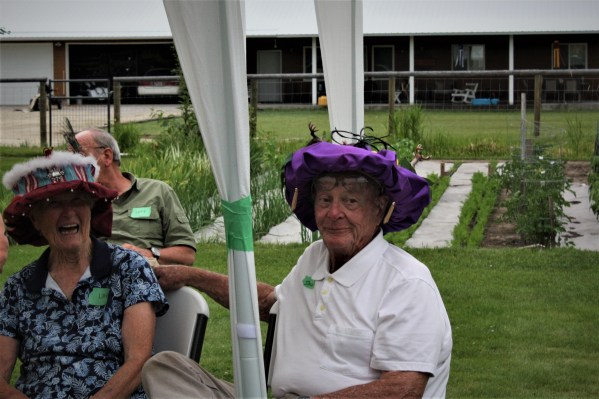
They were born on the eve of the Great Depression. When they were five, the Weimar Republic was dissolved. When they were 13, the US entered the Second World War. They married in 1952. At some point, family traditions began to take shape: camping, river floating, fishing, miraculously digesting Spam.
Stories about my grandparents’ lives move all over the place, and I know that any story I hear from or about them will only ever scratch the surface. I don’t know how to quantify my own quarter-century of a life. Quantification isn’t always important, though. Nobody needs to measure a life, old or young, in order to celebrate it. 90 years is a long time, and I can learn to let it meander beyond my understanding. Their lives are too varied for me to know in their entirety, and that’s a good thing. It means there will always be something new to learn, something new to unlearn as well.
They still technically have a bit of time before they officially turn 90, though, and their dedication to wild partying, as evidenced in the weekend-long get-together, puts my own youthful spunk to shame. I have a lot to learn.
-jk
 “Commensalism or mutual benefit is a constitutive premise of housesitting, or maybe an enabling fiction. The housesitter is apt to recognize the opportunity as a private windfall, and the pleasure is tandem: first in his own dis-habituation, and then in the adoption of a new readymade home, a vacated life to try on. With the extra keys on his chain, the housesitter leaves work on a different train or by a new road, becomes a local in the café or dogpark, creates or stars in fantasies grown out of his new neighbors’ notice.”
 I found out recently that bears do not, as I had previously believed, hibernate. Now my whole world is thrown into chaos.
 I’m pleased to announce that I have a poem in an anthology titled
  At least 30 percent of creative nonfiction is devoted to reflecting on etymology. We examine the words we use everyday. Fruit, from the Latin frui, meaning to enjoy; paragraph, from the middle French for stroke, as in a painting; field, from the German Feld, for open country; language, from the Latin lingua for tongue. The trend in nonfiction is to meditate on the the roots of our language to explore its deeper, older meaning.
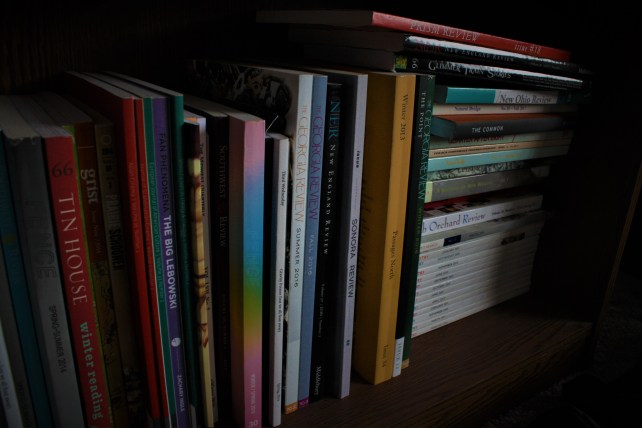 This year, I will not be attending the AWP conference in Tampa. I will not receive a tote bag, nor will I peruse the book fair and return with conference swag like pins or bookmarks or back copies of cool literary magazines. I will not hear any talented writers read their work, nor will I go to a poetry slam or watch creative writing professors dance awkwardly, nor will I hit up any local bars and wake up too hungover to attend the panel I’m supposed to present at, and when I don’t have time, I certainly won’t visit the many tourist attractions and restaurants that probably exist somewhere in Tampa, possibly.

 I have a bad habit of leaving places without saying goodbye first. I recognize that many consider it rude, but I know I’m not alone in this habit. We have multiple terms for it: the Irish goodbye, the French leave, ghosting. I promise I’m not being rude. This social practice is more common than you’d think.
 For me, writing is a practice. More than a hobby, writing is a profession, though I’ve never been paid for it. Writing is work that I enjoy, but it’s not labor. It’s production, but not a job.