Category Archives: Writing

“Don’t be a writer. Be writing.” -William Faulkner

Short Story Published in Waxwing

on-the-roadI’m honored to have my short story “Scouting Locations” published in Issue XIII of Waxwing, one of my favorite literary journals. It’s one of several historical fiction stories that made up my MA thesis at UNL. It’s about old Hollywood, among other things. But before you read it, you should read the other excellent work featured in Waxwing.

-jk

Fall in Another City

Campus 2.jpgI’m still getting to know Moscow, Idaho. I’ve only been here since August, but it takes me a while to reconfigure myself to new surroundings. I adapt slowly and cling to what is familiar: campus aesthetics, coffee shops, quiet mornings for writing.

The last time I moved, I went from Flagstaff, Arizona, to Lincoln, Nebraska, and it took me about a year to adjust. It took me a year to feel grounded in the place, in the people, like I wasn’t a transplant from the Southwest to the Midwest. Now that I live in the Pacific Northwest, I feel like a double transplant in yet another variation on the west, a west that I want to write down in the long, laborious tradition of writing about places. Do I need to be a tourist or a resident? I’ve gone from deserts to plains to this stranger place called the Palouse, a valley of vast wheat fields and pine trees.

I am not, yet, a tumbleweed, a person with “roaming proclivities.” But I still feel detached from so many places, so up-in-the-air right now. I wish I had spent more than two years with my friends in Nebraska before uprooting myself again. I wonder how long I’ll be in Idaho before I’m again uprooted.

I am still very much a westerner, but after only two moves, I feel scattered. I vote in Arizona, I made strong connections in Nebraska, and now I’m a writer in Idaho. The one constant has been the university as a setting, like a monastic system in which I orient myself toward the library, the English building, and the nearest coffee shop. Campuses are large and sometimes quiet. This is true of Flagstaff, Lincoln, and now Moscow. I like old campuses, brick buildings, planned and structured squares of nature for viewing purposes. In other words, the constant for me is finding places to work, the one thing I hope I am never uprooted from. If and when I move again, I hope there is a quiet campus wherever I go.


-jk


Essay Published in Atticus Review

buffalo parkI’m honored to announce that my essay, “Buffalo Park,” is featured online in Atticus Review. Feel free to read it, but also read the other nonfiction essays, short stories, and poetry featured in Atticus as well. This essay has been published one year to the day that I first submitted it to my graduate nonfiction workshop at UNL. I’m grateful, as always, for the feedback my peers and professor offered me about the essay last September. This is also the essay I used as a writing sample for my application to the University of Idaho’s MFA program. With a little luck and a lot of work, I might have a few more publications on the way.

-jk

Writing in the Rain

Rio de FlagI may not be jumping around like Gene Kelly in the rain (writing while dancing is ill-advised, and I would know, because I’ve lost four laptops that way). But I do like writing when it rains.

Growing up, I usually had plenty of free time during summer and Arizona’s monsoon season. In college, I took summer classes during the rainy months, and spent a lot of time indoors next to a window, writing. I associate rain with writing, and I enjoy desert rainstorms. The temperature drops, and the moisture makes everything smell more vibrant, the pine trees and shrubs and soil. Even an overcast sky makes me want to write, even if what I end up writing is terrible.

It’s safe to stay inside when it rains. Overcast skies mean lightning. In the Midwest, rain can sometimes mean tornadoes and flooding, and in Arizona the monsoons always accompany flash flooding, to the point that Arizona even passed a so-called Stupid Motorist Law, which requires drivers who enter flooded areas to pay for the cost of being rescued. I can’t write about rain like it’s a benevolent god when the opposite is equally true. Rain can destroy. But having grown up in a state that, in a few years, will have no water at all has made me appreciate the rain in all its destructive beauty. Noah had the better apocalypse. Drought is not the end I would choose, but it’s what I’ve been dealt.

Rain also feels safer to me, somehow. A swollen, grey-haired overcast sky stretching from horizon to horizon feels like a second roof over the roof over my head. I can hide behind rain curtains, like I’m waiting to go on stage and give a speech or monologue or stand-up routine. It precipitates anticipation, motivates me to prepare for something, but I never find out what. So I prepare by writing, and after the clouds dissipate, I wait for it to rain again.

-jk

Welcome to the University of Hell; Here’s Your Parking Pass

ParkingOn behalf of Satan and his minions and CEOs and several charitable people who donated buildings to us, we would like to welcome you, personally, to the University of Hell.

You’ll find your freshman orientation packets in your complimentary tote bag, along with two coupons for two free meals in the Hell Union. The cost of the tote bag and coupons will be included in your student fees, which will be calculated in total for you at the beginning of Finals Week. You will also find information about parking, which will become much easier with our new Henry Kissinger Bill Gates Memorial Super Tennis Parking Lot, located on south-east campus near the Ninth Circle Dorm. This year, parking passes are $786, which will also be included in your student fees. For those who don’t have a car, you’ll be glad to help pay for the parking passes of your fellow peers, or else.

The University of Hell is honored to serve our new students. Our Beelzebub Administration Center is located in the middle of campus, at the suggestion of UH graduate Jeremy Bentham, and our administrators are always open for questions, suggestions, and even concerns during their office hours from 3:00 AM to 3:15 AM every fifth Tuesday of the month. Feel free to direct all questions regarding student fees, parking, jobs, recreation, and housing to one of our 4,000 departmental administration management directors (we call them the DAMD for short). You’ll be paying for their salaries and Satan’s swimming pool of virgins’ blood with your student fees, so don’t be afraid to take advantage of their time.

Please feel free to tour our new Adam Smith Institute for Pharmaceutical Studies, or the recently constructed Brett Favre School of English Literature and Mass Entertainment, or our Walt Disney School of Criminal Justice and Gender Studies located next to the Pit of Eternal Fire, where football practice is held.

If any of our guests today find a lack of toilet paper, please do not be alarmed. We are working on a new system in which students pay for the necessary quantity of toilet paper with their student ID cards, and their student accounts are then charged for the toilet paper they use on the spot. If students lose their ID card for any reason and are unable to pay for toilet paper, they will be reminded that it is useful to carry their class syllabi with them at all times in the event of an emergency.

The University of Hell values you. Ever since its founding by Satan, who received his Hotel and Restaurant Management degree from Yale, UH has prided itself in the quantity of its students. We are here to help you help us, and we want to help you in doing so.

From all of us here at Hell, welcome to higher education.

-jk

Playlist For a Novel

Flagstaff Mars HillI’m writing a novel this summer, or at least until the semester starts. Without divulging too much, it’s a crime novel, which is a return to my literary roots. I grew up reading detective fiction by Rex Stout, Agatha Christie, Colin Dexter, and others. The novel is (unsurprisingly) set in Flagstaff, Arizona, and mixes fictional and historic criminal cases.

Like most writers, I listen to music when I write. It blocks out distractions and helps put me into whatever mood I need to be in to write, which for me changes from story to story. I try to create a certain atmosphere for myself when I write, something that suits the tone, plot, characters, and setting I’m writing about. For most short stories and essays, I listen to one or two tracks on repeat, usually folk music or classical. A novel, though, is different. I need numerous moods for the story’s numerous characters. So I created a playlist catered to the overlapping atmospheres I want to write in.

The songs in this playlist work together eclectically. Some songs suit a specific character (“The Boxer” and “Hollywood Forever Cemetery Sings”) while others suit the plot (“No Man Knows My Destiny” and “Runaway”). For a crime novel, I want mostly minor keys and acoustic sounds, with strategically surreal lyrics (crimey music, in other words). More than anything, I want to feel immersed into the fictional world I’m working in, a sense of a world that is closed in, identifiable, and aesthetically comprehensive.

My novel playlist is as follows:

“19th Nervous Breakdown” by The Rolling Stones

Hollywood Forever Cemetery Sings” by Father John Misty

La Llorona” by Sofia Rei

“When I’m Small” by Phantogram

“Sorcerer” by Junction

“The Battle of Evermore” by Led Zeppelin

“Tam Lin” by Fairport Convention

Bye Bye Macadam” by Rone

“The Boxer” by Simon and Garfunkel

“Runaway” by Nice as F*#k

“Seeds” by Moses Sumney

“No Many Knows My Destiny” by Ryan Biter

“El Mayoral” by Sofia Rei

“Far From Any Road” by The Handsome Family

How It Went Down” by Dark Dark Dark

“Man On the Moon” by Moses Sumney

You can find most of the music I’m listening to in this playlist. What music do you listen to while writing? Let me know in the comments. I’m always open to new tunes.

-jk


The Place-Based Writer Goes Places

Moscow Idaho“I suppose our capacity for self-delusion is boundless. I knew very well that I rarely make notes, and if I do I either lose them or can’t read them. I also knew from thirty years of my profession that I cannot write hot on an event. It has to ferment.” –John Steinbeck, Travels With Charlie
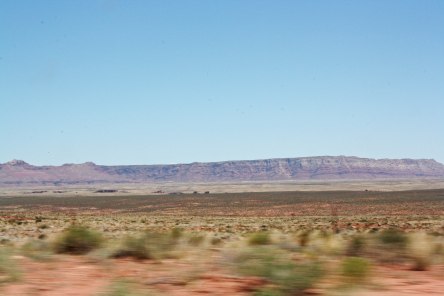
I’ve been on the road since June 4. I’ve traveled from Nebraska to South Dakota to Montana to Idaho to other parts of Idaho, and I will soon be on my way to another part of Idaho, then Utah, then Arizona. I’ve stayed in a lot of places, and seen a lot of places, and have plenty to write about. The problem is that writing on the road is difficult. Even John Steinbeck, known for writing about people (and dogs) traveling from point A to point B, knew that he had to let his stories stew. I’ve never had that kind of patience. I want to write the moment I get an idea.

I’ve often been accused of being a place-based writer. This makes sense, I suppose, because I place myself in bars with my laptop, then place large quantities of alcohol into my mouth, then place my fingers on the keys and type until I forget which place I’m in. But I also enjoy describing places. Setting is crucial for my stories, because most of my recent writing has focused on historical situations. Most of my stories cannot take place elsewhere, and taking place is an apt description of most of my plots. Setting, time and place, has more influence over my characters than I do, sometimes.

Right now, I wish I could write about the places I’ve seen, notably Moscow, Idaho,where I will live for three years starting in August, where I will hopefully get an MFA in creative writing. The town is small but quirky, surrounded by hills and distant mountains. There is a bagel shop that serves beer and a video rental stores on the same street. I drove into Moscow through a rain storm and misty curving roads, past industrial bridges and tall, deep green patches of forest and small, isolated towns. The campus is old and maintains most of its original architecture. It is a patchwork quilt of red bricks and green vegetation. Under overcast skies and in silvery clouds of mist, the town is surreal, even spooky. It’s the ideal place for a writer.

Not that I need an ideal place. I don’t want to be so tied to place that I need somewhere specific to be comfortable, to be myself. But I will admit that, as far as places go, Moscow looks like a lovely place to spend three years writing about all the other places I wish I was in.

-jk

Yet Another Final Poem

Floor waterIn a blogging tradition that dates to the early Enlightenment-era philosophers, I post one poem on the last day of April to celebrate the end of Poetry Month. This poetry month, I wrote fourteen poems, a record mediocrity (which is the title of an upcoming collection). In any case, the following poem is dedicated to the Floor Water Collective (or my graduate cohort who shared/trashed an office this past year). They will be missed, by someone, probably.

Dear Future Occupants of Our Office,

A word of caution: the doors are untrustworthy
and you might get locked out, or worse, locked in,
or better, locked in with people you trust.

The coffee is best made from a garbage can
if you don’t want to stain our office (we
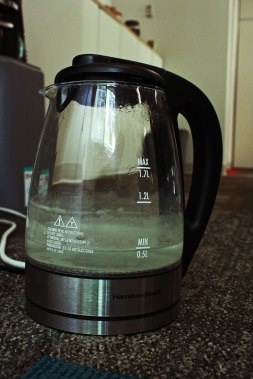
did), and the kettle is closest to an outlet
on the floor, which you should lie down on
listening to music when the world boils.

That will happen a lot, in and out of the office.
Our decorative rhetoric has remade it
a pilgrimage site for the curious and passionate,
as a reminder of what we used to be.

The office is exhausted inside and out,
but like us it’s used to being used as a means
of production, a clogged factory,
a closet of disconnected cogs, an easy target,
and inside the doors break, the floors are ant-trodden,
and everything is stained one way or another
with blood, sweat, coffee, tears, pizza sauce,
the list goes on. Whatever bright shine the office had
a year ago is now replaced with a language
that will be scrubbed away over summer.
It will look perfect again for you, but the flaws
are well-hidden in the design.

This office is a good place to go when the world
slams its many doors on you. It’s a good place
to have your heart and idealism broken,
to be comforted alone during your worst thoughts
on an uncomfortable couch under a friend’s blanket,
Future cohort, we dare you to match our worst days, to survive
the way we did, together, while our worlds boiled.

-jk

List: 30 Ways to Celebrate National Poetry Month

Umbrella Brick Wall 2.JPGApril is National Poetry Month, so here is a nifty list of things to do to celebrate poetry, nationally.

  1. Read a poem every day.
  2. Write a poem every day.
  3. Go to a poetry reading.
  4. Stick a poem in your pocket.
  5. Having already exhausted the ways people traditionally celebrate Poetry Day after four activities, think briefly about going back to prose, then read more poems or something.
  6. Write a poem and tape it to your office window so people outside can enjoy it.
  7. Read poetry you found on a sign or a movie poster.
  8. Take down your window poem after somebody complains to your boss, then passive aggressively write sequel poems to it.
  9. Try to write a haiku in under 140 characters.
  10. Realize that writing twitter haiku is too hard, and instead tweet a picture of your haiku written on a page in your moleskine notebook.
  11. Write poetry on the sidewalk in chalk before vindictive bicyclists run you down while humming the music from Jaws.
  12. Submit your poetry to journals until those $3 Submittable fees match the amount you spend on wine per week.
  13. Speaking of wine, Holy Week is in April, so you could write a poetry suite using Catholic imagery to talk about your feelings even though you are not Catholic and you have no feelings.
  14. On Good Friday, write another poem that pretentiously uses commas to somehow represent the nails in crucifixion.
  15. Realize that fourteen people online have misinterpreted your religious poem and want to know why you are taking away their right to choose.
  16. By Easter, lose fourteen of your Facebook friends over that one poem you posted.
  17. Share your favorite poems online, checking seven times to make sure you spelled each poets’ name correctly, because you really only read their work during April, even though you insist on how much their work means to you the rest of the year.
  18. Read early drafts of poems you wrote three National Poetry Months ago and die a little inside after counting the number of times you used a flower metaphor.
  19. Go to an open mic night and sit through four harmonica soloists before the poets get on stage.
  20. Research poets whose work you have never read. Chances are high that there are at least several.
  21. Go to a reading of new or recently published poets. They could use the moral support, especially if they’re grad student poets.
  22. Buy a new collection of poetry, then make time to read only half of it.
  23. Read poets recommended by your friends.
  24. Read poets recommended by your enemies.
  25. Write poetry in a coffee shop.
  26. Realize that “writing poetry in a coffee shop” requires four hours of sipping a latte and people-watching before writing down any words.
  27. Revise the thirteen poems you wrote in the past twenty-seven days and call it a statistical success.
  28. Find the good poem out of the thirteen you’ve written (the chosen Messiah of your poems) and revise it again.
  29. Select the Messiah poem as the best of your poems and post it on your blog on the last day of April, then take it down after worrying about its quality, then resurrect it back onto your blog three hours later.
  30. Relax. Poetry is about a lot of things, but first and foremost, it’s about paying attention to the small details around you. You could sporadically write many poems, but you need things to write about: the way your shirt smells like smoke the morning after a campfire, the way the smell clings to you as you listen to the seesaw of traffic over the hill. Or something like that.

-jk

Soft-Spoken in Academia

HallIs there a place for soft-spoken introverts in the competitive fast-paced aggressively limited-time-offer college-industrial complex? The short answer is no. The long answer is no, thank goodness.

I don’t speak often, and when I do, people usually tell me to speak up, and when I do, I try to hand the conversation to someone else. I don’t dislike contributing. What I dislike is overtly dominating conversations, steering them in one direction or another, or making an effort to gain control of the dialogue if I’ve somehow lost it. More than introversion, I prefer to be independently passive, rather than participate actively. I am neither competitive nor aggressive.

What I noticed in teaching an introductory rhetoric class last semester is that students primarily want to know how to win an argument. They want to know how to prove they are right, regardless of whether or not they are in the first place. My pedagogy class last semester reinforced the notion that rhetoric is a competition, and that arguing is an ideal way to participate in society. Academics I have interacted with in higher ed reflect this way of thinking, and it is reflected in the academic system as a whole. A recent conversation I had with scholars (in which I listened exclusively) about recent trends in academia emphasized the need for scholars to publish early and often, to make themselves known through websites and social media, and to compete aggressively for funding and jobs in an already over-saturated market and in fields (the sciences and humanities) that the President and Congress intend to attack in purely symbolic anti-intellectual gestures.

This institutional turn coincided with tuition hikes that have mostly funded increased college administration rather than faculty. The college-industrial complex imposes competition onto both students and faculty, but industrialization might be an overused metaphor, one that is accurate from an outsider’s perspective but does not reflect experiences on the ground level. Instead, it feels like an ecosystem, some stretch of the Great Plains where insects, birds, prairie dogs, and vegetation compete for survival. Academia feels Darwinian because those who do well are those who are aggressive, loud, eager, quick, and uncritical. The push to publish early and often requires faculty to sacrifice either quality or spare time, and students are pushed through an assembly line toward a diploma to simply qualify for numerous jobs, with no time for learning outside their designated specialty. Describing undergraduate requirements as paths and timelines also reinforces the need for students to specialize rather than explore. It’s no wonder so many of my students last semester said they enrolled in an English class to add to their ability to compete, by winning arguments.

And here I am, a shy listener who wants to learn from others more than I believe I can teach them. I won’t thrive in the ecosystem because I value quality over quantity, patience over immediate feedback, and listening over contributing. I consume more ideas than I produce, and as such, I’m not making anything universities can exploit for advertisement or prestige.

I do not contribute to the system, because the system does not run on patience and scruples. It is fueled by the production of ideas, the teeming blue schools of links clicked on a given day, the riptides of steady marketable publications. There is not an overpopulation of ideas, and I do not mean to dismiss self-expression. But there is not a place in the current scheme of things for the soft-spoken, for people who are here to learn regardless of what degrees I may or may not get out of it. I don’t fit in. Maybe that’s a good thing.

-jk