Category Archives: Writing

“Don’t be a writer. Be writing.” -William Faulkner

Big League Academia

New WriterTwo months into my first year of graduate school, I think I’ve finally started to settle in. The workload is not beyond my management (I somehow function better with less sleep), the faculty are just as thoughtful and thought-provoking, and my descent deeper into the cult of academia is going smoothly; soon, I’m told, I’ll be a card-carrying postmodernist. The support my writing receives is frequent, and the possibility of a writing career is even starting to take shape.

For example, this past week I had the opportunity to meet with two agents and two editors, to have them critique a section of my novel-in-progress and discuss the publishing industry. They told me what they liked about the short section, offered insights, made revision suggestions, and allowed me to see the project in grander terms. I learned that when I eventually get an agent and editor, publishing becomes a collaborative effort, a group project. They offered to stay in contact when I have a polished draft. Suddenly, the fantasy of publication no longer feels so impossible.

Is this it? Is this the next step for my writing? Or is this just the next phase in my hike up the ranks into academia? I ask myself this question because I’m surrounded by people who have it figured out already. I’m surrounded by serious academics, doctoral students devoting years to studying, students fulfilling long-term plans. Many of them took a break after college to figure out the rest of their lives, get married, travel, go on adventures, experience things they can then write about. And here I am, fresh out of my undergraduate career.

Am I here because I want to be a writer, or because I want to be an academic? I feel like a kid who doesn’t yet know what he wants to be when he grows up, and time is running out. Do I teach? Get a PhD? Another MA? An MFA? Is there life after publication? Or should I let my ambitions dictate my future? Tired of studying tragedy but never taking that study out of the classroom, I still want to join a charity, volunteer in a hospital in Palestine or Afghanistan or Jordan, or work on an organic farm in Chile or Brazil. I want to see the world, because I know if I stay in the confines of an English Department, I’ll run out of things to write about.

I’m still just a kid, academically speaking, and I’m surrounded by intellectual adults. I can’t count the number of times I’ve been asked about my PhD, as if that’s the only end in sight, and I can’t count the number of times I’ve silently shrugged and changed the subject. I only have until next fall to figure it out, though. Do I become a career academic? Teach? Work? Let me know in the comments your own thoughts or plans.

-jk

To Hear Hamlet (In a Cemetery)

Graveyard

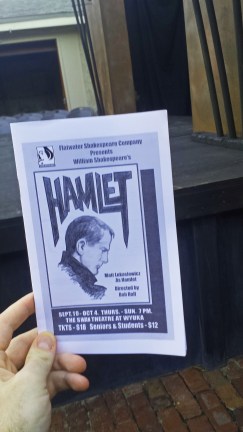
This weekend, I had the pleasure of seeing a live production of Hamlet by Lincoln’s Flatwater Shakespeare Company. The performance was held in the Swan Theater, which also happens to be in Lincoln’s historic Wyuka Cemetery. The show started at sunset; as the characters progressed into madness and scheming, the night grew darker and colder, and the full moon rose higher and higher. The experience was exhilarating.

Ham1As I’ve mentioned in previous posts, I love theater despite my minimal experience with it. Plays are not meant to be read, but seen, and heard. Words are powerful enough in print, but when given a voice, they have so much more power to move the audience. Some readers are familiar with how important voice is to me. I’m drawn to people with strong voices; to me, it’s the first part of attraction. I grew up caring about voice more than any other part of a person. Garrison Keillor’s rusty voice on the radio; the beautiful harmonies produced by folk singers, The Wailin’ Jennys or Peter, Paul, and Mary. Of course Renaissance theater isn’t for everyone; nothing is. But hearing Shakespeare’s words put to the instrumentation of a cast of strong voices makes it impossible for me not to enjoy those words.
But the experience of hearing Hamlet in a cemetery was even more gripping. When the ghost of Hamlet’s father appears, the audience is reminded that hundreds of ghosts are in the ground behind him. When Hamlet contemplates mortality, that undiscovered country, we are forced to remember that emigrants to that undiscovered country are just a few yards away. Finally, when a clown digs up a grave, tossing skulls out of the earth, we cannot help but think that an actual gravedigger is performing the same task, under the full moon. We are surrounded by actual skulls while Hamlet picks up Yorick’s skull; we are surrounded by actual corpses while Ophelia is placed in the grave.

The very ground the audience walks on to reach the stage is defined by mortality. The theatricality of undoing the grave’s permanence, of waking up the dead and gazing into their empty eye sockets, hits us uncomfortably close. The stage mocks the dead we struggle to leave hallowed; we depart from the performance facing the cemetery illuminated by a full moon wondering if our own skulls will be unburied, if a tragedy will be staged on the field we’re confined to.

In this case, the play’s the thing wherein the audience finds its own conscience, and as we all know, conscience does make cowards of us all. That’s the power of theater, and poetry, and art. It places mortality in our face and invites us to wonder. To look around. To investigate. To consider that soon we’ll be departing for an undiscovered country, and we can either go mad waiting in line for our plane ticket, or we can enjoy the graces the terminal has to offer. Thus conscience does make cowards of us all, unless we muster up the courage to laugh at all the skulls surrounding us. Why not laugh? Aye, there’s the rub.

-jk


Leftist Vegetarian Chili

Let’s say you want to make chili for the autumn season, something you can bring to a pot luck at a moment’s notice. If you’re anything like me (an English Major), any pot luck you get invited to will be filled with vegetarians who bring gallons of humus and pita chips by the crate. Here’s an easy recipe for a healthy chili to satisfy any English Major’s left-leaning, postmodernist palate.

The first step is to go to the local farmer’s market to obtain the best locally grown organic non-GMO socialist ingredients. Obtain the following items:

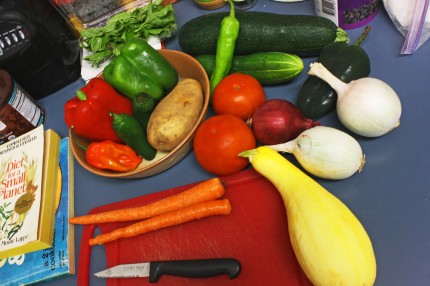
4 or 5 tomatoes1
1 red onion
1 sweet onion
2-3 carrots
2 bell peppers
2 jalapeno peppers
1 green chili pepper
1 habanero pepper
1 yellow summer squash
1 potato
1 copy of Das Kapital
2 cans of black beans

Optional: two bowls of marijuana, but only if you’re serving at a gathering of poets. If the chili is for a faculty meeting, two to three liters of rum (as a side dish) should be provided.

Various seasonings (salt, pepper, cumin, cloves, cinnamon, ginger, turmeric, grassroots activism) should be added to your own taste (which should be excellent because you’re an English Major).

First, lay out the ingredients and tell them that cuisine is a social construct. Then chop up the onions and dump them into a cooking pot with an inch of oil. Stir them enough to keep them from burning, and add salt and pepper. The onions should be strong enough to make you cry, if you aren’t already crying about the TPP.

2

Next, chop up the tomatoes. Add a can of tomato sauce if you really want to give money to the 1 percent, you terrible monster.

Add the cans of beans, ignoring the fact that Big Canning got your hard-earned money. In a vegetarian chili, you need protein, and the beans will provide enough protein to help you resist the man.

Chop up the vegetables; carve them the way you’d carve up Wall Street, and redistribute their wealth in the pot. Season liberally with spices.

4

Next, chop up the peppers. Be careful to protect your hands, otherwise your fingers will burn the way the Christian right wants you to burn in hell. Be especially careful chopping the habanero, which will provide the amount of spiciness needed to smash the patriarchy. You can also add smashed patriarchy to the chili, but don’t add too much; patriarchy has very little nutritional value, because it’s mostly fatty acids and blood.

5

Stir all ingredients and continue to season as you see fit, because you are a creative and unique individual and however you season it will be an expression of your individuality in the rising tide of fascism. However, don’t add too much cinnamon or ginger; if you wanted a pumpkin spice latte, you’d go to a coffee shop with your Mac and write a screenplay in the corner.

6Let the chili simmer the way the working class simmers before the coming revolution, for two or three hours. Feel free to freeze it for the future or emergency pot lucks. Because your vegetarian Marxist postcolonial chili will be as spicy as your attitude (on tumblr), serve with lots of bread, or over rice. This chili is not for the faint of tongue.

Feel free, even, to serve it to your conservative friends. It may be meatless, but that’s no reason to be afraid of it. Take it to a tailgate party, or an NRA meeting. Use it to bring people together. What we eat may be politically driven, but sharing a meal is universal. At least that’s what the shoeless hippies who sold me the onions said.

-jk

A Step-By-Step Guide to Not Writing a Novel

Coffee Flip

  1. Get an idea for a novel, something that challenges the status quo, too radical for your parents to read. Something like Cormac McCarthy’s work. Drink three cappuccinos and write two pages of exposition, then call it a day.
  2. Make concise, attainable writing goals the next day, but you should wake up late because the caffeine kept you from sleep. Create a reward system: one glass of wine for every ten pages you write. Proceed to crank out sixty pages of character description. Print it out the next day after the hangover wears off, read it over, and flush all sixty pages down the toilet because it sounds like a high school student trying to imitate Cormac McCarthy.
  3. Walk to the store for more wine and a plunger after the first draft of your radical novel clogged the toilet. Make small talk with the cashier. When she asks what kind of stories you write, look at the ceiling, shrug, and say, “Whatever comes to mind,” realizing that after the first three glasses of wine you forgot what you wanted to write about in the first place. Walk out of the store with the bottle of wine in one hand and the plunger in the other, like all writers do at some point.
  4. Rewrite your visionary, stupendous novel in a new voice. Shift the paradigms so radically that you end up with one hundred pages of a different novel entirely. Print it out, read through it, and this time flush the same sixty pages, keeping forty pages of unnecessary but extremely well-written exposition. Blame writer’s block and pour another glass of wine.
  5. Spiral into a deep depression because you can’t seem to write a novel. Spend the weekend drinking wine and reading Cormac McCarthy novels while sitting in front of your word processor. Manage to write another page of exposition, then go to a bar where writers are most likely to congregate, to ask them for help with your insurmountable writer’s block.
  6. Choose a swank hipster brew pub in a highly gentrified neighborhood. Stumble in and identify four or five writers sitting in a corner; you know they are writers because they have ordered wine in a brew pub and have brought their plungers with them. You order wine too and spend the next five hours pretending to listen to their advice but, like them, you spend much of the time updating your status about the loser Cormac McCarthy wannabes surrounding you.
  7. The next morning, email Cormac McCarthy. By now, your plot and character names should be thoroughly forgotten. You decide that you cannot write without his prophetic advice, so do not even attempt writing until you a receive a reply from Cormac McCarthy’s agent, a terse email containing the titles of several self-help books that Cormac McCarthy has written to counteract the rise of depressed writers trying to imitate him. You purchase one such book, entitled It’s Called Trying, Doofus. It features McCarthy on the cover holding a plunger.
  8. Spend the next three months perusing the Internet for cures to writer’s block and trying each one until it becomes boring. Start with the obvious (writing), then move on to the more exciting suggestions, like boxing Irish dairy farmers or having an affair with the prince of Liechtenstein. Try living on a diet of onions and peaches, or preach the gospel to alligators. All writers have their quirks, right?
  9. Try to be a writer; do everything you can to be a writer, because we all know being a writer is a lot easier than actually writing. The act of writing is difficult, often lonely work, requiring dangerous amounts of time alone with one’s thoughts resulting in alienation and poor social skills. Although the benefits of writing (completing a draft with a satisfied sigh, seeing the delight in the faces of those you share a polished draft with, seducing people, and such) are truly worth the effort in the end, the work that goes into writing is emotionally exhausting. If it were easy, there would be a lot more people writing than sitting around being writers.
  10. If writing were easy, it wouldn’t be worth it. Scars can be beneficial sometimes.

-jk

A Novel That Sounds Like Bach

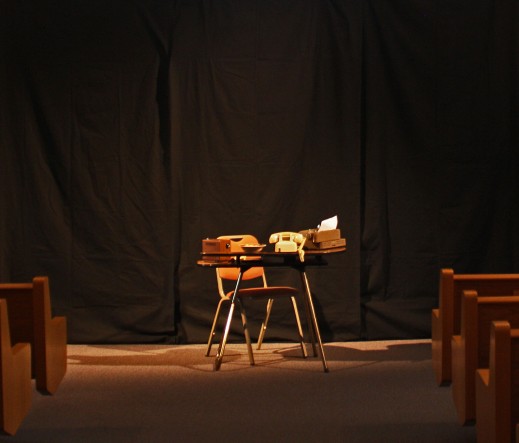
Typewriter musicStarting a new writing project can sometimes feel like latching onto an umbrella and jumping off a cliff, relying only on improvisation and plain luck to keep me from hitting the ground. The key difference is that, unlike jumping off a cliff, writing is a lot scarier.
The other day, I latched onto a good idea for a novel (lawyers, blogs, Texas). It’s since pulled me over the edge, and there’s no turning back. Fortunately, I have plenty to write about. I pull my inspiration from many sources, the authors I read, the people I talk with. One notion fueling this new novel is that I want it to read like the sonatas and partitas of J. S. Bach.

Of course prose and music are two different forms of art, but I’ve enjoyed listening to Bach for over ten years. I enjoy the deliberateness in his music. Nothing is superfluous, allowing the chord progressions to take center stage unhindered by a fixation with virtuosity, and I say this as a violinist who has personally dealt with the pretentiousness of virtuoso musicians and composers.

Instead, Bach patiently jogs along, sometimes as straight 8th notes for measure after measure. The emotions he conveys vary from movement to movement, but they always carry the same deliberate awareness, the same steady pace, putting focus on the chords rather than the structure. Similarly, I want to write prose that invites the reader to go on a run with it on an Autumn morning, that invites the reader to turn corners in an unfamiliar neighborhood but to keep running no matter what they encounter together. Ultimately, I hope to write something the reader can get along with easily, more a friend than a confusing professor. I admit that I am sometimes guilty of lecturing my readers in past stories.

I intend to listen to Bach’s sonatas and partitas while my fingers unravel this novel, but specifically I will listen to Chris Thile performing them on the mandolin. Bach wrote them for the violin, but I enjoy Thile’s rendition more. The timbre sounds more autumnal, more like raindrops or footsteps. And unless I get back to work writing, I may never see this idea to the end.

-jk

Like a Writer in a Candy Store

Lincoln

My books are on my shelves, my violin is tuned, and my spice rack is full. I’ve finally settled into Lincoln, Nebraska, with a few weeks before I start my first semester of graduate school. I spent yesterday exploring the city on foot, and a few sunburns and several hours later I returned to my apartment exhausted but satisfied.

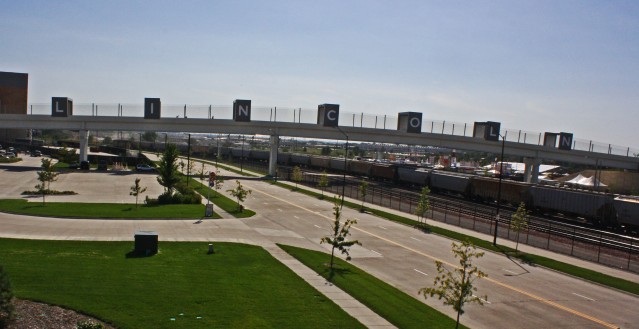
Wandering alone in a big city is a new experience for me. I knew my former home of Flagstaff was relatively small, but getting lost in Lincoln proved to me that I am only one brick in the world’s framework. In my exploration, every corner I turned showed me a new organ in Lincoln’s body. I flew through decades into the Midwest’s past, into rustic red brick buildings, some dating back to the 1870s. I perused this place’s history, its survival on the plains, and those strange intersections where the past meets the present in the connective tissue of reinvigorated neighborhoods and gentrification.

River

Although being in a big city should be overwhelming, for a writer it’s like being a kid in a candy store. I can use any one of a dozen metaphors to describe my place in the city, a cell in a body or a brick in a building, and all of them describe how I feel. They all express my belief that individuality is overrun by community, and I’m sure that Lincoln will organically change me as a person regardless of whether or not I want it to. But for a writer, a city is just one big candy store because it’s not made of bricks or cells, but of stories. There is street art, there is sewage, there are coffee shops, there are dimly lit bars, and right now all of it is new to me.

UNL

One day of exploration has already transformed me. Today, I’ll find a few good places to write on campus and around town, all of which are within walking distance of my apartment. But for the moment, I am still freefalling through Lincoln’s grid of stories, hardly able to contain my excitement.

-jk

P.S. A surprisingly fitting song to have stuck in one’s head while wandering around lost in a new city is H.S.K.T by Sylvan Esso. I also find it suitable for writing about cities.

My Last Letter to Flagstaff

Dear Flagstaff,

autumn forest

There’s no easy way to say this, but I have to say goodbye.

Northern Arizona University

It’s not that I don’t like you. On the contrary, you’re the finest community I’ll ever know. Never mind that you’re the only community I’ve ever known. Having lived in Flagstaff for twenty years and with no actual memories of my life in Pocatello, Idaho, before moving to you, it might be unfair to future communities, but I mean it, Flagstaff. Where else can I see a herd of deer pass in front of my car just uphill from my high school? Where else can I have a mountain for a backyard? Where else will I be an hour from the Grand Canyon and Sedona?

Flagstaff

You’ve been great to me, Flagstaff, but it would be naive to say it was all fountains of chocolate. I mean, you are in Arizona, after all. The snow was nice, but driving downhill on an icy road to a stop light was a little scary. I appreciated the dog food factory, but the smell was a little overwhelming sometimes.

Macy's

Everything good and bad that has ever happened to me, with a few exceptions (Ireland, Montana, Minneapolis), has happened to me in Flagstaff: failed orchestra concerts, a broken arm, publication, falling in love for the first time, crippling self-doubt, hangovers in church, learning to play the violin, becoming an Eagle Scout, rejections from journals, writing my first good poem, writing my first bad poem, saying goodbye at the train station to the woman I loved. I’ve had colds and stage fright, I’ve had frog dissections and marching band performances, I’ve had reader’s theater and photography gigs. I lurched through high school and college in Flagstaff. Spending two decades in a place allows for the accumulation of immeasurable joy and bitterness, and leaving you, Flagstaff, is a tough decision, perhaps the toughest I’ll ever have to make. Sticking around is quite tempting.

Train Station Bench

But I need to see other cities, other states, other countries. I need to travel. I need to study and write and learn. I’ll start by going to graduate school in Lincoln, Nebraska. Lincoln may be the opposite of you, Flagstaff, but everything is packed, and I’ll be out the door by the time you read this. After graduate school, I’ll traverse shores yet untarnished by my footprints.

Duck Pond

Even if I fall for Lincoln, I’ll always miss you, Flagstaff. You were the rough draft of a misshapen side character dropped into the world; you were a place of enlightenment in the saints’ cult of writers; you were the architect of this backpack stuffed with art and questions that I am honored to call my soul.

Christmas in Flagstaff

I owe you more than I’ve given, and you’ve given me more than I deserve, Flagstaff. Perhaps I’ll come back to you someday. I would like to see you at least once more before I die. If I do make it back, I hope you have not changed except to become more beautiful, but I cannot, for the life of me, imagine a more beautiful city.

Pipeline Trail

I’ll miss the hippies and cowboys and geriatric motorcyclists. I’ll miss the perpetual smell of pine trees and incense and dog food. My memories of Flagstaff are like photographs in a gallery hung at random. No real structure binds these moments, and it’s more breathtaking that way. With that, I say goodbye Flagstaff. Wish me luck.

Appalachia

Sincerely,

jk

Midwest by Northeast

The Map

For someone who grew up safe in the Southwest, the idea of the Midwest is just a scary story, no more real than werewolves or zombies or werezombies. But soon, all the stories may be proven true. I may wake up one day no longer a Southwesterner but a Midwesterner.

We’ve all heard tales of the Midwest. We’ve seen them in movies like A Christmas Story, Field of Dreams, even children’s movies like Fargo. We’ve heard Garrison Keillor’s weekly horror stories about allegedly growing up in the Midwest. I myself didn’t believe the stories, but soon I’ll immerse myself in the region, in the cornfields and endless piles of Lutherans.

I’ll have to disguise myself to fit in. I’m already quiet, so maybe they won’t recognize that I’m an Arizonan. I’ll have to start eating German and Scandinavian food instead of Mexican. But will I really become one of them? One of those smiling, dry-humor-loving, flat-land-roaming, hotdish-cooking huskers? I’m a fully-fledged American Westerner. My ancestors traversed the Rocky Mountains, settled in the potato fields of Idaho and the great Bitterroot Valley. I have family scattered across Arizona, Utah, Idaho, California, Oregon, Washington, and Montana. Will I transmute into a Midwesterner? Or will I be like the lone survivor of a zombie apocalypse, wandering the fields among the throngs of polka-dancing tundra folk?

I’m sure I’ll end up enjoying life in the Midwest, even if resistance is futile and I start eating hotdish and corn. Or I’ll discover that the Midwest and Southwest aren’t that different, and I’ll fit in just fine, because as important as regional identity is, we should dismantle every wall we allow it to build between us. We’re all in this sinking ship together, after all, and life’s too short to let our differences confine us.

In any case, I’ve lived in Arizona for twenty years: Arizona is a dystopian oligarchy whose capital city, which is a violation of basic human rights by its very existence, is run by a deranged sheriff, and about thirty percent of the population qualifies as a heavily armed militia that wants to improve upon the concept of walls with barbed wire and snipers. If I can survive in Arizona, I can survive anywhere.

-jk

Play Wins Contest, Writer Absent

stage fright

I’m pleased to announce that my ten-minute play “The Real Deal” is one of seven winning plays in this year’s Northern Arizona Playwriting Showcase. The seven short plays will be given a staged reading on August 28, 29, and 30. I’ve submitted to the contest before, under the guidance of various NAU Creative Writing faculty. Last year, I volunteered to be a reader for NAPS 2014, and was typecast to read for “Morons,” by William Baer. This year I’m honored the judges selected one of my plays, and I hope my Flagstaff friends will be able to attend. However, I will be absent, as I will be starting graduate school in Lincoln, Nebraska. It’s a two-day drive back to Flagstaff, and plane tickets are expensive.

The few times I’ve dabbled in theater have been rewarding, as well as painful. I’ve written, directed, and acted for fundraiser plays, and my experiences taught me that volunteer theater is a collectively-driven form of indentured servitude. The drama you see on stage is nothing like the drama behind the curtain. As a moron for NAPS 2014, I discovered the difficulty in holding a script while using props on stage. As with all volunteer activities, there is the challenge of people committing but dropping out at crucial moments.

Although I’ll be several states away from the stage, I’m still proud of my little play. Perhaps I’ll find similar contests in Lincoln; perhaps I’ll even see a full-length play of mine performed. Of course, that will never happen unless I keep writing.

Time to break a leg.

-jk

Out of the Frying Pan, Into Graduate School

book boxes A few months ago, I attended the AWP Conference where eager representatives from MA and MFA programs stuffed fliers into my hands. They all offered the same possibility: a few years in paradise with nothing to do but write, read, workshop, and inevitably publish. I was drawn into the illusion that ignored the work, the expenses, the debt, and the difficulty in getting anything published.

While preparing for life after NAU, I knew that graduate school was not the only way to become a writer. I could serve overpriced coffee to people in suits, slipping them poems on their receipts to show them my talent, or I could work as a governess for a rich man with gigantic muttonchops who helps me publish my sad story. Or I could take the realistic approach and work, write, and submit short pieces to journals, like most writers I know, gradually building up a longer and longer list of published works.

After I returned from the conference, I received an email from the University of Nebraska-Lincoln. I had applied to eight schools last fall, and all rejected me but UNL; late in April they informed me they would offer me full funding and a stipend through a research assistantship. It was a lucky break, and I took the offer, not because I believed it was the only path I could take, but because I believed it was the best path for me at the moment. It’s the opportunity to get a Master’s Degree in English without any debt, which is just short of a fantasy these days. I don’t believe I deserve such an opportunity over other applicants, but because I have the opportunity now, it’s my responsibility to make the best of it that I can.

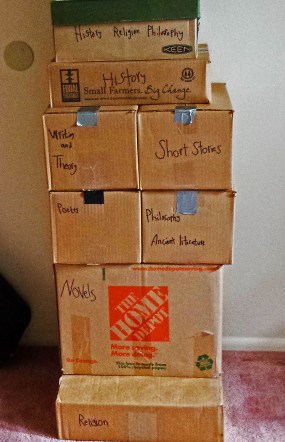
I’m not going just to improve my writing, though of course my emphasis will be in creative writing, and of course I intend to come out of it a better writer. But I also hope to become a more scholarly reader, a better student, a more disciplined person.  I was born into academia, and I can handle it a few more years without losing my mind. I am immensely grateful for the opportunity. So I’ll buckle down, pack up my four thousand books and my no. 2 pencils, and plunge into the fire.

-jk