Category Archives: Literature

“Literature is as old as speech. It grew out of human need for it, and it has not changed except to become more needed.” -John Steinbeck

Séance

At 7:00 PM, the hooded medium taps his phone and the music on the Bluetooth speaker switches to some esoteric chanting. He unsheathes a sword and holds it over the participants—eight people consisting of one couple, one of the bookstore’s employees, his girlfriend, a trio of women who could be sisters, and myself. The medium says something muted as he taps the sword three times in the air, then repeats with a few sprinkles of water from a glass. He takes his role seriously, explaining that he is casting circles to protect the room from ill-intentioned spirits while still making room for benevolent ones.

He pulls back his hood to reveal a long white beard and thick glasses. He smiles and says in a Kentucky accent, “Hi, there, I’m Drew.” I want to add, “And you’re a Druid?” but I keep that to myself. I’m here to take this seriously. I write about horror movies and ghost stories for a living (or part of one). If nothing else, this is research.

We are gathered in an indie bookstore for a séance of the spirit of Emily Bronte, whom we will try to summon in southern Indiana using soil from the Bronte Sisters’ grave in England stored in a glass vial that looks like a test tube, a gift to the bookstore owner from a patron years ago. This is not a performance the way improv comedy is a performance, but I understand the guide’s showmanship. He asks us if there are any mediums in the room, anyone who is used to feeling strange, significant changes in temperature, casual premonitions, dreams that come true. A few participants raise their hands for each; I don’t raise my hand at all. As much as I want to believe, I am skeptical, always Agent Scully instead of Spooky Fox Mulder.

As an afterthought, the medium asks, “Are there any standup comedians here this evening?” I can’t tell if he’s looking at me while he explains that the impulse to crack a joke to fill an awkward silence breaks the tension necessary for a séance. This is a literary explanation: holding tension, like staying in pitch while singing, is a craft technique. Tension builds atmosphere, holds the reader’s attention, keeps us in the moment.

“As a child,” writes Melissa Febos at the end of Body Work, “I did not understand spiritual, cathartic, and aesthetic processes as discrete and I still don’t. It is through writing that I have come to know that for me they are inextricable” (153). A séance for a British author is aesthetically appealing during the month of October and cathartic to a certain extent, but I’m still hungry for spiritual meaning. I can appreciate the theatrics involved in any kind of ritual, a form of adornment like the robes a priest wears, the gold shimmer of a communion chalice. I know a campus pastor who often said, half-seriously, that a modern Eucharist should involve pizza and cola. A community meal would be spiritually satisfying and certainly cathartic, but the gravitas of gold and robes adds a layer of distinction, demarcating rituals from habits.

The medium passes around Emily’s grave soil. We hold it one at a time, seeing how it changes what we notice in the air, what magnetism we can find. It is heavier than I expected; the glass is cool to the touch, but not cold. One of the intuitive women in the room, though, feels its warmth. She walks around the room gauging the spirit’s rambunctiousness, looking for where the warmth is thickest, and stops in front of me. I don’t know where to shift my gaze; there is a density of warmth in front of me, she says. The medium’s glasses are so thick and the room is so dark that I think he is looking past me when he asks me if I’m comfortable proceeding.      

Eager, almost giddy, he stands above me and draws a card from a tarot deck to see if the spirit of Emily Bronte or whomever else the circles invited in has a message for me.

He draws the Ten of Cups. He smiles. Red light reflects off his glasses, obscuring his eyes. He tells me that this is a sign that familial connections will come together soon, that questions of community and purpose will be resolved. That there is a reason to rejoice at something in the future.

I want to believe this. I’m actually taken aback by my own knee-jerk skepticism. I don’t know what spiritual force this is meant to resolve or why somebody would feel warm energy anywhere near somebody like me, so often told how cold I seem.

But this is just a prelude. The real séance requires two volunteers from the audience. One volunteer sticks his hand in a hole in the floor and leaves it dangling in the cold air above the basement. Another lies flat on his back with two death pennies on his eyes, pennies left on the eyes of the dead and uncovered decades later by gravediggers who had to shift bodies to narrower graves to make room for more of the dead. He has a vision of a worker whose whole family, generation upon generation, is at a mansion party, but the worker must leave. He almost hears the worker’s name, something with a T, but that’s all. The worker spirit must depart in a hurry, he cannot stay in our circle, in our waking world. Then, someone feels chills. Then, the warmth in the room falls away. The tension breaks before the ritual is over and the bookstore is a bookstore before it is supposed to be a bookstore. I walk out into the night, haunted by some ache I couldn’t name.

Stress, Growth

Numerous red-orange mushrooms sprouting from the bark of a fallen tree.
Mushrooms crowding for attention on a tree in the Hoosier National Forest.

“Trees that develop without setbacks stand straight and proud. At first their branches grow upwards, then sideways, and finally a little downwards, so they can bend with the rain and snow. Most adult trees, however, have gone through something in their lives: another tree falling against them; branches broken by the weight of snow or ice; fungus; holes in their trunks made by woodpeckers or beetles. All these have changed their form and they’ve acquired scars” (Meijer 37-38).


I can’t remember if it was The Rise of Silas Lapham by William Dean Howells or Sister Carrie by Theodore Dreiser that we were discussing. In either case, the professor for the Great American Novel seminar asked the class whether or not our character, our own as living people, are the accumulation of material accomplishments or the outgrowth of an innate set of traits we are destined to wrestle with. I argued for the latter in a paper about one novel or the other. Over a decade later, my thinking has evolved, as all thinking should, but reading Eva Meijer’s The Limits of My Language last month provided a solid counterbalance to the idea that who we are is innately fixed.

Subtitled Meditations on Depression, Meijer takes an essayist’s approach to a clinical experience that can only be expressed through language, which she states in the title is limited at best. Among the metaphors she uses to inspect her own depression, what struck me the most was that of a tree. She doesn’t go with the obvious route and describe tree rings that accumulate layers of weather and smoke and toxins and bark beetles. Instead, she describes the exterior of a tree, the way its branches twist and wend and warp, the shape it is in a constant state of taking. A tree has an innate direction to follow, but grows around the damage done to it. To access tree rings, after all, the tree must first be cut down.

What I remember about Sister Carrie is that the protagonist navigates continual limitations on her agency. Environmental factors play a role in shaping her decisions, from the length of a table between her and a powerful man to the layout of the city where the novel is set. What I remember of The Rise of Silas Lapham is a hulking all-American rags-to-riches figure who has attained excessive wealth but not the cultural capital that should, in his mind, accompany it. The novel opens with Silas giving an interview, uncomfortable with his circumstances. Silas has his wealth, but not his peers’ respect. Sister Carrie, on the other hand, gradually attains fame but is faced in the end with the same sense of emptiness with her success.

What exactly makes personal growth meaningful is still very much the appeal of literature today. It’s not surprising that the runaway horror movies of the summer, Sinners and Weapons, devote the bulk of their scripts to developing a wide cast of complicated characters, keeping their respective villains relatively in the background. It’s no surprise that one of the most popular fiction genres today, the romance novel, is predicated on the fact that people are bound to change when met with new circumstances. Trajectories like friends-to-lovers, enemies-to-lovers, lovers-to-enemies-to-lovers, and so on, all attest to a recognition that character is far from static.

A spider's web hanging in a forest in front of a tall tree surrounded by green but blurry leaves.
The spider was busy when I asked for life advice.

When he accepted the Nobel Prize in Literature in 1962, John Steinbeck said that “a writer who does not passionately believe in the perfectibility of man has no dedication nor any membership in literature,” meaning, I believe, that fatalism is incompatible with the craft of literature.

Essays like Meijer’s, on the other hand, are more confronting than fiction. In memoir, we’re not following a rags-to-riches or riches-to-rags plot, we’re not growing to more effectively confront vampires and witches, but taking our own growth (or lack thereof) and putting it under a microscope.

I find more comfort in Meijer’s tree metaphor because a healthy tree is measured by what other species it helps to foster. Like every organism in every ecosystem, nothing lives in isolation. A tree provides nutrients to fungus, shade to mammals, shelter to bugs and birds. These are all outcomes that a healthy tree is bound to provide by virtue of what a tree is: the transformation of sunlight and minerals and water into sugars and nuts and foliage. The shape of a tree is irrelevant; gnarled, twisted, straight, even, split—what matters is the processes that a tree recycles, the absorption of carbon dioxide, the excretion of oxygen and nutrients, the miraculous flow of care that its roots and branches provide to the rest of the forest.


Meijer, Eva. The Limits of My Language. Pushkin Press, 2021.

Works in Progress, 1: Enclosure of the Commons and Folk Horror

Here’s what I’m working on lately: a paper on folk horror films for the College English Association conference in Atlanta, Georgia.

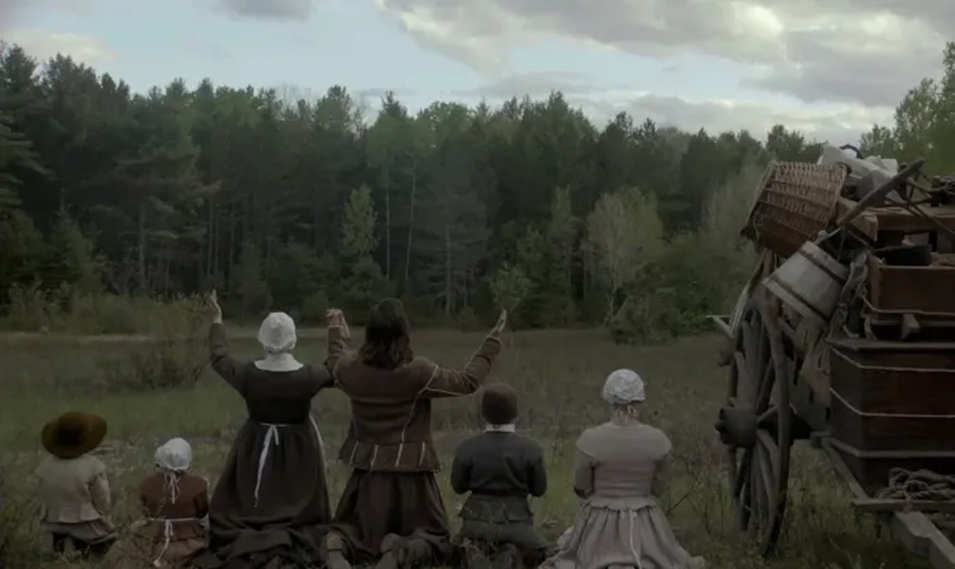
The Witch (2015)

THE GENRE

Scholarship about horror often highlights the genre’s ability to “render abject the subject of its gaze” (Chambers 12). 1980s body horror resonated with the AIDS epidemic, just as the Saw franchise is best understood in the context of the invasion of Iraq, and the zombie craze of the 2010s in the context of the Great Recession. Despite its rapid cult following, there is less consensus about folk horror.

Jamie Chambers notes that “theoretical approaches to folk horror remain in their infancy” (10) and Paul Cowdell writes that while “clear generic definitions are elusive,” the genre has a distinct atmosphere: folk horror films “rely on location in a landscape that acquires almost the status of an active character” whose influence results in what Adam Scovell calls “‘skewed belief systems and morality’ [enabling] the plots’ actual ‘happening/summoning’” (Cowdell 296).

Others have argued that folk horror exploits rural communities as sensational and backwards. As Chambers puts it, “folk denotes a productive way of seeing with an unstable inference of us and them” (17). Elsewhere, Cowdell argues that folk horror necessarily relies upon interdisciplinary interests in folklore studies, claiming that “The Wicker Man, then, would not exist without the development of an actual discipline of folklore” (309).

Is folk horror merely the abjection of folklore? While I find it admirably subversive to suggest that because the movies we love are just reboots of older folk stories, then we are not, in fact, morally or socially better than our ancestors, I also find this definition limiting. With obvious exceptions (The Witch), the legends in folk horror are usually fictitious. The traditions that drive the imagined peasant communities in Children of the Corn, The Wicker Man, and The Blood on Satan’s Claw are diegetic imitations of actual folklore.

Instead, folk horror is defined by the countryside, historicized between economic relations. Antonio Gramsci’s words on the subject are now famous to the point that they’re a meme: “The old world is dying, and the new world struggles to be born. Now is the time of monsters.” The question I want to pursue is whether or not those monsters are the peasants left behind by modernity, or modernity itself.

THE UNHOLY TRINITY

Most scholars agree that three unrelated English films, known informally as the Unholy Trinity, mark the first era of folk horror: Witchfinder General (1968), The Blood on Satan’s Claw (1971), and The Wicker Man (1973).

Witchfinder General is based on the real self-proclaimed witchfinder Matthew Hopkins, who abuses his authority in seventeenth century England. The Blood on Satan’s Claw portrays the satanic influence of Pagan artifacts on rural youths, who can only be saved by a witchfinder-like state agent. Meanwhile, The Wicker Man depicts a neo-Pagan Scottish cult whose mere existence challenges the English state’s internal stability by selecting a devout Anglican police officer for human sacrifice.

The most striking thing about these films is how ideologically incongruent they are. Whatever binds them together, then, is their shared depiction of an unresolved conflict between agricultural communities and an increasingly powerful class of landowners.

ENCLOSURE AND THE COMMONS

A Field in England (2013).

Economies in Europe were structurally and politically diverse during the thousand-year reign of feudalism, but were mostly built on social contracts between peasants who lived on the land and lords who held religious and political titles to that land. Peasants were also granted access to parcels of common land useful for procuring firewood, hunting and gathering, and grazing.

As early as the 1200s, feudal lords began violating those contracts by terminating customary rights to fish, graze, hunt, or harvest. Ellen Meiksins Wood writes that “enclosure meant the extinction, with or without a physical fencing of land, of common and customary use rights on which many people depended for their livelihood” (83). A much larger wave of enclosures began in the sixteenth century, placing the means by which one lives to see another day—food, water, and shelter—exclusively under market forces.

As a result, enclosure could lead to the elimination of small owner-occupiers, who were bought out by large proprietors” (623), writes S. J. Thompson. Meanwhile, Silvia Federici notes the relationship between enclosure and the violence of the witch trials. In Caliban and the Witch, she writes, “women were those who suffered most when the land was lost and the village community fell apart” because “a nomadic life exposed them to male violence” (73).

Folk horror calls back to what capital presumes to be extinct: the practice of holding resources in common. Witchfinder General portrays the agents of enclosure as monstrous, cruel figures. In contrast, The Blood on Satan’s Claw suggests that enclosure is a necessary step in social progress, and The Wicker Man depicts a community struggling to recreate premodern agricultural (emphasis on cultural) conditions.

THE HORROR OF MATERIAL CONDITIONS

One central premise of folk horror is that people and wilderness should be separate, that monstrosity emerges from too close an association with the land. This is the logic of Enlightenment-era liberalism. John Locke explicitly argued that land can only be considered property if the people on that land use it for profit, or as he called it, improvement.

Thompson writes that “improvers defended enclosure on the grounds that it was more compatible with individual liberty than the open-field system it replaced” (639). Employing the rhetoric of natural liberty and natural rights, the agents of enclosure redefined nature itself. Locke argued that “the value inherent in land comes not from nature, but from labor,” which in Wood’s assessment means that, for Locke, “unimproved land is waste” (Wood 85). In the sixteenth century, improvement looked like agriculture. By the 1960s, agricultural spaces had replaced the commons as the imagined backwaters of modernity.

The Wind (2018)

This is much more evident in the US corollary to English folk horror, known as hicksploitation. Ranging from Deliverance (1972) to The Texas Chainsaw Massacre (1974), American “hillbilly horror” is arguably more exploitative. In these films, isolated (usually white) communities in overgrown landscapes become monstrous. These films center harsh landscapes that are difficult to “improve,” despite the most industrious efforts of long-gone colonialist projects, which themselves become the subject of more recent American folk horror. The Witch (2015) and The Wind (2018) both emphasize the isolation of frontier spaces.

For Chambers, “the pleasures of the folk aesthetic frequently arise from depictions of cultural-geographic difference” (26). While I think Chambers underestimates the critical thinking skills of horror fans, his observation that the appeal of films like The Wicker Man for western liberal audiences is an imagined rural authenticity seems correct. Folk horror scratches a very particular itch; it confirms about ourselves whatever we want it to.

Today, there are dozens of studies about a contemporary epidemic of loneliness, contrasting a genre of memes about the desire to leave modern society and live in a cabin in the woods, to “retvrn with a V” to “the past,” because “medieval peasants” presumably worked fewer hours and because life was somehow “better” in “the past.” These memes traffic in the same metonymy for “the good old days” that folk horror encodes with monstrosity.

With more scholarship, I want to explore the ways that recent folk horror has reinterpreted landscapes from wastelands into spaces of mystery and open exploration, ecologically but also historically and economically, where present conditions can be seen, with both admiration and disgust, in sharp relief from afar.


Chambers, Jaime. “Troubling Folk Horror: Exoticism, Metonymy, and Solipsism in the ‘Unholy Trinity.’ Journal of Cinema and Media Studies, vol. 61, no. 2, Winter 2022, pp. 9-34. EBSCO, https://doi.org/10.1353/cj.2022.0014. Accessed 3 October, 2023.

Cowdell, Paul. “‘Practicing Witchcraft Myself During the Filming.’ Folk Horror, Folklore, and the Folkloresque.” Western Folklore, vol. 78, no. 2, Fall 2019, pp. 295-326. JSTOR. https://www.jstor.org/stable/10.2307/26864166. Accessed 18 October, 2023.

Federici, Silva. Caliban and the Witch. Autonomedia, 2014.

Thompson, S.J. “Parliamentary Enclosure, Property, Population, and the Decline of Classical Republicanism in Eighteenth-Century Britain. The Historical Journal, vol. 51, no. 3, 2008, pp. 621-642. JSTOR, https://www.jstor.org/stable/20175187. Accessed 19 March, 2024.

Wood, Meiksins Ellen. The Origins of Capitalism. Monthly Review Press, 1999.

Summer is the Time to Finish Reading All the Unfinished Books

Books!I have a lot of books that I’ve started, but for many different reasons never got around to finishing. Many of them are Christmas presents that I started during the holiday break but put down again shortly after the semester started because schoolwork and teaching overwhelmed my schedule. There are short story collections with dogeared pages where I stopped, and novels with a bookmark still stuck at Chapter Six, and poetry collections with coffee stains where I left off.
To be clear, I appreciate the books as gifts. I went into writing because I love reading. But it’s easy to lose track of time and even easier to start more than I have time to finish. To be greedy, or at least unrealistic. Also I was assigned thirty books between three classes this last semester. Most were good, but it’s difficult to make time for leisurely reading when I have to make arguments about three books a week.

Until August, I hereby vow not to buy any new books. My summer reading list will consist only of books I’ve started reading but never finished, the various gifts and books I bought with the intention of reading in my spare time (back when I believed in such silly things). I have Kim Barnes’s first memoir In the Wilderness, for example, and a few critical theory books I got this last year to catch up on The Discourse. Yesterday I finished Matt Cashion’s Last Words of the Holy Ghost, a gift from two years ago, and now I’m going to finish Precarious Life by Judith Butler, which I started last month for a paper.

I can’t promise that I won’t start-without-finishing books in the future, but this summer, I hope to make amends for years and years of this moral failing on my part.

-jk


Edible Ekphrasis

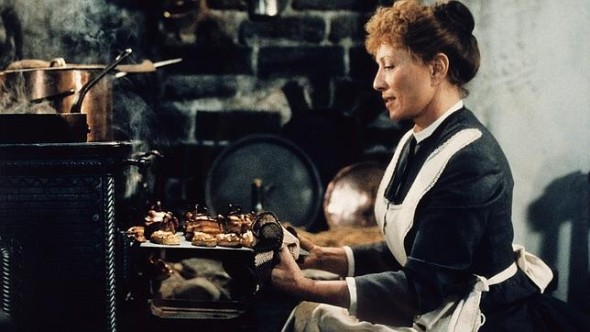
babette's feastLast week, I had the pleasure of watching the 1987 Danish film Babette’s Feast, directed by Gabriel Axel. Based on a short story by Karen Blixen, Babette’s Feast is set in a small village in the nineteenth century, focusing on two sisters in a strict pseudo-Puritan sect and their French cook Babette, whom they took in as an act of charity after she fled violence in France (as we all do from time to time). Her mastery of French cuisine contrasts the bland, simple food the sisters eat. Babette eventually inherits 10,000 francs, and decides to cook an elaborate, “real” French dinner for the churchgoers, who wrinkle their noses at the appearance of her imported ingredients (live quails, a turtle, various wines and champagnes), vowing not to mention the quality of the food to maintain their piety. Their decision to refrain from commenting on the food becomes more and more difficult as they eat, and the wine certainly complicates things, too.

It was one of the two last films that I watched on a Sunday night tradition that has become known as Single Guy Movie Night, hosted by a kind and brilliant PhD student and attended by myself and a fellow second-year MA student (and sometimes a married honorary single guy when he’s available). Since August, I have enjoyed our host’s meals and taste in movies, and he has occasionally tolerated the movie tastes of his guests.

This last year, I have watched more films on Sunday nights than I can remember: The 400 Blows, Road Warrior, Mad Max: Fury Road, Moonlight, Elizabeth, Halloween, Carrie, Akira Kurosawa’s Dreams, Rogue One, The Cook, The Thief, His Wife, and Her Lover, Spartacus, ParaNorman, The VVitch, The Best Little Whorehouse in Texas, among many others. It was fitting, I think, to end with a soft film about food, and perhaps the best film about food I have seen.

There is a small canon of food films. Ratatouille remains my favorite Pixar film, and I enjoyed Stanley Tucci and Campbell Scott’s 1996 Big Night, about Italian cooking. Jon Favreau’s Chef belongs in this canon, and though it is about many other, disturbing and beautiful things, Peter Greenway’s 1989 The Cook, The Thief, His Wife, and His Lover is a fantastic movie centered around the act of eating/consumption.

These movies are ekphrastic, in that they are about other forms of art. Most ekphrastic storytelling tends to be about painting or music. Putting the focus on food, and therefore taste, forces the audience to think about their own taste. The visual emphasis is on preparation, ingredients, cooking, and of course eating, a meta-narrativized mirroring of what audiences do when they watch movies, not literally eating the film but taking it in, enjoying its flavors, the blend of sweet or savory scenes, bitter or vibrant dialogue. As such, these films subtly ask their audience to reckon with the art they consume, the difference between taste and appetite, the difference between taste and quality, and do so in ways that invite variation. There is plenty to choose from on the menu; what will you watch tonight?

Babette’s Feast is different. At the forefront is gentleness. Rather than for competition or financial success, the film’s protagonist chef wants to give her patrons a free, perfect meal to show her gratitude. Her patrons, again contrasting from most food films, want to lower their expectations and resist enjoying the meal. The climax is the feast, but the pleasure of this long, drawn-out scene is watching the characters resist their own pleasure, and in subtle ways fail. The audience gets to see them lose, which means for them enjoying wonderful food. Babette brings them to their satisfaction by what she offers on the plate, giving them permission to enjoy life.

I prefer gentle movies, and that is a matter of taste. I like atmosphere, music, scenery, and subtle character developments that are easy to miss. But this is taste, and I give myself permission to enjoy everything on the menu. Life is short, and if I stuck to the same kind of movie, I’d miss out on the dozens of excellent movies I’ve had the gift of watching this past year with friends. It is too late to prepare a real French dinner for them to show my thanks. This has been an obscenely difficult and unpredictable academic year that left me paranoid, disillusioned, and feeling far from gentle. Babette’s Feast reminds me I am allowed to enjoy what I consume, whatever it is, and there is nothing wrong with taking pleasure in things, in as many things as possible.

The year is over for me. What comes next is new and uncertain, but I would prefer to go into it with an expanded pallet and the energy to enjoy generously.

-jk

John Steinbeck’s Peach Upside-Down Cake

the-lone-survivorIn 1902 on February 27, John Steinbeck was born, kicking off a wonderful century of war and economic strife. To celebrate his birthday, you can either have a disgusting beer milkshake or delicious mush or even a glass of extremely fresh milk. Or you can be sensible about the whole thing and make peach upside-down cake.
First, lose your land to a bank and drive to California, where the good peaches are. You should lose one or two family members on the trip, which means more cake for you. Lucky you. Find work at a peach orchard and collect four to five un-bruised peaches that you can take back to the rusted-out boiler you live in with your seven remaining children back in Monterey. Sell one of those children to buy 1/2 cup of butter, 2/3 cup of brown sugar, 1/2 teaspoon of cinnamon, and use whatever is left to buy as much bourbon as possible. Slice the peaches, melt the butter, add the brown sugar and cinnamon and a little bourbon if there’s any left after you’ve coped with the Great Depression that is living in California.

Work a few shifts at an apple orchard as a scab while a strike occurs and make enough to buy 2 cups of flour, one teaspoon of baking powder, 1/2 teaspoon salt, two sticks of butter, 1/2 teaspoon cinnamon, 2 eggs, 3/4 cup of sugar, 3 teaspoons vanilla, and several more cases of bourbon because one of your children broke into your stash and is no longer with us, which means one more child who doesn’t have to live in California. Beat the butter and sugar together, the way the system has beaten you, until smooth and creamy, unlike you. Mix in eggs, vanilla,and cinnamon. Add flour and baking powder and mix together. Meanwhile, you have probably lost a few more kids in the police raid on the striking apple pickers.

Take the hubcap of a Model T Ford and place the peach slices at the bottom with the butter-sugar mix. Pour the cake batter over it and cook at 350 degrees Fahrenheit or over an open fire on the side of the road for 35 minutes or until the bosses catch you and have you sent to jail with your one remaining child.

Enjoy the cake barefoot at the side of a river while you contemplate modernism and the horrors of living in America and probably a turtle or some worthless birds or some other obvious metaphor. Also, you’re probably a metaphor for Jesus by now, so change your initial to JC.

Also, happy birthday, John Steinbeck.

-jk

Genre, Nostalgia, and The Love Witch

I don’t normally do film reviews/analysis on this blog, but a recent viewing of The Love Witch with its “aggressive strangeness,” as a friend described it, warrants a a closer look.

witchAnna Biller’s 2016 The Love Witch begins as a parody of late 1960s/early ’70s sci-fi/fantasy sexploitation B movies such as Barbarella (1968) and A Touch of Satan (1971). Biller’s film establishes a concrete cinematic nostalgia that it then goes to great lengths to critique.

Spoilers and such: The main character, Elaine, is a witch utilizing her witchiness to seduce men in her supposedly endless search for love. After having killed her husband, Elaine quickly finds a new partner (Wayne) and uses her excessive witchitudes to convince him to take her to his getaway cabin. There, she gives him a “potion,” which causes him to “feel love” too intensely and die. (Audiences can recognize that taking beverages from strangers is also a possible way to die). Elaine attributes Wayne’s death to men being unable to cope with their emotions, and moves on from there, as we all should when someone feels emotions to death.

When Elaine finds  Griff, “the right one,” the film has veered from its established genre, becoming at different points a Hallmark romcom and a buddy cop drama. Disappointed that he fails to feel love for her (and also happens to be the cop who finds that she is guilty of “loving” people to death), Elaine stabs Griff in the chest. The film ends with a disturbingly quiet fantasy of Elaine marrying Griff in a Renaissance setting, interrupting the campy tone and ending with a serious meditation on the consequence’s of the film’s own logic.

The Love Witch exploits viewers’ nostalgia for a unique cultural moment that existed only after the emergence of birth control and before the HIV/AIDS epidemic, an era that felt like it was going places and might have were it not for the sudden death of hope that came with Reagan and the moral majority.

Elaine’s treatment of men is cynical and essentialist, and the film’s male characters buy into it just as much as she does. Audiences are meant to see her views as a product of her frustration with social expectations for happiness and monogamy, and she turns to witchliness to prevent further disappointment. Witchcraft here functions as a cult-like ideology: Elaine seeks improvement in relationships and cedes her agency to something beyond her (a program/product/cult), but as a result of that program/product/cult, she only ends up killing people (which, to no surprise, ends up hurting her relationships). Witchcraft is a stand-in for any commodified, pre-packaged self-help ideology, such as Sedona’s vortexes, Scientology, or the books of Rob Bell (all of which, I’m sure, have resulted in someone’s death).

Marriage appears most colorfully in a scene at a Renaissance fair, pulling back the curtain on Elaine’s personal investment in the program/product/cult. Elaine, like many Americans, is drawn to witchcraft simply for the nostalgia of a pre-globalized Europe, one without the intrusion of Christianity but all the aesthetics of a Pagan religion without the human sacrifice and patriarchy. All the fun without the historicity. Tolkien made even whiter and somehow less sexy. Halloween ruined by Medieval and Renaissance Studies majors. The list goes on. The film critiques the audience for participating in nostalgia for a style it portrays as commodified, pre-packaged, and self-consuming.

The Love Witch dissects the way many Americans imagine the sexual revolution, which existed between two periods of extreme repression, the 1950s and 1980s, and captures the strangeness of that moment of hope while simultaneously undermining it just as violently as it was subverted historically.

The film’s generic experimentation acts as a mechanism exploiting viewers’ nostalgia. The Love Witch tricks audiences the way time and politics often do, by taking its viewers on a trip they never signed up for but feel unable to step out of, forcing them to walk away with questions and pretentious blog post ideas about witch hunts and the 1970s or something.

-jk

In the Tradition of Poems for Dogs

IMG_0128

Recently, I read Andre Alexis’s novel Fifteen Dogs. Among the many delightful things in the novel (that it starts with the gods Hermes and Apollo in a bar in modern-day Toronto, that the characters are mostly sentient dogs, that it’s filled with excellent descriptions and dog-drama) is that one of its main dog characters, Prince, becomes a poet who uses a unique poetic form intended to make sense to both humans and dogs.

The French poet Francois Caradec invented this form of poetry for dogs, and Alexis lends him credit for its invention. The form requires the sound of a dog’s name to be embedded in the poem. In this way, dogs will hear their name if the poem is read aloud, and respond in their dogly way by wagging their tails and analyzing the poem from a critical dog studies perspective.

An example from the novel, for the dog named Prince, is as follows:

“Longing to be sprayed (the green snake
writhing in his master’s hand),
back and forth into that stream–
jump, rinse: coat slick with soap” (Alexis 81)

The name Prince can be heard in the words “jump, rinse,” and supposedly a dog named Prince will hear it in the poem. The rest, apparently, will be the usual human nonsense Prince is used to hearing by now.

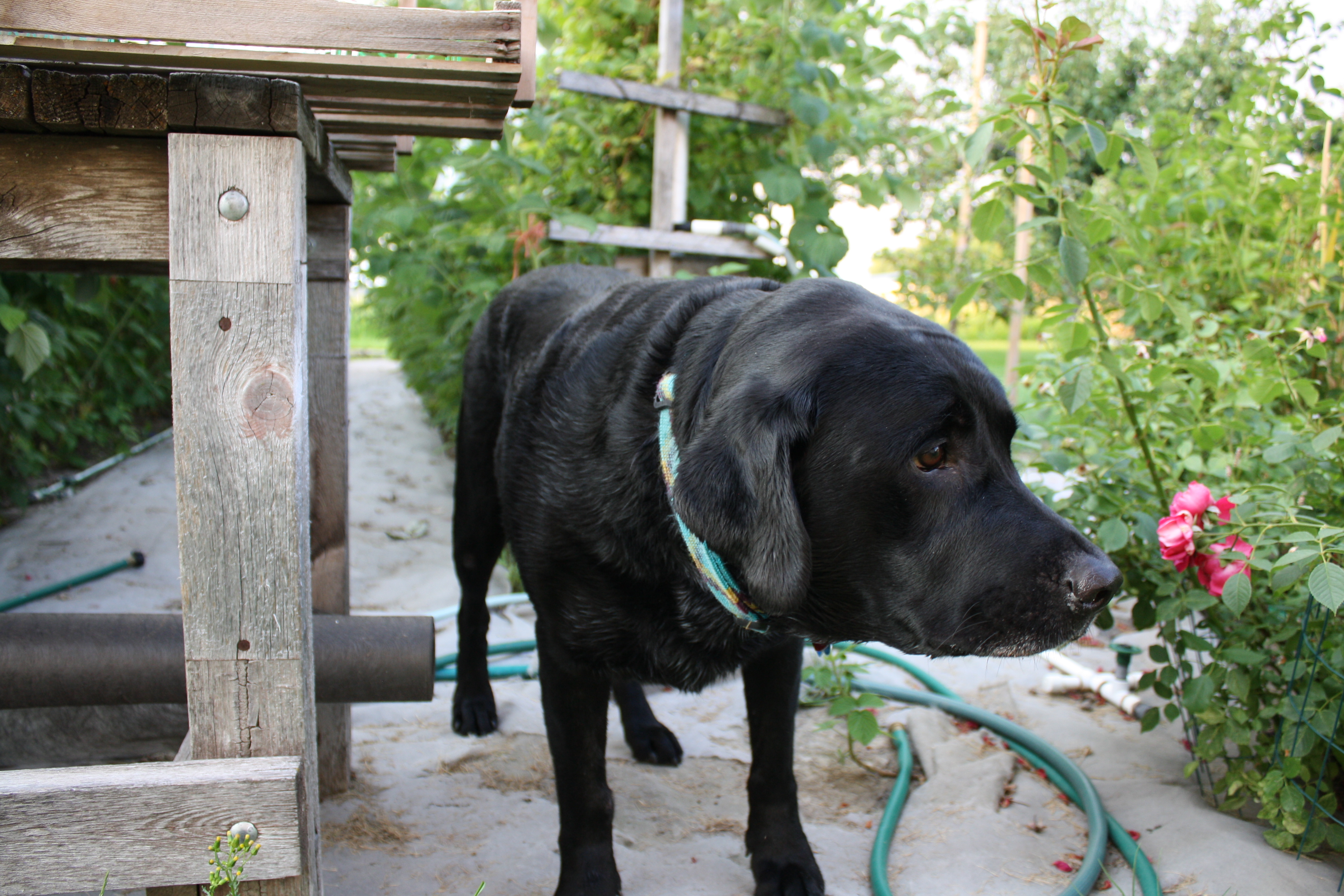
I wrote a poem in this form for my own dog, Pete, who has seasonal allergies and enjoys scratching his face on various surfaces, including people:

Rough carpet scratches
snatch up every face-itch
on the floor, sensations
to make easy sleep. Eat, sniff, dream
until the next itch, then scratch.

Do you have a dog? A pet? Write them a poem and see what they think.

-jk

Alexis, Andre. Fifteen Dogs. Toronto: Coach House Books, 2015

Reading Terry Tempest Williams in Zion

Zion 2This week, I had the pleasure of joining one of my best friends for a trip through parts of southern Utah, starting in Moab and ending in Zion National Park. We went for the usual reasons (viewing nature, camping, hiking, burning a dictionary and cooking quesadillas over it). After hiking the Wildcat Canyon Trail (a good ten miles of limb-crunching views), we went to our campsite and read our selected book in the fading light, both collections of short pieces on the Southwest and West, Getting Over the Color Green and Northern Lights.

In Northern Lights, I stumbled upon an essay by Terry Tempest Williams, “The Clan of One-Breasted Women.” Williams grew up in Utah in the 1950s when fallout from nuclear testing in Nevada drifted beyond the test sites. As a result, many people downwind of the tests, including her family, suffered from radiation. Williams meditates in her essay on the many women (many in her family) downwind of the test sites who developed breast cancer from the radioactive fallout.


At the peak of the hike in Zion, I could see far, far out into the distance. I was surrounded by a place brimming with life; the whole area is a complexity of ecosystems overlapping, intertwined: red and tan oceans spotted green or lush with ponderosa and aspen or colored with sand and pale sunlight. Much of the Southwest doesn’t look alive to the untrained eye. Deserts play tricks on us by hiding their life, but life is always there. Overlooking Zion, I was overwhelmed and haunted by its history.

Zion

In the 1860s, Mormon pioneers founded a town near Zion, Springdale, and named the nearby canyon Zion. To Mormons, Zion refers to a gathering place for the faithful, and naming the canyon was an act of claiming the land for Mormon culture. But while pioneers were in the process of colonizing the area, the region was home to Southern Paiute communities pushed out by U.S. settlement. Like much of the Southwest, Zion is part of overlapping histories and state-sanctioned narrative revision.

The place was shaped by geologic hands, the fingers of rivers, a mind of clouds and rain, then engulfed with diverse flora and fauna, indigenous communities, overrun by Spanish colonization, Mexican statehood, Mormon expedition, and U.S. authority that ignored all previous layers by deeming the Southwest an absolute desert, a place so deserted they could safely test nuclear weapons there without harming anyone or anything worth mentioning. But Williams contests, as many do, that all of it is worth mentioning, worth respecting and preserving and revering.

After reading Williams’s essay, I stargazed with my friend in the desert where the stars are aggressively visible. The Southwest is misleading to those unfamiliar with it. The stars are brighter here, the air is heavier with scent, the land is rougher, and the going can be tough. Zion, a place of peace, a place of eternity, may be an apt name. The whole Southwest may be a kind of Zion, a refuge for wanderers and romantics. Its beauty is rare and atypical, taking on strange shapes and colors, rich sounds and haunting narratives. Its beauty is misfit and misleading, but in its presence it’s impossible to miss.

-jk

After Two Years of Blogging, Your Guess is Still as Good as Mine

toastWordPress reminded me that today is my two-year blogiversary. I missed last year’s for the obvious reasons (grad school applications, Macbeth, mud wrestling, etc.). Today, though, I slide two years into the past when I was surrounded by the mess of my education: Beloved, essays on the Holocaust, a textbook on linguistics, The Outlaw Bible of American Poetry, and drafts of my own poetry. The liberal arts defined my life, but lacked definition; in a confused fervor I wrote my first blog post asking simply, why get a liberal education in the first place?

Two years have gone by. I created this blog to explore the liberal arts generally, the life of a wannabe writer specifically. At varying times, it has served as an open journal, editorial, bully pulpit, and archive of my writing. I started out posting short vignettes satirizing myself as a freshman, but moved on to better creative writing, philosophy, travelogues, history, and humor. If my blog feels eclectic, it’s only because my brain is eclectic. I move rapidly from Steinbeck to colonial Egypt to writing a short story. This blog is one part journal, one part art, and one part scholarship, with three extra parts marked “miscellaneous.” I strive to make sure no two posts are alike, which may be a bad idea when blogging is supposed to be about consistency and ritual, two qualities I lack.

I’ve explored numerous moments in my life on this blog: I mourned Pete Seeger, challenged myself to write a poem every day each April, founded a photography business, announced publications, had breakfast in Ireland, lunch in Jerome, dinner in Wisconsin, went to my first big fancy writing conference, broke up with my hometown of twenty years for graduate school in Nebraska.

For the most part, though, I’ve read, and written about what I read, and read what others wrote about what I wrote about what I read. An endless reading list is the bedrock of any good liberal education.

Liberal Education

On this blog, I’ve also reached many half-baked conclusions, but one thing has remained clear post after post: a good liberal education is worthless if it stays inside the classroom. Sitting around reading and writing is no way to be a writer, if it’s all I do. I have to experiment with baking or acting, work for a charity, travel, read for a literary journal. I should traverse the gridlock of cities, the innards of bars, the vast organs of campsites. My blog may be ineffectively unconventional; the only binding theme is the continual mess of my lifelong education and my desire to be a writer. But I know blogging has made me a better writer, a more considerate reader, a more confident thinker. It’s been an eclectic two years. I hope the next two will be even more eclectic.

jk

Why a liberal education? Your guess is as good as mine, and I mean that. If you’re engaged in the liberal arts, especially outside of academia, let me know in the comments what you study or write or create, and why.

-jk