Author Archives: keeneshort

Unknown's avatar

About keeneshort

I am a writer in Southern Indiana.

Reading and Road Trips

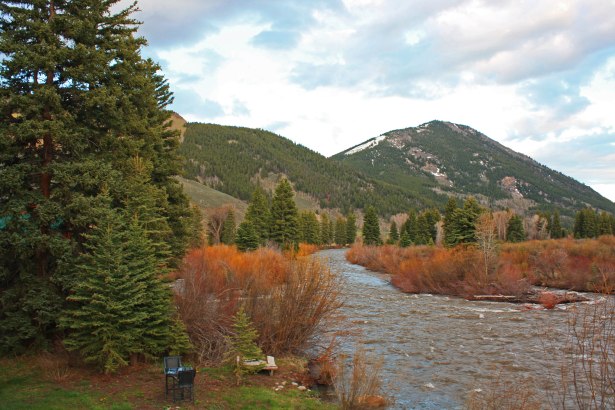
Crested ButteTwo weeks ago, I graduated from UNL with a Master’s degree in English. It is the result of two years of reading, writing, and writing about what I read. More importantly, I had the pleasure of spending time with the friends and colleagues I worked with this past year. To celebrate the end of the semester and our program, several folks in my graduate cohort took a vacation by driving from Lincoln, Nebraska, to Crested Butte, Colorado, for a weekend next to a river. Soon, we will scatter and go our separate ways, and the slice of time we gave one another without responsibility, without the need to work for someone else, without tasks to fulfill, was a small slice of heaven (which is, as we all know, a place on Earth).

Right now, I have a summer of road trips planned ahead of me. I have been accepted into the MFA program at the University of Idaho, in Moscow (the fun Moscow). I’ll be driving there from Lincoln soon with part of my family, then through Montana and Idaho to visit a variety of relatives, then back to Flagstaff, Arizona, before driving back to Montana and Idaho a month later. I’ll be spending a lot of time in a car.

When a handful of English Majors go on a road trip, they take books with them, and for me it’s always been that way. As long as I can remember, I’ve taken long road trips every summer from Arizona across the Rockies to Montana, Idaho, Utah, Oregon, Washington, and California, and I’ve always taken a book with me. One summer, I read On the Road by Jack Kerouac. Another summer, I read The Grapes of Wrath by John Steinbeck. On this most recent road trip, I read The Motorcycle Diaries by Ernesto Che Guevara, and to continue my step in the left direction through summer reads, I think I’ll take along Terrorism and Communism by Leon Trotsky, which I hear is a pleasant beach read.

I’ve spent the last two years reading more books than I expected, various novels, historical texts, books on theory, books on the Russian Revolution of my own volition, craft essays, and several Nigerian plays. It is telling that, on my first break from grad school, I continued to read. The same is true of my friends who went to Crested Butte.

I have a lot going on this summer, much to look forward to and much to fear. I could blog about going to a new graduate program in creative writing or the college-industrial complex after surviving it for two more years or moving to a new state again. But right now the only things I want to do are read and spend time (reading) with my friends. I even hear talk of a Kafka/Marxist reading group in the making.

-jk

Yet Another Final Poem

Floor waterIn a blogging tradition that dates to the early Enlightenment-era philosophers, I post one poem on the last day of April to celebrate the end of Poetry Month. This poetry month, I wrote fourteen poems, a record mediocrity (which is the title of an upcoming collection). In any case, the following poem is dedicated to the Floor Water Collective (or my graduate cohort who shared/trashed an office this past year). They will be missed, by someone, probably.

Dear Future Occupants of Our Office,

A word of caution: the doors are untrustworthy
and you might get locked out, or worse, locked in,
or better, locked in with people you trust.

The coffee is best made from a garbage can
if you don’t want to stain our office (we
did), and the kettle is closest to an outlet
on the floor, which you should lie down on
listening to music when the world boils.

That will happen a lot, in and out of the office.
Our decorative rhetoric has remade it
a pilgrimage site for the curious and passionate,
as a reminder of what we used to be.

The office is exhausted inside and out,
but like us it’s used to being used as a means
of production, a clogged factory,
a closet of disconnected cogs, an easy target,
and inside the doors break, the floors are ant-trodden,
and everything is stained one way or another
with blood, sweat, coffee, tears, pizza sauce,
the list goes on. Whatever bright shine the office had
a year ago is now replaced with a language
that will be scrubbed away over summer.
It will look perfect again for you, but the flaws
are well-hidden in the design.

This office is a good place to go when the world
slams its many doors on you. It’s a good place
to have your heart and idealism broken,
to be comforted alone during your worst thoughts
on an uncomfortable couch under a friend’s blanket,
Future cohort, we dare you to match our worst days, to survive
the way we did, together, while our worlds boiled.

-jk

1917: Kerensky’s Sidestep

Alexander Kerensky and Map

Alexander Kerensky, briefly Prime Minister, 1917. Via Keystone/Hulton Archive, Getty Images

In early 1917, rebelling Russians wanted three things: political reform, economic reform, and for Russia to withdraw from the Great War. The Provisional Government that took over many of the Tsar’s administrative tasks attempted to satisfy the various Soviets that appeared throughout Russia, which represented the interests of soldiers, workers, and peasants (often in that order). Without mutinying soldiers, the February Revolution would likely not have happened, but many soldiers were divided about whether or not to continue a war that had proven disastrous for them under the Tsar.

The crisis of leadership following the February Revolution placed several key figures into powerful positions. Pavel Miliukov, a pro-monarchy and pro-war politician, became the Provisional Government’s Minister for Foreign Affairs, and in contrast, the moderate socialist Alexander Kerensky simultaneously held positions in the Petrograd Soviet and the Provisional Government, as the vice chairman and Minister of Justice, respectively. Kerensky’s role in the chaotic time between March and November of 1917 shaped Russian policy between the year’s revolutions.

At the start of the war, Kerensky was the leader of the center-left Trudoviks. After the February Revolution, he came to power in both the Petrograd Soviet and the Provisional Government against official Soviet policy, which made it illegal for Soviet members to hold government positions. Kerensky occupied  a position comparable to a US Senator who somehow managed to also hold a seat in the US House of Representatives.

Led by the Mensheviks, the Petrograd Soviet held a firm grip over the capital, but refused to act as a new government because Mensheviks predominantly believed that “the February Revolution was a ‘bourgeois revolution.’ . . it was the task of the workers’ party to refrain from compromising itself in the workers’ eyes by taking power” (Treadgold & Ellison 96). As a result, the Petrograd Soviet and Provisional Government created a power vacuum that could not be filled, preventing elites from exercising power but also making it difficult to pass economic or military reforms, what Trotsky called “dual power.” Kerensky managed to bridge that gap.

Kerensky was liked by those to the political right of him. In isolation, Tsar Nicholas II wrote in his journal that the “more power [Kerensky] gets, the better” (91), and Miliukov said in a speech to the Provisional Government shortly after its formation that he “just received the consent of [his] comrade A. F. Kerensky to assume a position in the first Russian public cabinet. We are eternally joyful to place into the trusty hands of this public activist the ministry that will mete out out just retribution to the servants of the old regime” (Daly and Trofimov 51).

He continued to rise to power as the year progressed and the Bolsheviks continued to attempt to stir up support after their mid-April return from exile. In late April, Miluikov’s pro-war policy found little support, and he resigned from office on May 2, days after the Minister of War, Alexander Guchkov, resigned. Once again, Kerensky filled the power gap by replacing Guchkov as War Minister on May 5. However, Kerensky adopted a similar stance on the war, and rededicated the Russian military to the Allies. Kerensky slid to the center and Russia stayed in the war.

After a failed coup in summer, he would replace Prince Lvov (appointed by the Tsar) as Prime Minister. In four months, Kerensky would rise to power by moderation, rhetorical savvy, and his continual sidestep closer to the right. The stalled gears of “dual power” in the capital made it possible for one person straddling both branches to exert more and more influence, foreshadowing Stalin’s power grab a decade later. But Kerensky was neither a dictator nor a cynic. His politics were pragmatic, though increasingly conservative. His betrayal of leftist idealism makes sense in the wake of leftist hesitation while his rise to power was possible only through the failure and resignation of other powerful figures. Because his lack of immediate shortcomings contrasted the inadequacies of those he continually replaced, his rise to power was seen as stabilizing rather than centralizing. But his military failures and insufficient land and economic reforms imitated the same failures that led to the Tsar’s ousting. If February was a bourgeois revolution against Tsarism, October was an intelligentsia’s revolt against Kerenskyism, which was a bourgeois liberal’s attempt at restoring order without changing the order of things.


Daly, Jonathan, Leonid Trofimov. Russia in War and Revolution, 1914-1922. Hackett Publishing Group, 2009.

Treadgold, Donald W., Herbert J. Ellison. Twentieth Century Russia. Westview Press, 2000.
List: 30 Ways to Celebrate National Poetry Month

Umbrella Brick Wall 2.JPGApril is National Poetry Month, so here is a nifty list of things to do to celebrate poetry, nationally.

  1. Read a poem every day.
  2. Write a poem every day.
  3. Go to a poetry reading.
  4. Stick a poem in your pocket.
  5. Having already exhausted the ways people traditionally celebrate Poetry Day after four activities, think briefly about going back to prose, then read more poems or something.
  6. Write a poem and tape it to your office window so people outside can enjoy it.
  7. Read poetry you found on a sign or a movie poster.
  8. Take down your window poem after somebody complains to your boss, then passive aggressively write sequel poems to it.
  9. Try to write a haiku in under 140 characters.
  10. Realize that writing twitter haiku is too hard, and instead tweet a picture of your haiku written on a page in your moleskine notebook.
  11. Write poetry on the sidewalk in chalk before vindictive bicyclists run you down while humming the music from Jaws.
  12. Submit your poetry to journals until those $3 Submittable fees match the amount you spend on wine per week.
  13. Speaking of wine, Holy Week is in April, so you could write a poetry suite using Catholic imagery to talk about your feelings even though you are not Catholic and you have no feelings.
  14. On Good Friday, write another poem that pretentiously uses commas to somehow represent the nails in crucifixion.
  15. Realize that fourteen people online have misinterpreted your religious poem and want to know why you are taking away their right to choose.
  16. By Easter, lose fourteen of your Facebook friends over that one poem you posted.
  17. Share your favorite poems online, checking seven times to make sure you spelled each poets’ name correctly, because you really only read their work during April, even though you insist on how much their work means to you the rest of the year.
  18. Read early drafts of poems you wrote three National Poetry Months ago and die a little inside after counting the number of times you used a flower metaphor.
  19. Go to an open mic night and sit through four harmonica soloists before the poets get on stage.
  20. Research poets whose work you have never read. Chances are high that there are at least several.
  21. Go to a reading of new or recently published poets. They could use the moral support, especially if they’re grad student poets.
  22. Buy a new collection of poetry, then make time to read only half of it.
  23. Read poets recommended by your friends.
  24. Read poets recommended by your enemies.
  25. Write poetry in a coffee shop.
  26. Realize that “writing poetry in a coffee shop” requires four hours of sipping a latte and people-watching before writing down any words.
  27. Revise the thirteen poems you wrote in the past twenty-seven days and call it a statistical success.
  28. Find the good poem out of the thirteen you’ve written (the chosen Messiah of your poems) and revise it again.
  29. Select the Messiah poem as the best of your poems and post it on your blog on the last day of April, then take it down after worrying about its quality, then resurrect it back onto your blog three hours later.
  30. Relax. Poetry is about a lot of things, but first and foremost, it’s about paying attention to the small details around you. You could sporadically write many poems, but you need things to write about: the way your shirt smells like smoke the morning after a campfire, the way the smell clings to you as you listen to the seesaw of traffic over the hill. Or something like that.

-jk

Soft-Spoken in Academia

HallIs there a place for soft-spoken introverts in the competitive fast-paced aggressively limited-time-offer college-industrial complex? The short answer is no. The long answer is no, thank goodness.

I don’t speak often, and when I do, people usually tell me to speak up, and when I do, I try to hand the conversation to someone else. I don’t dislike contributing. What I dislike is overtly dominating conversations, steering them in one direction or another, or making an effort to gain control of the dialogue if I’ve somehow lost it. More than introversion, I prefer to be independently passive, rather than participate actively. I am neither competitive nor aggressive.

What I noticed in teaching an introductory rhetoric class last semester is that students primarily want to know how to win an argument. They want to know how to prove they are right, regardless of whether or not they are in the first place. My pedagogy class last semester reinforced the notion that rhetoric is a competition, and that arguing is an ideal way to participate in society. Academics I have interacted with in higher ed reflect this way of thinking, and it is reflected in the academic system as a whole. A recent conversation I had with scholars (in which I listened exclusively) about recent trends in academia emphasized the need for scholars to publish early and often, to make themselves known through websites and social media, and to compete aggressively for funding and jobs in an already over-saturated market and in fields (the sciences and humanities) that the President and Congress intend to attack in purely symbolic anti-intellectual gestures.

This institutional turn coincided with tuition hikes that have mostly funded increased college administration rather than faculty. The college-industrial complex imposes competition onto both students and faculty, but industrialization might be an overused metaphor, one that is accurate from an outsider’s perspective but does not reflect experiences on the ground level. Instead, it feels like an ecosystem, some stretch of the Great Plains where insects, birds, prairie dogs, and vegetation compete for survival. Academia feels Darwinian because those who do well are those who are aggressive, loud, eager, quick, and uncritical. The push to publish early and often requires faculty to sacrifice either quality or spare time, and students are pushed through an assembly line toward a diploma to simply qualify for numerous jobs, with no time for learning outside their designated specialty. Describing undergraduate requirements as paths and timelines also reinforces the need for students to specialize rather than explore. It’s no wonder so many of my students last semester said they enrolled in an English class to add to their ability to compete, by winning arguments.

And here I am, a shy listener who wants to learn from others more than I believe I can teach them. I won’t thrive in the ecosystem because I value quality over quantity, patience over immediate feedback, and listening over contributing. I consume more ideas than I produce, and as such, I’m not making anything universities can exploit for advertisement or prestige.

I do not contribute to the system, because the system does not run on patience and scruples. It is fueled by the production of ideas, the teeming blue schools of links clicked on a given day, the riptides of steady marketable publications. There is not an overpopulation of ideas, and I do not mean to dismiss self-expression. But there is not a place in the current scheme of things for the soft-spoken, for people who are here to learn regardless of what degrees I may or may not get out of it. I don’t fit in. Maybe that’s a good thing.

-jk

Exciting Spring Break Plans for Grad Students

Spring BreakLet’s face it: Spring Break is an undergrad’s game. Most of them flock to some sunny island whose painful history of colonization you learned about last week in a story form PRI’s The World. Grad students just don’t have the time or money or energy for a ritzy vacation, but that doesn’t mean they can’t have a glamorous Spring Break from the comfort of their university. There are many fun activities grad students can enjoy.

  1. Grade! Spring Break is a great time to catch up on the forty papers your students turned in three weeks ago. Knowing that two thirds of your students will probably go to the obscure Caribbean island you mentioned in your lecture about neo-colonialism will make it easier to point out their spelling mistakes.
  2. Enjoy the library! There’s a fifty percent chance your university library will be torn down to make room for another Business Administration building, so enjoy it while it lasts! Remember, the triple-major out-of-state undergrad running both checkout desks at the library during Spring Break is probably as miserable as you are.
  3. Find places to publish your articles! It’s an exciting time to be writing in academia, almost as exciting as a train wreck, but finding the right journal takes time. Whether it’s a case study proving that spiders have more successful dating lives than you do or a new argument about something Shakespeare once wrote, academic journals are eager to publish high quality caffeine/wine-fueled work.
  4. Enjoy public broadcasting! There’s a seventy-six percent chance that NPR and PBS will lose all their funding soon, so enjoy them while you can! Remember, the new administration probably won’t imprison you for supporting them, but if you stream PBS on your laptop or listen to NPR while microwaving your last hot dog, the government will know.
  5. Taxes! You still have time to file your taxes, and between grading forty papers and apologizing to your committee for the typos in your 400-page dissertation about John Carpenter’s The Thing and applying for the same teaching position that 250 more qualified graduates are also applying for, this is your chance! What could be better?
  6. Binge watching while binge drinking! Catch up on your favorite obscure foreign-language Caribbean documentaries you heard about on PRI’s The World or rewatch your favorite sitcom for the seventh time! Remember, one bottle of vodka per season.
  7. Find conferences you can’t afford! You have an idea for a paper to present at the Fall Interdisciplinary Shakespeare in the Caribbean Conference held in the ever-lovely Fargo, North Dakota, and even if you can’t afford to attend, you can still submit your proposal and fantasize about the bus ride to Fargo.

This is your time. You’re a grad student; you’re socially awkward and prefer the company of cynics and hipsters, and you prefer dedicating your time to research and analysis, because without it, you’d go crazy. What is there to do on a sunny beach with hours of boring free time, anyway?

-jk

1917: The Ides of March

Nicholas II and Alexei

Nicholas II and his son Alexei inspecting troops near Mogilev.

On March 15 in the Gregorian Calendar, Tsar Nicholas II abdicated the throne.

Nicholas was returning to Petrograd by train from the Eastern Front. However, the train’s operators “in contact with the Duma Committee” in Petrograd “deliberately exaggerated the threat [of rebels at the train station] in order to keep Nicholas away” from the capitol under the control of the Petrograd Soviet, where he had lost almost all favor with his subjects. (Steinberg & Khrustalev 58). A General and two political leaders met Nicholas at Pskov, where Nicholas ordered the imperial train to reroute to, and encouraged him to abandon the throne at the station. Ultimately, the dissent of generals and military leaders pushed Nicholas to accept that he had been politically defeated.

Nicholas abdicated that night, naming his brother Grand Duke Michael as the next Tsar instead of his son Alexei, whom he deemed too sick. However, Michael decided not to accept the position. In his own statement of abdication on March 16, the Grand Duke wrote,

“. . . I have firmly resolved to assume supreme power only if that should be the will of our great people who will be required by popular vote, through their representatives in the Constitutional Assembly, to create a form of government and new fundamental laws for the Russian State. Therefore, in appealing to God’s blessing, I ask all citizens of the Russian Empire to obey the Provisional Government” (105).

He officially waited for the Duma to pass a resolution favoring him as Tsar, but they never allowed for a vote. Nicholas was infuriated, but he had already abdicated, and there was nothing he could do.

It is only a poetic coincidence that Nicholas abdicated on the Ides of March, or March 15. In 44 BCE, numerous conspirators in Rome assassinated Julius Caesar on March 15 in the midst of Rome’s political crises of the era, through which Rome mutated from a republic to an empire. The Roman historian Plutarch noted that a seer warned Caesar that he would be killed by this date. William Shakespeare made famous the Ides in his own dramatization when a soothsayer shouts to Caesar, “Beware the Ides of March!” to which Caesar responds, “He is a dreamer; let us leave him” (Shakespeare 1.2.100-110). But there is another connection between Caesar and Nicholas.

The word Tsar comes from the word Caesar, which eventually came to mean Emperor. Ivan IV (the Terrible one) was the first Russian Tsar, claiming the title in 1547. An earlier Ivan (Ivan III and presumably not as terrible) had married the niece of the last Byzantine emperor, Constantine XI Palaiologos. The Tsar, then, was a political-religious emperor of Roman-style prestige, with the demise of that prestige already embedded in the title’s narrative as early as Plutarch and sealed in popularity by Shakespeare. By claiming the title Tsar, Ivan IV created a lineage connecting Rome, Byzantium, Orthodox Christianity, Muscovy (Moscow), and Imperial Russia, a lineage that Nicholas II inherited.

But Nicholas was not assassinated on March 15. He merely stepped down from the throne, for what might have been a peaceful transition of government from autocrat to soviet, from empire to republic.

Following abdication, the Romanovs planned to flee to England, but were instead arrested and eventually assassinated, in their entirety, by communists in July of 1918. When Lenin learned about the assassinations, he had been drafting healthcare plans for the new regime. According to historian Wendy Slater, “Lenin showed no obvious reaction to the news. . . The answer, of course, is that Lenin had not wanted Nicholas’s death to happen in this manner. If the Tsar had to die in order for the Revolution to assume legitimacy as Russia’s new government, then his death ought to have been a public execution, following a public trial” (Slater 152-153). For the Bolsheviks, it would have been better politically to let all Russians determine the Tsar’s fate.

For Russia in 1917, March was a volatile turning point, but not a stopping point. The Revolution spun forward, taking monarchs and peasants and dissenters with it. March 15 was significant for the Revolution because a monarch willingly conceded defeat. At the time, there was no conspiracy to depose him, and the assassins would come later. Power, then, was seized quite fluidly by the Provisional Government and the Petrograd Soviet, putting the burden of order entirely on the temporary leadership established by force in the capital.


Shakespeare, William. Julius Caesar.

Slater, Wendy. The Many Deaths of Tsar Nicholas II. Routledge, 2007.

Steinberg, Mark, Vladimir M. Khrustalev. The Fall of the Romanovs. Yale University Press, 1995.

John Steinbeck’s Peach Upside-Down Cake

the-lone-survivorIn 1902 on February 27, John Steinbeck was born, kicking off a wonderful century of war and economic strife. To celebrate his birthday, you can either have a disgusting beer milkshake or delicious mush or even a glass of extremely fresh milk. Or you can be sensible about the whole thing and make peach upside-down cake.

First, lose your land to a bank and drive to California, where the good peaches are. You should lose one or two family members on the trip, which means more cake for you. Lucky you. Find work at a peach orchard and collect four to five un-bruised peaches that you can take back to the rusted-out boiler you live in with your seven remaining children back in Monterey. Sell one of those children to buy 1/2 cup of butter, 2/3 cup of brown sugar, 1/2 teaspoon of cinnamon, and use whatever is left to buy as much bourbon as possible. Slice the peaches, melt the butter, add the brown sugar and cinnamon and a little bourbon if there’s any left after you’ve coped with the Great Depression that is living in California.

Work a few shifts at an apple orchard as a scab while a strike occurs and make enough to buy 2 cups of flour, one teaspoon of baking powder, 1/2 teaspoon salt, two sticks of butter, 1/2 teaspoon cinnamon, 2 eggs, 3/4 cup of sugar, 3 teaspoons vanilla, and several more cases of bourbon because one of your children broke into your stash and is no longer with us, which means one more child who doesn’t have to live in California. Beat the butter and sugar together, the way the system has beaten you, until smooth and creamy, unlike you. Mix in eggs, vanilla,and cinnamon. Add flour and baking powder and mix together. Meanwhile, you have probably lost a few more kids in the police raid on the striking apple pickers.

Take the hubcap of a Model T Ford and place the peach slices at the bottom with the butter-sugar mix. Pour the cake batter over it and cook at 350 degrees Fahrenheit or over an open fire on the side of the road for 35 minutes or until the bosses catch you and have you sent to jail with your one remaining child.

Enjoy the cake barefoot at the side of a river while you contemplate modernism and the horrors of living in America and probably a turtle or some worthless birds or some other obvious metaphor. Also, you’re probably a metaphor for Jesus by now, so change your initial to JC.

Also, happy birthday, John Steinbeck.

-jk

1917: The First Soviets

petrograd-soviet-1917

Petrograd Soviet of Workers’ and Soldiers’ Deputies, 1917. Photograph by Viktor Bulla (1883-1938)

The Russian word Soviet means council or congress, a unified and organized body of persons, a congregation or polity. The first Soviet appeared in the Revolution of 1905 when urban workers organized. It diminished quickly soon after, and did not implement the socialist revolution that many early factions (Socialists, Marxists, Anarchists) had hoped for. It would take twelve years for Soviets to form again, in early 1917.

Lenin described the first Soviets as workers spontaneously developing class consciousness. In 1918, he called the Soviets the “direct organization of the working and exploited people themselves” (Lenin). He viewed them as self-organizing microstates, writing that “Soviets are the Russian form of the proletarian dictatorship [and should] be transformed into state organizations” rather than mere revolutionary organs (Lenin). From Lenin’s perspective, the Soviets could be utilized as more than workers’ organizations and instead be states.

However, Lenin and some other Bolshevik leaders were out of the country during the Soviets’ formation because they were exiled from Russia at the time. Despite their inability to participate in the February Revolution, the Bolsheviks had a clear end in mind (a new state) while the Soviets themselves had a variety of connected motives (hunger, peace, land).

World War One is an important context for the 1917 Soviets. In February, Tsar Nicholas II left for the Eastern Front, abandoning citizens to concentrate on a failing war that had already killed thousands of Russians. Additionally, as Mark Steinberg points out, the emergence of a “sphere of civic activities situated in a social space beyond private life and not completely under the control of the state, made enormous differences in the lives of many Russians. . . Voluntary associations proliferated. They included literacy and temperance societies, business and professional associations, workers’ mutual assistance funds, private schools, and varied cultural circles” as well as trade unions and new political parties (38). Turn-of-the-century organizations legitimized new political ideologies, including anarchism and socialism, which, coupled with increased literacy and private discourse beneath the radar of the regime, contributed to Russians’ range of organizational possibilities.

By March 8 (in the Gregorian calendar), on International Women’s Day, working-class women joined protestors and marched through Petrograd. A police officer named Ilia Mitrofanovich Gordienko recalls in a memoir that women chanted “‘Down with the war! Down with high prices! Down with hunger! Bread to the workers'” and that “Clashes with the police took place near the City Duma and in other places, but these were only minor skirmishes. . . The same thing happened the next day” (Daly & Trofimov 36). The Petrograd Police Chief, Aleskandr Pavlovich Balk, noted that on March 10, “the factories functioned less intensively than on the previous days. Workers walked off the job in groups, holding rallies as they went” and that soldiers from the Pavlovskii Guard Regiment not only protested but fired upon officers attempting to disperse them (41).

On March 12, desperate and with little left to lose, workers stormed Tauride Palace, occupying it while protests continued in the streets. Inside the Palace, striking workers and mutinous soldiers created the Provisional Executive Committee of the Soviet of Workers’ Deputies, a new Petrograd Soviet, as documented by the socialist witness Nikolai Nikolaevich Himmer:

“There was no order even in the meeting itself. There was no permanent chairman. Chkheidze, who later performed the chairman’s duties almost permanently, didn’t do much work in the Ex. Com. during its first days. He was constantly being summoned–either to the Duma Committee or the Soviet sessions or, above all, ‘to the people,’ the constantly-changing crowd standing in front of Tauride Palace. . . If anyone had the means to [restore order to the city] it was the Soviet, which was beginning to acquire control over the masses of the workers and soldiers” (46).

He later critiqued the Soviet as too disparate to function as a government, stating that it was capable only of “moral functions” (48). The act of occupying Tauride Palace was the moment of class consciousness Lenin and other orthodox Marxists obsessed over, but after that moment, the desire for restoring order became a difficult task, resulting in the negotiated creation of a Provisional Government meant to restore order in the absence of the Tsar, who would abdicate on March 15.

The spontaneous, illegal occupation of public space was the revolutionary moment of crisis that Lenin and the Bolsheviks missed. It was the moment workers and soldiers united for the primal task of surviving a system that was rapidly killing them. Like Egyptians taking Tahrir Square in 2011, the Women’s March on Versailles in 1789, and the successful slave rebellion of the Haitian Revolution, the impromptu formation of a Soviet in Tauride Palace was a purely revolutionary moment, one of Hakim Bey’s Temporary Autonomous Zones. It occurred before the state could monitor and contain it and resulted in a new approach to governance.

Bey describes such autonomous zones as temporary. Utopia, if achieved in a revolutionary context, is always temporary. Soviets coalesced spontaneously without a clear end, but most managed to redistribute food, water, and health to suffering workers and rebellious soldiers. The October Revolution that followed later in the year was much more organized and had specific steps and goals, and its subsequent political state lasted much longer, but the introduction of statehood into the Soviets moved the Revolution from a moment with an imagined future to the constant need to support, protect, and update a highly-structured present.


Bey, Hakim. From TAZ: The Temporary Autonomous Zone, in Cultural Resistance Reader, ed. Stephen Duncombe, New York: Verso (2002), 113-118.

Daly, Jonathan, Leonid Trofimov. Russia in War and Revolution, 1914-1922. Hackett Publishing Group, 2009.

Lenin, Vladimir. The Proletarian Revolution and the Renegade Kautsky. 1918.

Steinberg, Mark. Voices of Revolution, 1917. Yale University Press, 2001.

The Life and Times of a Short Story

short-story-draftThe young short story begins with a bang as the author manages to write six thousand words in several non-continuous sittings over the course of two weeks, though the author will later describe it in workshop as a single moment of creative pure truth. The short story matures with each passing workshop, experiencing growing pains, expanding and then suddenly being cut by a thousand words repeatedly, and not just because Rick from workshop said it “felt a little novelish.”

Still young for a while, the short story has a weird look. The story has a lot of split endings and wears a tight title that leaves little to the reader’s imagination, which the author is unaware of for several weeks because the author is too busy trying to understand Rick’s workshop submission, which involves a duck and how great New York apparently is.

Eventually, the story graduates from college with a sense of completion: the story has a clear beginning and ending and a fitting title. The story is submitted to four small literary journals. Like many American short stories, this story waits confidently for six months while resting in the back of the author’s hard drive with several older, wiser short stories.

After the first four rejections, the short story wonders about getting a better title, or if there was something wrong with the cover letter. The author polishes the story a bit with a quick makeover and pedicure to work out the typos and plot holes, then sends the reinvigorated story out to five journals. The short story’s determination is palpable.

But palpable determination is not enough, because after five more rejections, the story spirals into a mid-life crisis and gets two new characters and a new ending and then loses five hundred words after going to the gym. The short story feels better and is sent off to seventeen journals, six of which have already rejected the story as politely as is possible in an email. Meanwhile, Rick from workshop has been coasting on his one probably accidental publication in The New Yorker.

Seventeen rejections later, the short story finally decides to retire out of frustration. The author sees the potential in the story, but understands the difficulty in publication and ultimately thinks that better stories are waiting to be written. The author could dwell on the story for ten more years, but several new ideas have emerged in the author’s imagination, so the short story quietly goes back into a file on the author’s computer, solemnly labeled “Short Stories,” and is never heard from again. But the story lives on quietly in the author’s memory, and the memory of Rick from workshop who said it was pretentious and overwritten, but his characters are all just watered down versions of himself, so he can go lick a brick.

-jk