Tag Archives: Writing

Who am I to Write This?

Resource Management.JPGRecently, Jonathan Franzen published his “10 Rules for Novelists” on lithub. Essayist Dinty W. Moore, who also edits one of my favorite journals, Brevity, countered with a satirical “10 Rules for Essayists.” Franzen makes a lot of predictable moves in his 10 rules. Echoing Stephen King, who railed against writers watching TV in his 2000 memoir On Writing (despite now producing several TV shows based on his work), Franzen’s eighth rule states that it is “doubtful that anyone with an Internet connection at his workplace is writing good fiction,” which Moore counters in his own eighth rule by proclaiming that it’s “doubtful that anyone with an Internet connection at his workplace is not being observed by the NSA,” which is more accurate given the things that writers have to look up on the Internet, especially when writing historical fiction (I was once asked by Google to prove I wasn’t a robot for looking up information about trials in the USSR, because freedom).

To be clear, I love Stephen King’s memoir. It was the first writing-about-writing that I read. But the idea that writing should be driven by rules seems strange when so many of those rules are highly fluid and riddled with exceptions. It is odd to me that King and Franzen and even Moore do not mention ethics in their writing rules. I’ve never lost sleep over using too many adverbs or researching too much. Instead, what keeps me up is whether or not I should write what I’m writing.

The underlying assumption is that can should always be read as should, but I want to dispute this assumption. Writing isn’t auto-mechanics. It’s not motorcycle maintenance or plumbing. Its success or failure cannot and should not be measured by the technicalities of performance and the structural questions of craft. Maybe writers should ask the question “Does this work” only after they have answered the question “Who am I to write this?”

This is partly a question of authenticity, but for me, it is primarily about ethics. In nonfiction, I have the ability to, as Joan Didion puts it in the preface to Slouching Towards Bethlehem, “sell out” the people I am around. And like Didion, I am “so physically small, so temperamentally unobtrusive, and so neurotically inarticulate” (xiv) that my presence in any situation is like a sponge. I collect stories that do not belong to me. I have an excellent memory. I know what you said offhandedly around me three years ago. I remember the argument we had five years ago. I remember everything. So who am I to commit those memories to paper?

This is my one and only writing rule: As a general policy, I don’t write someone else’s story. If someone’s story intersects with mine, I only include them if I have their permission. I have asked friends what they think of an essay that mentions them, for approval, for accuracy, for kindness. As such, most of what I want to write about will never be written, and I’m fine with that. If I need to exploit people for stories, then I don’t think I can call myself a real writer. Anyone can write down the most memorable conflicts in their life. All interpersonal conflicts are personally meaningful, by their nature. It takes talent to find meaning around, between, and beyond those contentious moments.

-jk

After Five Years of Blogging

The Dry SeasonWordPress has reminded me, as it does, that five years ago today I started this blog.
I began it initially as a personal website, but as I move forward as a teacher, writer, and for better or worse an academic, I think this blog will likely become more of a professional website. All writers have them; it’s the one piece of advice all published authors have given me in addition to reading and writing a lot.

As such, I expect to write fewer posts for this blog. For a while, I was ambitious: 4 posts a month. I’ve been generally consistent, but I am beginning to realize that even I have limits. Amazing, right?

This year has been good for me, all things considered. I am into the second year of my MFA program at the University of Idaho, I had four good publications (short stories, poems, essays), I compiled a draft of a short story collection (kind of), I had my first writing fellowship, I improved my syllabus for ENG 102, and I also took up a volunteer position as the creative nonfiction editor for Fugue. I also carved out some time for traveling around Idaho and Montana, to linger in places I’ve often passed without stopping to take a closer look.

I don’t want my life to be purely academic, but in grad school, that’s difficult to avoid. I’m also myself not good about leaving time for life outside work. This next year, I will blog inconsistently as I focus on writing, publishing, and teaching. I asked in my first post, why pursue a liberal arts education? After five years of writing about it and as I enter my fourth year as a grad student, your guess is still as good as mine.

-jk


Short Story Published in Longleaf Review

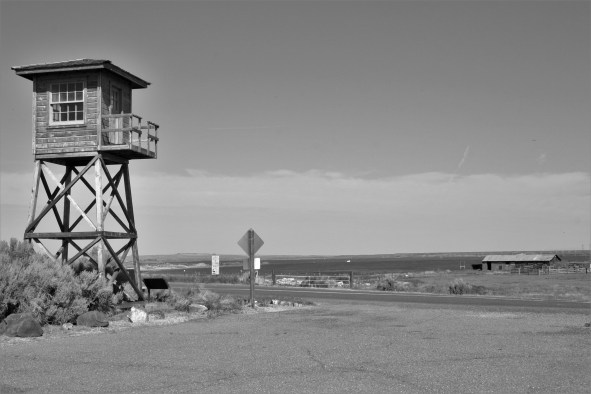
Guard TowerI’m honored to announce that I have a short story in Issue 4 of Longleaf Review, a relatively new and very cool online journal. The theme of the issue is aliens, just in time for the Halloween season, but the theme is broad. You can read my story “The International Congress for Kids Whose Dads are Commie Draft Dodgers,” among so many other great essays, stories, and poems. For me, this is one more historical fiction story, part of what I hope will amount to a manuscript for a collection. For now, though, I have a full, rich online journal to read.

-jk

Return from the Frank Church Wilderness: A Photo Essay

In the wilderness, public policy feels far away. But it has effects, eventually, inevitably. There is wildfire damage. There are species, or sometimes the lack thereof. This is the battleground for conservationism, but the conservationists spent too much of their time looking at the soil, not the sky. The air was filled with smoke one day while I was here, and the next day was clear. This place in central Idaho, this last wilderness, is a refuge, a haven. Given the failures of the environmental movement to solidify a real climate policy, or perhaps given the reactionary violence of counter-movements against environmentalism who have doomed my generation to extinction to preserve their precious branding, even public land that is preserved by the strictest laws will be affected by the inevitable. The connections cannot be felt, now, but what happens in D.C. will eventually alter the air, water, and greenery of this place. But this stretch of wilderness, unlike the rest of us who visit it, will not go without a fight. These photographs will, in ten or twenty years, be testaments to what is no longer there, not entirely. Soon, these will be photographs of spatial ghosts.


-jk

Into the Frank Church Wilderness

In a few days, I will drive south of Moscow to McCall,  hop on a bush plane at a nearby airstrip, and fly into the Frank Church Wilderness in central Idaho. There, I will spend a week writing in a cabin, in what is arguably the last stretch of land in the lower 48 that still counts as true wilderness. The cabin is connected to the Taylor Ranch research station, affiliated with the University of Idaho. For one free week, I will write, read, and reflect, all in a world without phone service and effectively no internet access. When I return to Moscow, it will be the first day of autumn, but the seasons are already rapidly turning.

This is my first writing fellowship, ever, and I’m lucky enough to have a program that sponsors such a fellowship. It will probably be my last writing fellowship, ever. I intend to make the most of it.

I won’t be completely alone. Some UI students spend a semester at the research station, and an ecocriticism professor (one who led the movement in its early days) will be there for part of the week. But I will have plenty of time to myself, to my thoughts, and hopefully to my writing, which is good, because I have had almost no time to write so far this semester.

I’m told the bears will be preparing for the winter, not hibernating (they don’t hibernate, as loyal readers will remember from an earlier post). A fellow nonfiction writer in the program who is familiar with the wilderness tells me that the area mostly has black bears, who will be filling up with wild berries (as will I).

This isn’t a vacation, but a writing opportunity. I need a direction for my thesis; I have essays to write, ideas to explore, maybe even a poem lurking somewhere. I will not be preparing for winter like the bears, but instead will be preparing for a practice thesis defense two weeks after I return (which, of course, I accidentally scheduled on my advisor’s birthday with my usual terrible timing). I’ll have a week free of teaching, classes, and other obligations. So I intend to make the most of it.

-jk


On Starting Yet Another Daybook Again

DaybookI’ve never been good at keeping journals. I’ve started many, but I leave them behind soon after starting them. I’ve tried keeping traditional journals or more work-related daybooks, and once I even tried keeping a dream journal, which was redundant because most of my dreams involved spiders or missing a deadline or sometimes missing a deadline given to me by the spiders.

I know it’s a good habit, not just for writers but for anyone with too many thoughts and too many tasks. It can be therapeutic, and a few times even was. But I’ve never managed to keep a journal for more than a few weeks, despite being a creature of habit. Last winter, I woke up at 6 every morning and exercised for half an hour, and ate the same meal every night for dinner (a can of beans with salsa and cheese). I’m good at regimentation, except when it comes to writing.

I don’t count this blog as a daybook, either, because it’s the opposite of habitual. I post inconsistently, and I have no specific topic. Last year I wrote twelve posts about the Russian Revolution between attempts at satire and wannabe McSweeney’s rants. This year I’m writing twelve posts about American history between joke recipes for smoothies and self-referential metablog posts. This blog is more like an intellectual junk drawer where everything that isn’t easily categorized finds itself one way or another.

Today, I started another daybook. I don’t know if I’ll see it through to the end of the year, but I want to write at least a paragraph every day. Maybe posting about it here will keep me in check; maybe the theme (observations about Moscow from September to May) will make it easier to write consistently. Lately, I’ve wanted to write about this weird place I now live. There’s a lot of take in, even for such a small town. Or maybe because it’s such a small town, there’s a lot to take in, just around the corners, subtle but always there.

My first entry in the daybook was about Farmers Market potatoes. Tomorrow, I hope something just as engaging will fall into my life.

-jk

Essay Published in Split Lip Magazine

highway 43 2

I’m pleased to announce that I have an essay in the August issue of Split Lip Magazine. It’s titled “Faking It,” and it’s a creative nonfiction essay about the time I sold my soul to the devil. It might be called excessively creative nonfiction.

Feel free to read it, but also check out the other work this month and in the archives. Split Lip publishes a small handful of writers each month, as opposed to many other journals who feature a lot of writers two or three times a year.

For me, this is an honor, and also a good way to kick off the semester on the first day back to work for TA training.

-jk

Will Write for Contest Fee Waivers

Cash and BooksRecently, I had a short story published in issue 20 of Prism Review, titled “The Next Best Thing.” This is good news, of course, and I’m honored to be featured in their journal. In addition to the contributor copy I received in the mail, the journal also offered monetary compensation. This was the first time in my life I have been paid for my writing. Even more exciting is that I have an essay debuting soon in an online journal that also pays its contributors. Twice this year, so far at least, I can say I’m a paid writer.

I haven’t done the math on this, but I know that what I’m been paid in writing this year will not meet or exceed what I’ve paid in reading and contest fees. I know these fees are important for literary journals to survive, and now that I’m volunteering for a literary journal in Idaho, I know how crucial these funds are. It’s standard to pay two or three dollars to submit to a journal online. In a way, it’s like gambling.

In an ideal world, the written word would be more collectively valued and publicly funded, and authors would be paid for their work, and ideally this would include journalists, reporters, and screenwriters. But this isn’t an ideal world. Instead, art is publicly devalued, journalists are called the enemy of the people, and production companies easily get away with underpaying their screenwriters.

To be clear, I didn’t go into writing for the money. If I wanted to be rich, I’d go into punditry or the gun lobby where writing fiction is valued. I’m not the kind of person who cares about, or really believes in, worshiping the bottom line or breaking even. I’m not struggling to make ends meet, but I’m still writing–and submitting–on a budget. I have to decide when to gamble and when to withhold a reading fee, and for many other writers, budgetary decisions are much more pressing.

The last thing writers and publishers need right now is to be divided over funding. Both of these things are true: publishers need to survive, and writers deserve to be paid. This is a balancing act, but it doesn’t need to be a competition. I hope I can more easily do what I can to get my writing into the world, and until then, I’ll happily balance reading fees and writing on a budget.

-jk


Another Summer, Another Syllabus

WorkingThis fall will be my third year teaching first-year composition at the college level, and my fifth time drafting my syllabus from scratch. Some instructors keep a syllabus, but so far, I’ve opted to rebuild and try something new. Fifth time’s the charm, or maybe not.

Each time I teach an introductory writing class, I have made significant changes to the syllabus, the assignments, the readings. I change the amount of points that participation is worth, because I am still redefining what qualifies as sufficient participation. Should I have more shorter assignments or just a few really long essays? How can I get students to read what is required? I’ve never believed in reading quizzes, but this year I may try them out.

I am returning to some of the standard readings I’ve used from my first semester in Nebraska, way back in Fall, 2016, during simpler, less stupid times. I will still assign Stephen King’s “What Writing Is” and show Chimamanda Ngozi Adichie’s “The Danger of a Single Story.” But I’m also adding new readings, like Tiffany Midge’s essay “Bury My Heart at Chuck E. Cheese’s” and Joy Castro’s essays “Grip” and “Getting Grip.”

Every semester is a tri-weekly exercise in trial and error, and to a degree I regret doing this to my students. I have been in classes where professors try new things and talked excitedly about their brand new syllabus, and now, after three years on the other side of the classroom, I wonder if I shouldn’t just repeat what is familiar, but I know that repeating even the most familiar trials will still result in plenty of errors. Every class is different, and within those classes are unpredictable factors.

Students might hate what I assign. They might not. Conversely, I might hate teaching something they end up loving. It’s rare that we’re all in agreement. The question is how can I teach them this lesson–that speakers struggle to connect with their audiences in the most ideal circumstances–without simply telling them it’s the case. Teaching is like writing in that showing is preferred over telling, but just like writing too, honesty is the best policy.

So, this year, I will write at the top of my syllabus “Please anticipate technical difficulties.” Extra credit to students who pay enough attention to notice it.

-jk

In Which My Grandparents Turn 90

grandparents 2.JPGIn the year 1928, my grandmother was born in Kennewick, Washington, on October 20, and my grandfather was born on July 24 in Elk Basin, Wyoming. Last week, their six children and an extensive number of grandchildren and great-grandchildren got together in/descended upon my grandparents’ house in Hamilton, Montana (approximately halfway between Kennewick and Elk Basin) to celebrate their 90th birthday in the one week in summer when most of their descendants are free between work and travel.

I’ve only been around for twenty-five of those ninety years. I don’t know much about the sixty-five years my grandparents lived before me. I’ve always known them in one place, their garden-surrounded home in Hamilton, but I’m told they traveled a lot, from Montana to Washington to Minnesota. Their house has a kind of permanence in my mind. It has always been there, and has always been theirs. It’s strange to think of my grandparents living anywhere else. But ninety years is a long time to accumulate stories.

grandparents.JPG

They were born on the eve of the Great Depression. When they were five, the Weimar Republic was dissolved. When they were 13, the US entered the Second World War. They married in 1952. At some point, family traditions began to take shape: camping, river floating, fishing, miraculously digesting Spam.

Stories about my grandparents’ lives move all over the place, and I know that any story I hear from or about them will only ever scratch the surface. I don’t know how to quantify my own quarter-century of a life. Quantification isn’t always important, though. Nobody needs to measure a life, old or young, in order to celebrate it. 90 years is a long time, and I can learn to let it meander beyond my understanding. Their lives are too varied for me to know in their entirety, and that’s a good thing. It means there will always be something new to learn, something new to unlearn as well.

They still technically have a bit of time before they officially turn 90, though, and their dedication to wild partying, as evidenced in the weekend-long get-together, puts my own youthful spunk to shame. I have a lot to learn.

-jk