
 I found out recently that bears do not, as I had previously believed, hibernate. Now my whole world is thrown into chaos.
I’ve been thinking about bears a lot lately. I took a short trip to Montana last weekend to visit my grandparents, and though I didn’t see any bears, the few I have seen crossing the road, if my memory is correct, have been in Montana. I passed the University of Montana, whose mascot is the Grizzly, and was saddened to discover that they will likely be cutting many of their programs, including English. My grandfather and my father both have pointed out to me it’s a good thing I didn’t get accepted into UM because of their financial issues. I could have been a Grizzly, but in the long run it’s better that I’m not.
Biologically speaking, I am not a bear, but I share a few characteristics: I have a special affinity for honey and berries, I possess a quantity of brownish unruly fuzz, and I require a lot of alone time. Also, I like to stand in front of a river and wait for fish to jump into my open, gaping jaw, but who doesn’t? Most importantly, I have always appreciated bears because they hibernate, or so I thought. I, too, have always thought of myself as hibernating, but if I was wrong about bears, I might be wrong about myself.
Hibernation is absolute isolation. Other species hibernate because they literally sleep the entire winter, clicking off their other functions to preserve heat and energy. Bears, on the other hand, wake up periodically during the winter months to leave their dens. During winter, they stay in their dens with stored energy and warmth, but move about to replenish their needs, but only sometimes, when it’s necessary. Bears don’t hibernate; they’re just introverted.
It’s unlikely that bears clack away on a typewriter during winter, crescent moon glasses on their large wet bear noses as they squint their bear eyes at their bear memoir (beamoir) while taking a sip of mead and then glancing out of their den to contemplate the complexities and horrors of being alive. But if they did, I would sympathize.
It was cold and rainy and almost snowing when I drove six hours to Montana through sloping mountain passes, driving past and in some cases over small secluded towns in the forests. I rarely leave the Palouse, or Moscow, or my apartment. I prefer long periods of seclusion storing energy, writing, digesting berries and honey and whatnot. But apparently, this is not hibernation. Even in summer, I burrow away to write and read. It’s more like conservation, if anything.
Now that the weather in Moscow has finally become consistently warmer, I cannot justify staying inside my den all day. In some respects, I don’t want to. This has been the longest winter I have experienced in quite a while. It has been brutally windy, unpredictably cold, overwhelmingly sunless. It has become easy to stay inside my apartment in isolation, because going anywhere requires preparation, even on good days. For me, I’m realizing, this is true in other circumstances. But it’s comforting to know that what I do is not hibernation. I don’t vanish, I’m just resourceful.
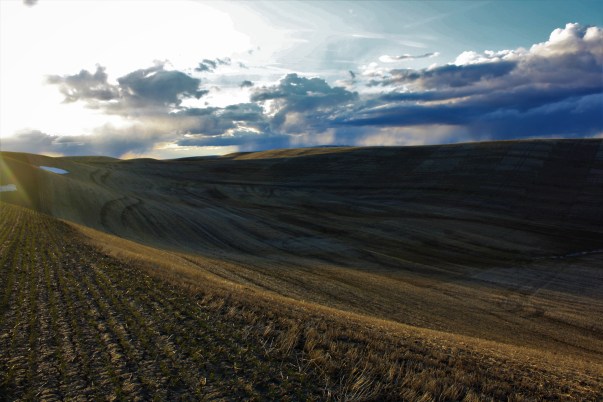
The road to Montana was clear and almost completely empty in the early morning. Low storm clouds obscured some of the mountaintops and dark green forests along the road. It was cold, but not violently so, and the clouds slipped away when I reached my grandparents’ house in the Bitterroot Valley. It was almost warm during the weekend excursion. As a break, it was even almost enough.
-jk
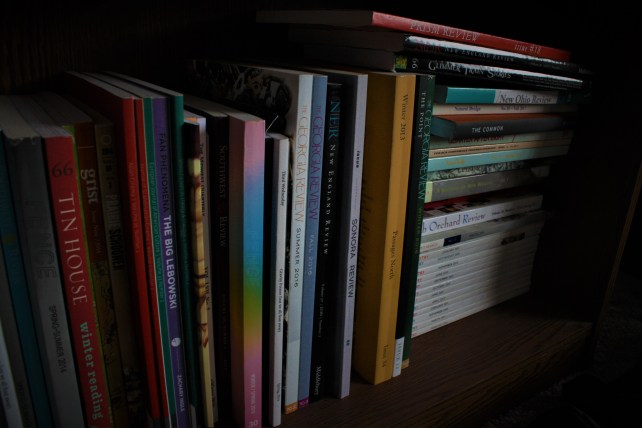
 I’m pleased to announce that I have a poem in an anthology titled
  At least 30 percent of creative nonfiction is devoted to reflecting on etymology. We examine the words we use everyday. Fruit, from the Latin frui, meaning to enjoy; paragraph, from the middle French for stroke, as in a painting; field, from the German Feld, for open country; language, from the Latin lingua for tongue. The trend in nonfiction is to meditate on the the roots of our language to explore its deeper, older meaning.
 This year, I will not be attending the AWP conference in Tampa. I will not receive a tote bag, nor will I peruse the book fair and return with conference swag like pins or bookmarks or back copies of cool literary magazines. I will not hear any talented writers read their work, nor will I go to a poetry slam or watch creative writing professors dance awkwardly, nor will I hit up any local bars and wake up too hungover to attend the panel I’m supposed to present at, and when I don’t have time, I certainly won’t visit the many tourist attractions and restaurants that probably exist somewhere in Tampa, possibly.

 I have a bad habit of leaving places without saying goodbye first. I recognize that many consider it rude, but I know I’m not alone in this habit. We have multiple terms for it: the Irish goodbye, the French leave, ghosting. I promise I’m not being rude. This social practice is more common than you’d think.
 For me, writing is a practice. More than a hobby, writing is a profession, though I’ve never been paid for it. Writing is work that I enjoy, but it’s not labor. It’s production, but not a job.
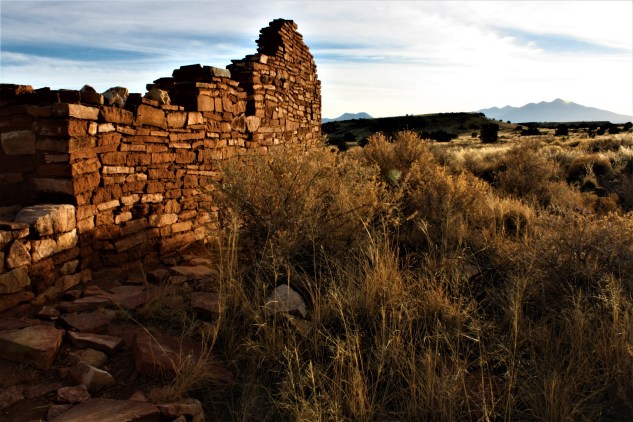
 My plan for the break was to take a bus from Spokane to Missoula, and get a ride from there to Hamilton, Montana, to visit my grandparents, then travel to Arizona with my parents. To make a short story shorter, the bus was delayed, and now I’m stuck in Spokane for the night. I will depart in the morning, I hope.
 There wasn’t much going on at the Spokane International Airport. Its two runways did not seem busy yesterday as I navigated the rigid airport security system. I diligently took off my shoes, placed my laptop in its own plastic tub, and placed my sparsely packed backpack in another tub. Shoeless, coatless, without my glasses and a little sleepy, I went through security. Past the body scan, I then waited as a TSA agent rummaged through my backpack.
 Keene Short