Tag Archives: academia

Graduate School, Season Two

teapotAmong the many things coming this Fall is the second season of me being in Graduate School. This next year looks promising, and I’m looking forward to the goofy Nebraska antics, the creative writing classes I’ll be taking, and finally teaching a class on my own.

I hope the next year of Graduate School corrects some of the mistakes of last season. For example, the protagonist last year came off as exceedingly pretentious, especially in his attitude toward the setting. The protagonist spent too much time complaining about the Midwest, and while the “missing home narrative” was compelling, it got old quickly. I for one hope the main character does more than sit around making bad jokes about the prairies.

The next season will most likely see more of the main character trying to get published, and the audience will enjoy the conflict between devotion to graduate studies versus the effort it takes to write, read, submit, and convince literary magazines to publish his work. Many of last season’s episodes focused on various low-stakes self-contained stories that take place in the protagonist’s apartment or the English department, which is why I hope Graduate School will venture out a little more this season. As a show with a whole city for a setting, it’s strange that so much of it uses only two interior buildings to shoot in.

The show has many strange components: the romance plots are all backstory, the drama is all internal, there’s very little dialogue, and the protagonist doesn’t seem to have changed in the first season, at least not in ways the audience would hope for. Where’s his arc?

The real question is whether or not Graduate School will go on for a third season, or if the show will wrap up with the protagonist just getting a Master’s Degree and stopping his college pursuits after that. Future years of Graduate School could be quite worthwhile, but without major character development, this could be Graduate School’s last year. In any case, I look forward to the season premier, and I hope the coming year will be, at the very least, entertaining.

-jk

The Nine Circles of Term Paper Writing

College students across the country are about to walk through hell, a hell of term papers and cramming and source-hunting. Many of you will not make it, but all of you can expect to pass through several of the dreaded Nine Circles of Term Paper Writing.

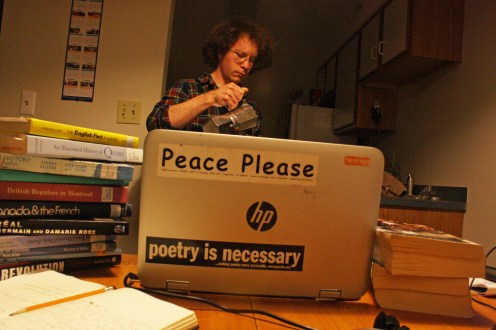
First is Limbo, otherwise known as procrastination. This is where most of you will die. Limbo is where you need fifteen cups of coffee before even looking at your sources, where you are forever logged into facebook no matter how hard you try to leave. It’s a place of endless scrolling, a place where the due date at the end of the tunnel is miles away. It takes a concentrated effort to work through this circle.
2

After sitting down to start, you will find yourself in Lust. Now you have a thesis that you want to prove, and it becomes an obsession. You really, really want to prove this wonderful thesis of yours. You want to prove it until the sun comes up. Maybe you want to write a postpostmodern analysis of the presidential race, or argue that Plato was just a whale’s intestine and Aristophanes actually wrote all his works. Whatever it is, it will consume you, no matter how ridiculous.

3

Moving on from Lust, you will find yourself in Gluttony. Here you will quench your desire to prove your thesis by binging on the various amenities college life offers: ramen noodles and your RA’s stash of confiscated alcohol. Gluttony tends to resurface throughout the rest of your journey.

4

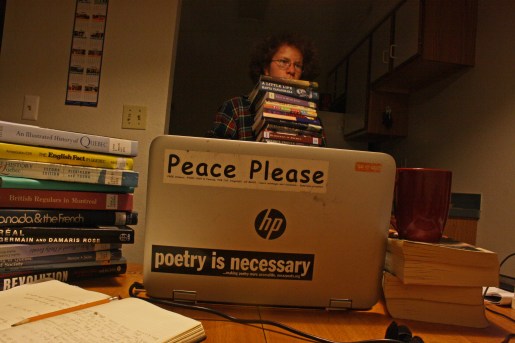
Next comes Greed. Filled with calories and “inspired” by Rick the RA’s vodka, you will push yourself to secure more sources than needed. Your paper is on the American Revolution, but you will find a way to incorporate Mad Max into it. Or your paper is on Mad Max, and you just need the perfect Plato quote for the intro. If the sources and vodka don’t kill you, unless you revise extensively, your professors might.
5

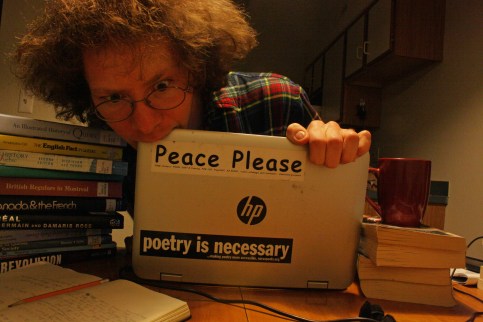
Sobering up a bit, you will find yourself in Anger. In this circle, you are taunted by your computer screen showing that after three hours of work, you put your name as the title, misspelled the date, and have written nothing else. Filled with rage and sudden hunger, you will seek satisfaction by insulting your roommate who wrote his final papers last week like a total jerk.
6

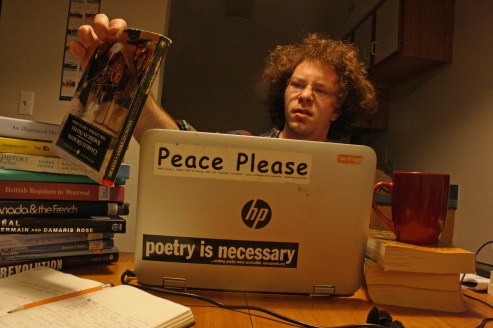
Soon, you will find yourself passing through Heresy. Here, you begin to question things: the due date on the syllabus, the current day of the month, whether or not you need to pass this class. You even find yourself questioning petty things, like whether or not the nineteenth century even happened in the first place (it didn’t).
7

Failing to arrive at sufficient answers, you will move on to Violence. This circle will last only briefly, and if it doesn’t, your jerk roommate will bring Rick the RA in, and you’ll have to apologize and watch that jerk return to his video games while Rick cuts you off from the vodka like the dingo’s bladder he is.

8

Next comes Fraud. Seriously, run through this circle. Sprint through it. Fraud is perfectly acceptable in other circumstances, such as politics, banking, military spending, the EPA, trade regulations, local/state/federal elections, corporate taxes, government surveillance, international gambling rings, working as an RA in a dorm, and even important places like twitter, but it is not acceptable in an academic paper, so just move on to the next circle.
9

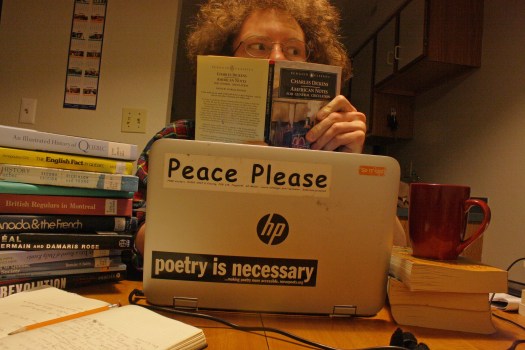
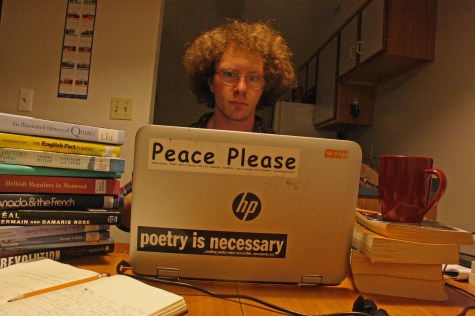
Finally, you will come to Treachery. By now you have a paragraph of rewritten thesis statements that somehow ended up in second-person plural. You remove every instance of “all ya’ll” from your intro and realize that your problems all started with procrastination. This is where you realize that you have betrayed yourself by putting off this paper for so long. Maybe you spent too much time blogging and taking stupid pictures of yourself for your blog. Who knows? Whatever the case, you have procrastinated yourself into a hole, and procrastination is a terrible way to climb back out. So you slap yourself in the face and focus all your attention on one valiant goal: a high C. After this, you vow to never procrastinate so much again, just like last semester. But this time it’s for real.
10

To my fellow academics, happy End of the Semester. Now stop wasting time reading this and get back to work.

-jk

Reflections on a First Semester in Grad School

AcademyI’m twenty-five percent of the way finished with my Master’s Degree in English at the University of Nebraska-Lincoln. Most of what I’ve encountered is unsurprising: the workload is tough, the Midwest is flat. However, there are certain things I’ve learned, perhaps unique to my own situation, that I wish I’d known earlier this summer.

  1. Maturity is a state of mind. I’m the youngest person I’ve met in the creative writing segment of my department, and I’m often made to feel like a little kid, like I don’t quite belong, among the adults (at least among most of the writers I’ve met). Many are PhD students with an MFA or an MA. In truth, I don’t quite fit in with most of the other writers stylistically, humorously, or aesthetically. Both my writing and self are plain weird, and I’m surrounded by tradition and formality. I don’t want to sacrifice my identity to fit in, though. I’d rather be a transplanted weirdo in the Midwest than a converted Midwesterner. Growing up isn’t about leaving behind parts of myself that don’t meet others’ expectations; it’s about maintaining myself in increasingly diverse and challenging situations.
  2. Discussions of craft are not as important as craft itself. Every discussion of craft I’ve had so far consists of an extensive mythology of what other writers did to keep themselves writing, followed by the refrain, do what works for you; coffee, rum, fishing in the Missouri River, whatever will help crank out a daily three to four pages. My own method involves writing for those who inspire me, unhealthy amounts of caffeine, and hikes in nature (which I’ve yet to find near Lincoln).
  3. Nothing is more important than the writing. I came to graduate school to write, and to publish, and to understand literature and improve myself intellectually, but my primary goal is to crank out three to four pages a day, no matter what.
  4. Friendship is more important than the writing. Friends are increasingly hard to come by the higher I climb into academia. Allies are nice, but the few friends I’ve made are crucial to my survival. Without them, I’d have no support for my experimentation. Plus, writing can be lonely, and being cooped up all day is a good way to get cabin fever.
  5. Contradictions are okay (and inevitable). Graduate life, much like undergraduate life, is complex and full of numerous contradictions. Some are basic: a free ride still requires one thousand dollars of student fees per semester. Some are more complex: writing depends upon time and inspiration, but inspiration usually comes from things requiring time not spent writing (loved ones, caffeine, hiking). Fortunately, I now have the benefit of knowing exactly what I need to survive the next seventy-five percent of my degree: writing, friends, coffee, a place to hike, more confidence in my weirdness, and a few more publications would be tolerable, I suppose.

Look out, 2016, here I come.

-jk

After Two Years of Blogging, Your Guess is Still as Good as Mine

toastWordPress reminded me that today is my two-year blogiversary. I missed last year’s for the obvious reasons (grad school applications, Macbeth, mud wrestling, etc.). Today, though, I slide two years into the past when I was surrounded by the mess of my education: Beloved, essays on the Holocaust, a textbook on linguistics, The Outlaw Bible of American Poetry, and drafts of my own poetry. The liberal arts defined my life, but lacked definition; in a confused fervor I wrote my first blog post asking simply, why get a liberal education in the first place?

Two years have gone by. I created this blog to explore the liberal arts generally, the life of a wannabe writer specifically. At varying times, it has served as an open journal, editorial, bully pulpit, and archive of my writing. I started out posting short vignettes satirizing myself as a freshman, but moved on to better creative writing, philosophy, travelogues, history, and humor. If my blog feels eclectic, it’s only because my brain is eclectic. I move rapidly from Steinbeck to colonial Egypt to writing a short story. This blog is one part journal, one part art, and one part scholarship, with three extra parts marked “miscellaneous.” I strive to make sure no two posts are alike, which may be a bad idea when blogging is supposed to be about consistency and ritual, two qualities I lack.

I’ve explored numerous moments in my life on this blog: I mourned Pete Seeger, challenged myself to write a poem every day each April, founded a photography business, announced publications, had breakfast in Ireland, lunch in Jerome, dinner in Wisconsin, went to my first big fancy writing conference, broke up with my hometown of twenty years for graduate school in Nebraska.

For the most part, though, I’ve read, and written about what I read, and read what others wrote about what I wrote about what I read. An endless reading list is the bedrock of any good liberal education.

Liberal Education

On this blog, I’ve also reached many half-baked conclusions, but one thing has remained clear post after post: a good liberal education is worthless if it stays inside the classroom. Sitting around reading and writing is no way to be a writer, if it’s all I do. I have to experiment with baking or acting, work for a charity, travel, read for a literary journal. I should traverse the gridlock of cities, the innards of bars, the vast organs of campsites. My blog may be ineffectively unconventional; the only binding theme is the continual mess of my lifelong education and my desire to be a writer. But I know blogging has made me a better writer, a more considerate reader, a more confident thinker. It’s been an eclectic two years. I hope the next two will be even more eclectic.

jk

Why a liberal education? Your guess is as good as mine, and I mean that. If you’re engaged in the liberal arts, especially outside of academia, let me know in the comments what you study or write or create, and why.

-jk

Big League Academia

New WriterTwo months into my first year of graduate school, I think I’ve finally started to settle in. The workload is not beyond my management (I somehow function better with less sleep), the faculty are just as thoughtful and thought-provoking, and my descent deeper into the cult of academia is going smoothly; soon, I’m told, I’ll be a card-carrying postmodernist. The support my writing receives is frequent, and the possibility of a writing career is even starting to take shape.

For example, this past week I had the opportunity to meet with two agents and two editors, to have them critique a section of my novel-in-progress and discuss the publishing industry. They told me what they liked about the short section, offered insights, made revision suggestions, and allowed me to see the project in grander terms. I learned that when I eventually get an agent and editor, publishing becomes a collaborative effort, a group project. They offered to stay in contact when I have a polished draft. Suddenly, the fantasy of publication no longer feels so impossible.

Is this it? Is this the next step for my writing? Or is this just the next phase in my hike up the ranks into academia? I ask myself this question because I’m surrounded by people who have it figured out already. I’m surrounded by serious academics, doctoral students devoting years to studying, students fulfilling long-term plans. Many of them took a break after college to figure out the rest of their lives, get married, travel, go on adventures, experience things they can then write about. And here I am, fresh out of my undergraduate career.

Am I here because I want to be a writer, or because I want to be an academic? I feel like a kid who doesn’t yet know what he wants to be when he grows up, and time is running out. Do I teach? Get a PhD? Another MA? An MFA? Is there life after publication? Or should I let my ambitions dictate my future? Tired of studying tragedy but never taking that study out of the classroom, I still want to join a charity, volunteer in a hospital in Palestine or Afghanistan or Jordan, or work on an organic farm in Chile or Brazil. I want to see the world, because I know if I stay in the confines of an English Department, I’ll run out of things to write about.

I’m still just a kid, academically speaking, and I’m surrounded by intellectual adults. I can’t count the number of times I’ve been asked about my PhD, as if that’s the only end in sight, and I can’t count the number of times I’ve silently shrugged and changed the subject. I only have until next fall to figure it out, though. Do I become a career academic? Teach? Work? Let me know in the comments your own thoughts or plans.

-jk

Once Upon a Time, Graduation Meant Something

Empty It finally happened. I graduated. I shook hands with the Dean of Arts and Letters and some of my favorite literature professors, and was handed a fancy diploma case for after the real one arrives in the mail. I went through the whole ritual, but when I left the Skydome amidst Flagstaff’s annual early-May snowstorm, I felt about as empty as the diploma case they gave me.

Most of my friends and family expect graduation to be a time of great joy, relief, sadness, and memory. I reflected on many things, but I tend to be reflective in general. For me, graduation offered no profundity. It was a mess of finding the right place, shaking the right hands, and enduring vague speeches about the future. Walking onto stage, having my name (and other information) announced, and receiving a diploma case should have been meaningful experiences, but I couldn’t keep myself from thinking that it was all a show.

Commencement was a self-congratulatory performance for the university, and the profiteering involved in the current education system was not only evident but ever-present. All students were required to have a cap and gown to participate in commencement, and the only way to obtain them, short of cheating and borrowing them from a friend, is to purchase them from a company; I was among those who cheated. After receiving an empty diploma case, students were ushered into two photo shoots. I was literally pulled into position, but I cannot get any of the photos taken unless I spend more money to purchase them. The commencement speeches had nothing to do with any of our own problems, our crippling student debts, an unnavigable job market, a scary world with an even scarier future. Instead, the speeches were about the university’s accomplishments, its growth and benefits, all at our expense.

College is no longer about advancing art and science and law; it’s become a business for the corporations benefiting from the on-campus dining, the corporations who make and sell caps and gowns, the construction companies profiting on new buildings the school can’t afford without cutting valuable tutoring and learning initiative programs. Education is one of the most important assets of the modern world, but the education system has become a method of exploitation.

All through commencement, I felt exploited. That’s not to suggest I did not receive an adequate education. Indeed, my professors exceeded my expectations, and they’ve changed me immeasurably. But college, as a system, profits regardless of anybody’s intellectual, scientific, artistic, political, technical, or social improvement. Instead, it encourages us to bankrupt ourselves so it can grow. In the end, NAU’s leaders do not care whether or not I graduate; they care about getting my money, and that realization hurts. I’m fortunate to have worked with professors who sincerely value their students’ collective improvement, to the point that they run themselves into the ground physically and emotionally by the end of each semester just to help us. But NAU, and the modern college-industrial complex, has done little, if anything, to contribute to its students’ intellectual improvements. I owe nothing to my university, but I do not blame it. This is a national pattern, and all of us are caught up in it. How long will it last? How long can it last before students realize that they are on a conveyer belt for the profit of private firms with no investment in literature, law, environmental science, political science, understanding globalization, or the development of compassion?

And now I’m going to pursue a graduate degree at the University of Nebraska-Lincoln. Now I’m plunging myself back into the factory.

Am I wrong about all this? Is it not the case that my friends have been placed on a conveyer belt for the past four years? For the next fifteen? Will the education system ever be returned to the hands of the educators and not the businesses? In a perfect world, the students gain more from a four-year program than the university they attend; we’ll never make it to a perfect world, but I think we deserve more than we’ve been given. We are more than crops with full pockets to harvest from. We are more than fruit to be drained and dried. We are scared, we are angry, we are curious, and we seek understanding. We are passionate and seek the means to express. We are knowledgeable and seek to use our knowledge. We deserve to be treated honestly about what we’ve been given, what we can do, and where we are going. Although I’m disappointed in my graduation, my university, and my country for voting the universities into such positions, I’m far from disheartened. Behind the curtain and the profiteering are professors who still work hard to teach and improve us. It is because of these professors that I have the means to express my discontent, and it is only through these means that I see any possibility for change.

-jk