
 In contemporary American discourse, the ways we talk about Islam and the Muslim world tend to be limited. The phrase “Middle East” has become synonymous with Islam in the American imagination. In recent years, the self-proclaimed “Islamic State” has dominated western discourse about a large and malleable region of the world, but the concept of an Islamic state has appeared in numerous other historical moments, warranting a more nuanced understanding of the phrase.
Edward Said points out that “before the sudden OPEC price rises in early 1974, ‘Islam’ as such scarcely figured either in the culture or the media. One saw and heard of Arabs and Iranians, of Pakistanis and Turks, rarely of Muslims” (36). Discussions of nationality and ethnicity were practical for American discourse. Economically and politically, American discourse began homogenizing these polities under one overarching category: Islam. Oil price changes, revolutions in Iran, protests in India, and socialism in Afghanistan in the 1970s and 1980s slipped away as Americans perceived dozens of countries as simply “The Middle East.”
The concept of the Islamic World actually has its roots in Medieval Islamic thought as the dar al-Islam, or the abode of Islam, which was a (most likely idealized) view of the Medieval world in which a Muslim could move freely throughout regions with Muslim rulers, ranging from Spain to the borders of China. The dar al-Islam was not a state, but a conceptualization of territories.
An older article in The Atlantic defined a Caliphate as “an Islamic State,” which is a historically insufficient definition.Nation-states emerged in Europe as a result of geographic borders solidified by absolutist monarchs who dictated what qualified as citizenship, namely religion, taxation policy, and loyalty to the crown. As European nations and colonies swept aside absolutism and attempted to create secular liberal republics, the concept of the state as a geographic fence with a common language and fiscal arrangement remained the same: a homogeneous block of identity.
Thomas Barfield calls this the American Cheese model of statehood, and uses Swiss Cheese as a metaphor for premodern regions of Central Asia such as Afghanistan (Barfield 67). Rather than a solid block, polities were porous, malleable, and not always ruled through and through by a dominant king or ideology. This is true, I think, of what most Americans call the Middle East. It is largely Islamic, but it is far from homogeneous. The relationship between citizen and state often differs from the easy system many Americans paint onto the world, trying to mark which populations are with us or against us. The U.S. and Pakistan share more in common historically, as republics formed from anti-British/anti-colonial independence movements, yet the U.S. has a better working relationship with Saudi Arabia, an oppressive regime that likes to bomb its neighbors and censor its people. (Maybe the U.S. has more in common with Saudi Arabia than I’d thought).
Likewise, the Caliphate did not function the way we often think state-religion relationships function today. The nineteenth century Egyptian reformer Muhammad ‘Abduh wrote that Muslims never experienced “something that resembled the power wielded by the Papacy of Europe, nor were they ever exposed to a Pope-like figure who could and did exert power to remove Kings and banish princes, extract taxes and decree Divine laws” (Haj 93). Writing from the 1900s, his statement was true. Caliphs were not believed to rule the way Popes and monarchs claimed to, as infallible and acting as spokespeople of God to his otherwise hapless subjects. This is not to say that Caliphal rule was always just, but suggests that religion and state in the Islamic world grew up functioning alongside one another, but never competing with one another for control.
For most of Islam’s history, the initial Caliphate “remained head of the umma [community of believers] and a symbol of Muslim unity” but “would represent the administrative and executive interests of Islam while the scholars and Sufis defined Islamic religious belief” (Lapidus 102), and even that diminished as the Caliphate moved around, ending up in the Ottoman Empire where, after World War One, it was officially abolished. Smaller caliphates appeared every so often, but the use of the phrase “Islamic state” to describe a caliphate is too simplistic, because for much of history the Caliphate represented the separation of Islamic doctrine from political administration, at least in theory.
As such, the concept of a secular state grew up differently than it did in the west, perhaps with a greater dissonance. A single glance at the United States today, which passes laws about abortion based on religiously inspired magical definitions of personhood, suggests that we have yet to actually implement the separation of church and state.
Depending upon what is convenient for media and politicians, the Middle East contains parts of Africa, the Arab world, and Central Asia. If used literally, the Muslim World should be expanded to include China, Russia, the Caucasus, Southeast Asia, the Balkans, and regions of the Western Hemisphere where African Muslims were forcibly shipped during the Atlantic slave trade. The majority of the world’s Muslims are in Indonesia, not western Asia. The Islamic World is neither unified nor homogeneous, and instead encompasses a broad spectrum of religious, philosophical, and political discourses.
When Americans talk about the Islamic world, they typically think only of the Arab world plus Iran, because, as Said points out, it became convenient for Americans to think of themselves as persecuted by a collective polity (Islam) during the 1970s and 1980s. Violent extremists exist within a unique historical context; their crimes are not justified by that history, but they should nevertheless be understood as stemming from particular origins. It is neither useful nor intelligent to homogenize one billion people. States are intrinsically porous and malleable; Americans should recognize that this applies to the U.S. as well as the rest of the world.
Barfield, Thomas. Afghanistan. Princeton University Press, 2010.
Haj, Samira. Reconfiguring Islamic Tradition. Stanford University Press, 2009.
Lapidus, Ira. A History of Islamic Societies. Cambridge University Press, 2002.
Said, Edward. Covering Islam. Random House Vintage, 1997.
 The last time I wrote anything for NaNoWriMo this year was November 8. After November 9, I mysteriously lost interest in a genre-bending crime-western about four elderly women who witness a murder and can only recall the gritty details of a bad acid trip they had together in their college days in the late 1960s.
 November 1 kicked off the beginning of National Novel Writing Month, or NaNoWriMo, the long-standing tradition in which writers and readers alike decide to write a novel (or 50,000 words at least) during the month of November. The idea isn’t to have a novel finished by December 1, but to have written enough of a first draft of a novel (or memoir or novella even) to build on during the next year, something to return to and tinker with at a more casual, realistic pace.
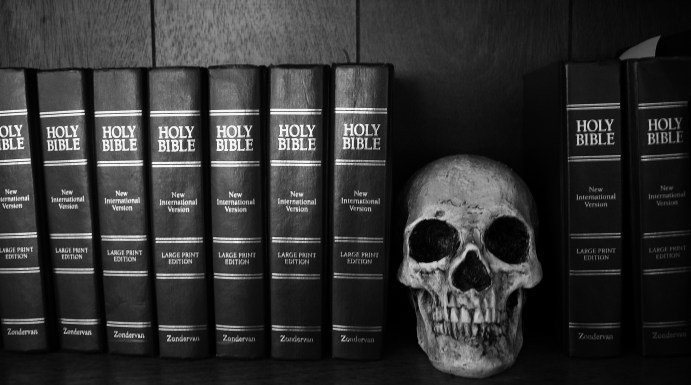
 Stephen King once suggested that aspiring writers carve out time to write every single day, which probably works for wealthy retired people like him. For the rest of us proles trying to be writers, carving out time to write can be a challenge. There are, however, numerous ways one can make time to write.
 I can’t tell you why I enjoy autumn as much as I do. Apart from the many holidays and the associated consumerism, I enjoy the aesthetic this time of year imposes on parts of the country. In my hometown of Flagstaff, AZ, the leaves on the aspen trees turn whole sides of Mount Elden a new, shocked shade of yellow. In my new home in Lincoln, NE, the season is just as magnificent, minus the mountain. It’s darker and windier every morning as I walk to campus. The nights are cool and toasty.
 For almost a week, there has been an argument above me. I don’t know who is living in the apartment above mine, but it sounds like their fight has lasted days. As the drama unfolds, I stay where I am. Doors slam as I brush my teeth. Feet stomp over my kitchen as I wonder if my pasta is still too crunchy. I hear voices in rapid succession, back and forth, back and forth. I stay where I am, as if I’m living underneath a stage during rehearsals for a three-act play. I don’t know the story, and I never will.
 You sit down at your desk awaiting students with questions. Some have already sent you emails with one concern or another; they have questions and it’s your job to answer them in office hours. So you wait.