

“Maybe 1978 was the year the 1960s ended and the 1980s began. Maybe there were no 1970s.” -Rebecca Solnit, The Encyclopedia of Trouble and Spaciousness
My generation talks about Portland, Oregon, the way my parents’ generation talked about California in the 1960s, in that supposedly magical decade when Haight-Ashbury was for free-thinkers and runaways and Hollywood was a place of romance rather than violence, a place of paradise, freedom, and escapism, or at least just a place to escape to.
For a lot of us born in the 1990s, I think, the Pacific Northwest is still seen as a kind of paradise. I know a dozen people who went to Portland after graduating from college or instead of college, and I know more who talk about going there sometime in the future. In the American West, I think, many of us see it as the only remaining authentic counter-cultural scene, now that Seattle has been corrupted by Amazon and Boeing. It’s paradise, and like California before the cults and murders, this reputation is equally earned and exaggerated.
I will admit that, when I visited last week, I was struck by this city, by its oblique beauty and opaque optimism. But I’m also ambivalent. It’s not romantic to me, but familiar. It’s just like being back home in Flagstaff, Arizona in all the best and worst ways, because it’s a tourist destination, which means that what is visible to the visitor is only one side of the stage the city wants to present. Tourists never peek behind the curtain to see the other city inside the city, or rather, they do, constantly, but choose to ignore anything that disrupts the sense of paradise, the escapism that tourism is built on, a centuries-old colonial logic that treats any visited people or place as a cultural buffet. I recognize the theatricality, the performativity. I lived for two decades as a local in Flagstaff, on the side of town the tourists never go to.
Gentrification is to tourism as imperialism is to capitalism, in which those with economic power, in a given city’s financial Center, invade a marginalized community or neighborhood, buy out its necessary businesses (laundromats, corner stores, diners), and replace them with yuppy businesses that those in the community cannot afford, forcing them to look elsewhere for laundry or food. Meanwhile, the gentry have a new colony in a part of town with cheap rent from which to sell artisinal donuts to wealthy newcomers, or to all the tourists.
I went to Portland as a tourist—as the gentry, as the colonist—for the annual AWP conference. 15,000 writers and publishers descended on the City of Roses to network and share journals and thoughts and their creative work. To be clear, this conference was productive for publishers, writers, for a variety of literary communities, and for me personally as well as professionally. But like all conferences, it came at the expense of the environment and the local community.
Portland is a strange place because it simultaneously compels me to want to be more compassionate to others, while also reminding me how insufficient compassion is, despite its urgency, despite its necessity.
But I see the appeal of the dream here, too. I see why my friends relocated to this gritty, green, rusting city, this place of wondrous contradiction, where the river pushes past the streets and Mount Hood is always watching over the mossy brown cacophony of the landscape, the patches of cherry blossom trees, the network of trains and the bicyclists and the sense of cheerful nihilism. I want to be a part of this scene. I want to fit in here. I do fit in here, feel a kinship with the sense of possibility, the sense of communal towardness to one another, despite the likeliness that this sense is more a product of my 1990s imagination, driven by Twin Peaks and The X-Files. But, like any glorified past, maybe there were no 1990s.
Portland is no paradise—I’m not naïve; I grew up in a city that people from Phoenix called utopic when they came to ski and drink while my friends on the other side of the tracks dealt with floods, fires, and catastrophic rent hikes. But still: I’ve always felt out-of-place until coming to Portland, where I felt like it didn’t matter if I was a tourist or a local, as if the difference dissolved and waking up in Portland felt like deja vu, but in a good way, like delirium. A tourist seals this feeling up for himself, like a trinket; what can I do, instead, to fight for a world in which this sense of immediate community, this impulse toward affinity despite factual difference, is common for everyone else?
-jk


 My plan for the break was to take a bus from Spokane to Missoula, and get a ride from there to Hamilton, Montana, to visit my grandparents, then travel to Arizona with my parents. To make a short story shorter, the bus was delayed, and now I’m stuck in Spokane for the night. I will depart in the morning, I hope.
 “I suppose our capacity for self-delusion is boundless. I knew very well that I rarely make notes, and if I do I either lose them or can’t read them. I also knew from thirty years of my profession that I cannot write hot on an event. It has to ferment.” –John Steinbeck, Travels With Charlie
 This week, I had the pleasure of joining one of my best
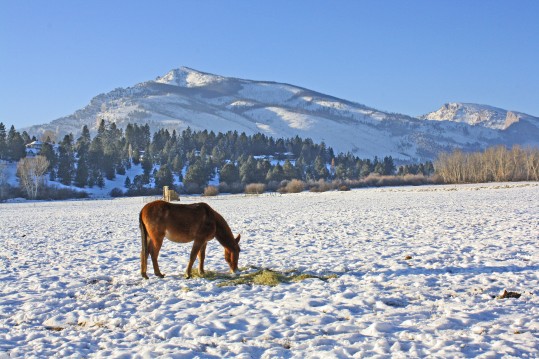
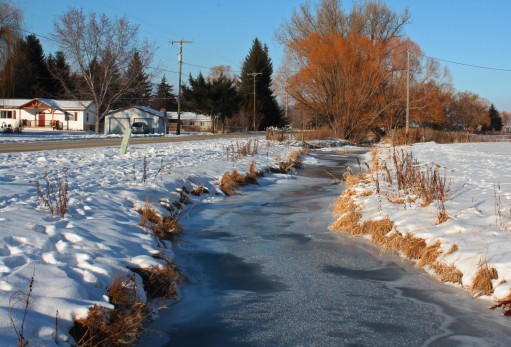


 Yesterday afternoon, I crawled off the California Zephyr after spending sixteen hours next to a window watching snowy mountains go by as I sat alone with a good book (Chang-Rae Lee’s Native Speaker), some new music on my iPod (Bombay Bicycle Club), and laptop to write short stories (Sci-Fi and Cli-Fi, with very little Wi-Fi). I was completely alone, standing up only to stretch and get coffee from the service car. It was spectacular.


 Keene Short