

In a few days, I will drive south of Moscow to McCall, hop on a bush plane at a nearby airstrip, and fly into the Frank Church Wilderness in central Idaho. There, I will spend a week writing in a cabin, in what is arguably the last stretch of land in the lower 48 that still counts as true wilderness. The cabin is connected to the Taylor Ranch research station, affiliated with the University of Idaho. For one free week, I will write, read, and reflect, all in a world without phone service and effectively no internet access. When I return to Moscow, it will be the first day of autumn, but the seasons are already rapidly turning.
This is my first writing fellowship, ever, and I’m lucky enough to have a program that sponsors such a fellowship. It will probably be my last writing fellowship, ever. I intend to make the most of it.
I won’t be completely alone. Some UI students spend a semester at the research station, and an ecocriticism professor (one who led the movement in its early days) will be there for part of the week. But I will have plenty of time to myself, to my thoughts, and hopefully to my writing, which is good, because I have had almost no time to write so far this semester.
I’m told the bears will be preparing for the winter, not hibernating (they don’t hibernate, as loyal readers will remember from an earlier post). A fellow nonfiction writer in the program who is familiar with the wilderness tells me that the area mostly has black bears, who will be filling up with wild berries (as will I).
This isn’t a vacation, but a writing opportunity. I need a direction for my thesis; I have essays to write, ideas to explore, maybe even a poem lurking somewhere. I will not be preparing for winter like the bears, but instead will be preparing for a practice thesis defense two weeks after I return (which, of course, I accidentally scheduled on my advisor’s birthday with my usual terrible timing). I’ll have a week free of teaching, classes, and other obligations. So I intend to make the most of it.
-jk
 I’ve never been good at keeping journals. I’ve started many, but I leave them behind soon after starting them. I’ve tried keeping traditional journals or more work-related daybooks, and once I even tried keeping a dream journal, which was redundant because most of my dreams involved spiders or missing a deadline or sometimes missing a deadline given to me by the spiders.
 Recently, I had a short story published in issue 20 of
  In the year 1928, my grandmother was born in Kennewick, Washington, on October 20, and my grandfather was born on July 24 in Elk Basin, Wyoming. Last week, their six children and an extensive number of grandchildren and great-grandchildren got together in/descended upon my grandparents’ house in Hamilton, Montana (approximately halfway between Kennewick and Elk Basin) to celebrate their 90th birthday in the one week in summer when most of their descendants are free between work and travel.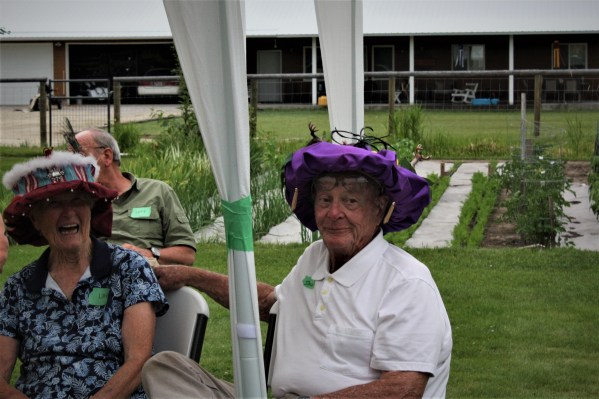
 “Commensalism or mutual benefit is a constitutive premise of housesitting, or maybe an enabling fiction. The housesitter is apt to recognize the opportunity as a private windfall, and the pleasure is tandem: first in his own dis-habituation, and then in the adoption of a new readymade home, a vacated life to try on. With the extra keys on his chain, the housesitter leaves work on a different train or by a new road, becomes a local in the café or dogpark, creates or stars in fantasies grown out of his new neighbors’ notice.”
 I found out recently that bears do not, as I had previously believed, hibernate. Now my whole world is thrown into chaos.
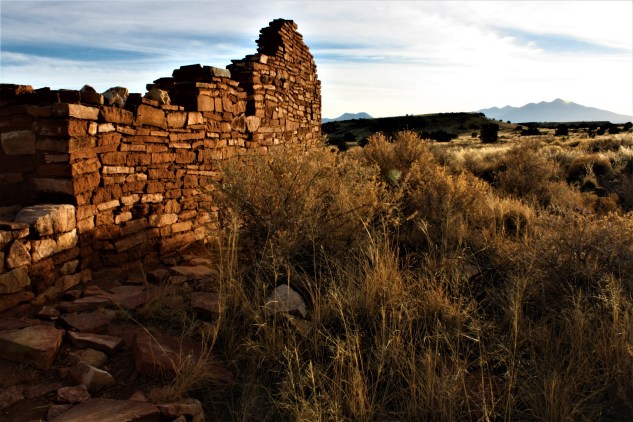 I’m pleased to announce that I have a poem in an anthology titled
 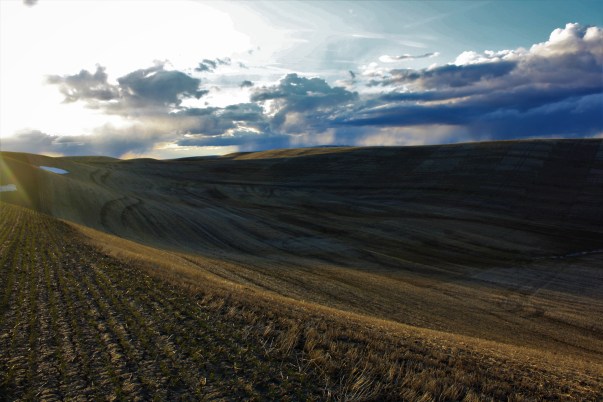 At least 30 percent of creative nonfiction is devoted to reflecting on etymology. We examine the words we use everyday. Fruit, from the Latin frui, meaning to enjoy; paragraph, from the middle French for stroke, as in a painting; field, from the German Feld, for open country; language, from the Latin lingua for tongue. The trend in nonfiction is to meditate on the the roots of our language to explore its deeper, older meaning.
 Keene Short