There wasn’t much going on at the Spokane International Airport. Its two runways did not seem busy yesterday as I navigated the rigid airport security system. I diligently took off my shoes, placed my laptop in its own plastic tub, and placed my sparsely packed backpack in another tub. Shoeless, coatless, without my glasses and a little sleepy, I went through security. Past the body scan, I then waited as a TSA agent rummaged through my backpack.
“It looks like there’s a knife in here,” he said to me, casually.
Of course. My air travel backpack is the same as my camping backpack. Before packing, I had emptied my backpack of all my camping equipment, and even emptied it of pens and pencils, just in case. It seems I had missed a pocketknife, which took the agent a few minutes to locate after it slipped into one of my backpack’s many pockets. Only an X-ray could detect it. He held the knife in front of me, saying I had three options. I could have it delivered somewhere from the airport, put it in my car (I didn’t drive there), or, as he put it, I could “surrender it and let it go to knife heaven.”
I paused for a second. My flight would begin boarding in thirty minutes, and I probably had enough time to have it mailed back to my apartment and then go through security again, even though the knife was the only issue. But the line behind me and the agent’s calm patience made me feel embarrassed, even ashamed, at not doing my civic duties and preparing my backpack for Thanksgiving travel thoroughly enough. I chose to surrender the knife.
During my flight, I mulled over the word surrender. There are so many other ways of putting it: confiscate, disavow, give up. Instead, the situation looked like this: a TSA agent held my knife at me and told me to surrender.
It occurred to me that I felt safer at an airport than I do in my own classroom. I cannot take a knife on a plane (fair enough), but if I wanted to, I could bring a concealed handgun into my classroom while teaching. Idaho’s laws are finicky, and concealed-carry gun-owners, while on campus, are not allowed to reveal their weapons, but I still have the option to have one, and so do my students.
The argument is that the only thing stopping a bad guy with a gun is a good guy with a gun, and yet we don’t apply this logic to airplanes. On the plane, we cannot trust anyone with a pocket knife, or scissors, or toothpaste, so we regulate these things, or at least we collectively agree to embrace the cognitive dissonance required to believe that the good guy/bad guy hypothetical situation works everywhere except a plane. Nobody is trusted on a plane, but we have to trust that good guys will be everywhere else.
While teaching my last class before the holiday break, a man walked into my classroom, abrasively opening the door and marching toward me. He was older, balding, and looked frantic. Before I could panic, before I could beg him not to shoot me, he pointed to the lectern at which I stood and said, “I need to get a flash drive.” Then, in a few quick moves, he unplugged a flash drive from the computer. Evidently, he was another professor who had previously used the same classroom, and had left his equipment there. He apologized for the inconvenience and walked out. My students didn’t seem bothered. Maybe they’re all just good guys.
As my plane landed, I thought about something Charles Olson wrote in his 1947 literary criticism Call Me Ishmael: “I take SPACE to be the central fact to man born in America, from Folsom cave to now. I spell it large because it comes large here. Large, and without mercy.” I’m skeptical that there is one central fact of America, but after the twin incidents in the classroom and airport, I’m inclined to think the central fact of America might be surrendering. This might be the case for every nation-state, but I cannot speak to other countries, but it seems more widespread in America: If I were not white, I can’t imagine what the TSA agents would have done to me after discovering a pocket knife in my backpack.
The word surrender has another, more sinister layer. Only combatants can surrender to another authority, lesser or greater in force. Soldiers surrender in war, and criminals surrender to cops. It suggests a more equal power dynamic than what is actually recorded in history. Native Americans surrendered land and life, Afghan children surrender security under drones, politicians surrender principles and we surrender to them our votes and our privacy, the working poor surrender their labor. What the state calls surrender is more like seizure because those who are asked to surrender are made to feel responsible for their defeat, as if it was their choice to enter into a conflict with America, large and without mercy.
And what was I ashamed of? That I was caught not remembering the state of terror we live in? I think, in truth, I was ashamed that the first time I relaxed this semester was walking into an airport, that I felt safer in a security complex designed to reinforce fear than I do in a classroom designed for comfort and an easy pace, and that I’m made to feel responsible because I’m not a good guy with a gun. Instead, I walk into a classroom with pens, pencils, markers, books, and slideshows, but none of those things, it seems, are enough to make me good.
-jk
 “I suppose our capacity for self-delusion is boundless. I knew very well that I rarely make notes, and if I do I either lose them or can’t read them. I also knew from thirty years of my profession that I cannot write hot on an event. It has to ferment.” –John Steinbeck, Travels With Charlie
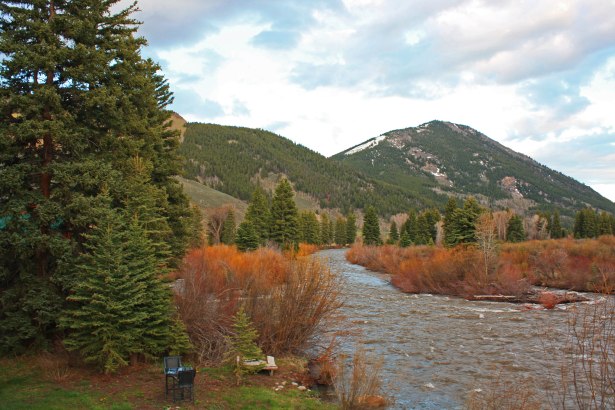 Two weeks ago, I graduated from UNL with a Master’s degree in English. It is the result of two years of reading, writing, and writing about what I read. More importantly, I had the pleasure of spending time with the friends and colleagues I worked with this past year. To celebrate the end of the semester and our program, several folks in my graduate cohort took a vacation by driving from Lincoln, Nebraska, to Crested Butte, Colorado, for a weekend next to a river. Soon, we will scatter and go our separate ways, and the slice of time we gave one another without responsibility, without the need to work for someone else, without tasks to fulfill, was a small slice of heaven (which is, as we all know, a place on Earth).
 This week, I had the pleasure of joining one of my best


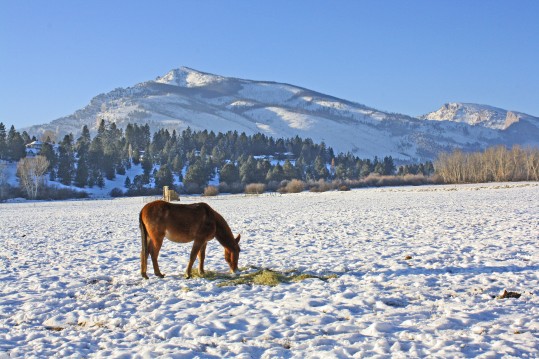


 Yesterday afternoon, I crawled off the California Zephyr after spending sixteen hours next to a window watching snowy mountains go by as I sat alone with a good book (Chang-Rae Lee’s Native Speaker), some new music on my iPod (Bombay Bicycle Club), and laptop to write short stories (Sci-Fi and Cli-Fi, with very little Wi-Fi). I was completely alone, standing up only to stretch and get coffee from the service car. It was spectacular.
 Creativity is sneaky; it can strike at the most inopportune moments, and writers need to be prepared. Writers can find inspiration while showering, cooking biscotti, giving back rubs, performing open heart surgery, or in my case all of the above simultaneously, and creative ideas can whither if not recorded quickly enough. Many writers, myself included, carry around small notebooks to salvage sudden ideas.