Category Archives: Travel

The Place-Based Writer Goes Places

Moscow Idaho“I suppose our capacity for self-delusion is boundless. I knew very well that I rarely make notes, and if I do I either lose them or can’t read them. I also knew from thirty years of my profession that I cannot write hot on an event. It has to ferment.” –John Steinbeck, Travels With Charlie

I’ve been on the road since June 4. I’ve traveled from Nebraska to South Dakota to Montana to Idaho to other parts of Idaho, and I will soon be on my way to another part of Idaho, then Utah, then Arizona. I’ve stayed in a lot of places, and seen a lot of places, and have plenty to write about. The problem is that writing on the road is difficult. Even John Steinbeck, known for writing about people (and dogs) traveling from point A to point B, knew that he had to let his stories stew. I’ve never had that kind of patience. I want to write the moment I get an idea.

I’ve often been accused of being a place-based writer. This makes sense, I suppose, because I place myself in bars with my laptop, then place large quantities of alcohol into my mouth, then place my fingers on the keys and type until I forget which place I’m in. But I also enjoy describing places. Setting is crucial for my stories, because most of my recent writing has focused on historical situations. Most of my stories cannot take place elsewhere, and taking place is an apt description of most of my plots. Setting, time and place, has more influence over my characters than I do, sometimes.

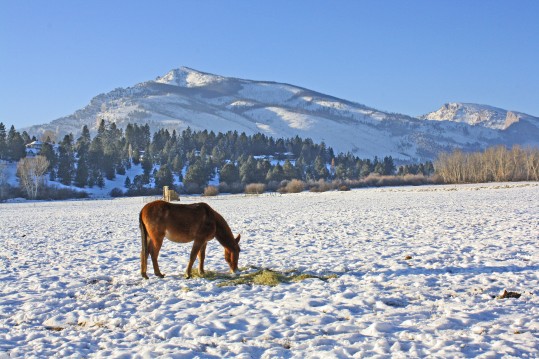
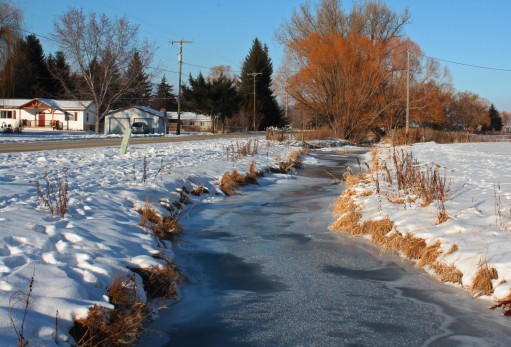
Right now, I wish I could write about the places I’ve seen, notably Moscow, Idaho,where I will live for three years starting in August, where I will hopefully get an MFA in creative writing. The town is small but quirky, surrounded by hills and distant mountains. There is a bagel shop that serves beer and a video rental stores on the same street. I drove into Moscow through a rain storm and misty curving roads, past industrial bridges and tall, deep green patches of forest and small, isolated towns. The campus is old and maintains most of its original architecture. It is a patchwork quilt of red bricks and green vegetation. Under overcast skies and in silvery clouds of mist, the town is surreal, even spooky. It’s the ideal place for a writer.

Not that I need an ideal place. I don’t want to be so tied to place that I need somewhere specific to be comfortable, to be myself. But I will admit that, as far as places go, Moscow looks like a lovely place to spend three years writing about all the other places I wish I was in.

-jk
Reading and Road Trips

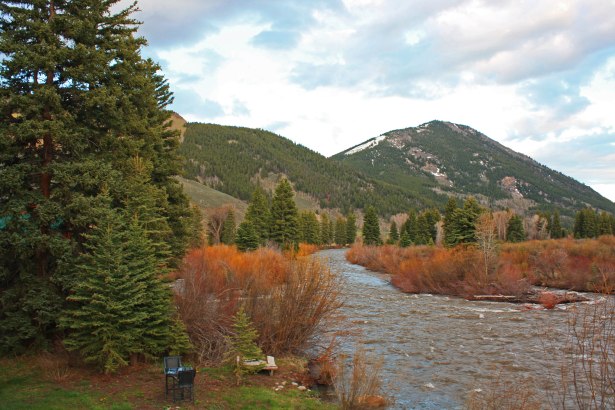
Crested ButteTwo weeks ago, I graduated from UNL with a Master’s degree in English. It is the result of two years of reading, writing, and writing about what I read. More importantly, I had the pleasure of spending time with the friends and colleagues I worked with this past year. To celebrate the end of the semester and our program, several folks in my graduate cohort took a vacation by driving from Lincoln, Nebraska, to Crested Butte, Colorado, for a weekend next to a river. Soon, we will scatter and go our separate ways, and the slice of time we gave one another without responsibility, without the need to work for someone else, without tasks to fulfill, was a small slice of heaven (which is, as we all know, a place on Earth).

Right now, I have a summer of road trips planned ahead of me. I have been accepted into the MFA program at the University of Idaho, in Moscow (the fun Moscow). I’ll be driving there from Lincoln soon with part of my family, then through Montana and Idaho to visit a variety of relatives, then back to Flagstaff, Arizona, before driving back to Montana and Idaho a month later. I’ll be spending a lot of time in a car.

When a handful of English Majors go on a road trip, they take books with them, and for me it’s always been that way. As long as I can remember, I’ve taken long road trips every summer from Arizona across the Rockies to Montana, Idaho, Utah, Oregon, Washington, and California, and I’ve always taken a book with me. One summer, I read On the Road by Jack Kerouac. Another summer, I read The Grapes of Wrath by John Steinbeck. On this most recent road trip, I read The Motorcycle Diaries by Ernesto Che Guevara, and to continue my step in the left direction through summer reads, I think I’ll take along Terrorism and Communism by Leon Trotsky, which I hear is a pleasant beach read.

I’ve spent the last two years reading more books than I expected, various novels, historical texts, books on theory, books on the Russian Revolution of my own volition, craft essays, and several Nigerian plays. It is telling that, on my first break from grad school, I continued to read. The same is true of my friends who went to Crested Butte.

I have a lot going on this summer, much to look forward to and much to fear. I could blog about going to a new graduate program in creative writing or the college-industrial complex after surviving it for two more years or moving to a new state again. But right now the only things I want to do are read and spend time (reading) with my friends. I even hear talk of a Kafka/Marxist reading group in the making.

-jk

Reading Terry Tempest Williams in Zion

Zion 2This week, I had the pleasure of joining one of my best friends for a trip through parts of southern Utah, starting in Moab and ending in Zion National Park. We went for the usual reasons (viewing nature, camping, hiking, burning a dictionary and cooking quesadillas over it). After hiking the Wildcat Canyon Trail (a good ten miles of limb-crunching views), we went to our campsite and read our selected book in the fading light, both collections of short pieces on the Southwest and West, Getting Over the Color Green and Northern Lights.

In Northern Lights, I stumbled upon an essay by Terry Tempest Williams, “The Clan of One-Breasted Women.” Williams grew up in Utah in the 1950s when fallout from nuclear testing in Nevada drifted beyond the test sites. As a result, many people downwind of the tests, including her family, suffered from radiation. Williams meditates in her essay on the many women (many in her family) downwind of the test sites who developed breast cancer from the radioactive fallout.


At the peak of the hike in Zion, I could see far, far out into the distance. I was surrounded by a place brimming with life; the whole area is a complexity of ecosystems overlapping, intertwined: red and tan oceans spotted green or lush with ponderosa and aspen or colored with sand and pale sunlight. Much of the Southwest doesn’t look alive to the untrained eye. Deserts play tricks on us by hiding their life, but life is always there. Overlooking Zion, I was overwhelmed and haunted by its history.

Zion

In the 1860s, Mormon pioneers founded a town near Zion, Springdale, and named the nearby canyon Zion. To Mormons, Zion refers to a gathering place for the faithful, and naming the canyon was an act of claiming the land for Mormon culture. But while pioneers were in the process of colonizing the area, the region was home to Southern Paiute communities pushed out by U.S. settlement. Like much of the Southwest, Zion is part of overlapping histories and state-sanctioned narrative revision.

The place was shaped by geologic hands, the fingers of rivers, a mind of clouds and rain, then engulfed with diverse flora and fauna, indigenous communities, overrun by Spanish colonization, Mexican statehood, Mormon expedition, and U.S. authority that ignored all previous layers by deeming the Southwest an absolute desert, a place so deserted they could safely test nuclear weapons there without harming anyone or anything worth mentioning. But Williams contests, as many do, that all of it is worth mentioning, worth respecting and preserving and revering.

After reading Williams’s essay, I stargazed with my friend in the desert where the stars are aggressively visible. The Southwest is misleading to those unfamiliar with it. The stars are brighter here, the air is heavier with scent, the land is rougher, and the going can be tough. Zion, a place of peace, a place of eternity, may be an apt name. The whole Southwest may be a kind of Zion, a refuge for wanderers and romantics. Its beauty is rare and atypical, taking on strange shapes and colors, rich sounds and haunting narratives. Its beauty is misfit and misleading, but in its presence it’s impossible to miss.

-jk

From Coffee Shops to Mountaintops

Macy's

For a too-short time this summer, I’m on a pilgrimage to my hometown of Flagstaff, Arizona. Here, I’ve been working on a collection of short stories that will become my Master’s Thesis in less than a year (no pressure), because I won’t have much time to write come Fall when I’ll take four graduate classes, teach two classes, hold office hours, and try to get published. Flagstaff is a nice place to be productive. It’s also a nice place to be useless.

This month, I’ve been scurrying from one Flagstaff coffee shop (many in gentrified neighborhoods, admittedly) to the next. Maybe sitting all day in Macy’s or Firecreek or Steep (technically a tea house) is a bit of a yuppee activity, but for many writers it’s an easy solution. Coffee shops induce productivity with comfortable spaces, lots of light, energetic music, and socially acceptable drugs like caffeine. They remove us from crammed apartments, English departments, and work places; they spark quiet, collective inspiration. I’ve also enjoyed the aggressively supportive environments that seem to define the West, where even complete strangers encourage you to keep going and pursue your dreams, even if they’re strange and uncomfortable. My writing has been very productive.

But there was another pilgrimage I needed. Yesterday, after writing and reading stories in Firecreek all morning, I took the afternoon to hike up Mount Elden. I did not take anything to write with, and although I’m a strong advocate for making art in the wilderness (alone or with friends), I wanted a more complete silence. I wanted the overwhelming smell of bark and dust and dew. When I return to Nebraska, I’ll have to find the same solitude in the prairies, out on the range.

Mountaintop

From the mountainside where I stopped to rest, the only thing I could hear were crickets and the distant whistle of a train. There was no traffic; there was no music; sometimes a bird chirped, or a deer fluttered through the forest below the steep cliff’s edge. I was not alone, but I was alone from people, and from myself.

It was windy, almost cold, but closer to the sun I felt warm. It was peaceful to be nobody for a while, to be free of the need to be someone. The pressure to be someone these days, the millennial fixation with making something of oneself, being a successful talented individual with a totally unique, self-owned identity, is sometimes too much.

Sometimes I’d rather sit on a mountaintop and be useless. No fast pace. No updates. No news. No one to impress. Just one more organism in an ecosystem finding, at last, its place therein: a lone and unimportant creature in a society of deer, coyote, foxes, crows, ponderosa, a cityscape of boulders and greenery.

-jk

Very Near the Last Best Place

“I’m in love with Montana. For other states I have admiration, respect, recognition, even some affection. But with Montana it is love. And it’s difficult to analyze love when you’re in it.” -John Steinbeck, Travels with Charley

Snowy Horseman

It’s been especially cold in the Bitterroot Valley this week. The air is fat with moisture, and below-freezing temperatures are typical. Still, there is clarity in the cold, standing at the center of the Valley’s balding head. The crown of mountains rolling up and down across the horizon like changing statistics are garnished with snow and the torn fabric of clouds. The trees carry tufts of it, the fields and sleepy barns hold sheets of it stretched thin into ice, and the sky lets down more, flake by perfect, God’s-eye flake.

River Icy

In the middle of the ring of mountains, I stand surrounded by the monumental totality, the jagged white-purple strips draped below a hazy, bitter blue sky, like skin left out in the cold too long.  My nose hairs freeze as I breathe in and look at the sunlit snowscape, a territory lost in cold dreams of something to bloom later, something better to come, something beautiful in the future. I find beauty in the waiting, or try to. The snow is a fixation for me. This frigid terrarium of agriculture and forestry is astounding.

Fence

Maybe there really is such a thing as timelessness. Maybe there’s a way to stop time, step out of it like out of a beater truck, and frame time within electrical confines. Keep it forever, or send the past into the future untarnished by change. But the snow will melt, and something gorgeous will replace it. Trees will philosophize, flowers will converse, and a listlessness of birdsong will fill the air.

Snow Mountain

I pull my camera from my bag, take my gloves off, and take a picture of the landscape. The snow is so lovely, and it melts so quickly when touched, so I try to hold it in another way. I can hardly use my fingers when I lower the camera. I didn’t notice how numb they’d gotten in the photographic thrill of momentlessness.

-jk

All photos copyrighted material of Lost Compass Photography, 2016. Donations, or else get-well-financially cards, are always welcome.


Midnight Train to Colorado

LocomotiveYesterday afternoon, I crawled off the California Zephyr after spending sixteen hours next to a window watching snowy mountains go by as I sat alone with a good book (Chang-Rae Lee’s Native Speaker), some new music on my iPod (Bombay Bicycle Club), and laptop to write short stories (Sci-Fi and Cli-Fi, with very little Wi-Fi). I was completely alone, standing up only to stretch and get coffee from the service car. It was spectacular.

A century ago, trains propelled people into expanses of uncertainty. They helped us contract time and space, a theme I regularly wrestle with. Trains pushed Europe into Asia, and solidified New England. They stapled towns together across the American Midwest like a string of Christmas lights, one after another after another, bringing them to the foot of the Rockies and knitting cross-communal quilts in the process. The railroad changed history entirely.

Today, trains are far from the fastest form of transportation. I could have gone home by plane in a fifth of the time it took by train. But for a historian and writer, trains are the perfect form of travel. Being able to slow down, lean back, and reflect on the past semester was just what I needed.

Midnight Train to Colorado

It’s difficult for me not to be reflective this time of year. Winter break imposes introspection. In one year, I’ve changed more than I thought possible. I almost wrote a novel but completed a poetry manuscript, and saw the publication of two poems, an essay, a story, and a ten-minute play. In the past year, I found more of my voice than I had in ten years prior. I also moved to a new home and school, leaving behind everything familiar. I raced through the last semester too fast to enjoy it, propelled by a locomotive of too much ambition.

These days, trains are a way of retracting time and space, and after running through the semester at full speed, slowing down to watch the nightscapes and frosted mountains go by was a healthy step back, a way to manage the introspection overwhelming me after a year of so many wonderful, terrifying changes.

-jk

When a Story Strikes

Blank PagesCreativity is sneaky; it can strike at the most inopportune moments, and writers need to be prepared. Writers can find inspiration while showering, cooking biscotti, giving back rubs, performing open heart surgery, or in my case all of the above simultaneously, and creative ideas can whither if not recorded quickly enough. Many writers, myself included, carry around small notebooks to salvage sudden ideas.
Sometimes, the best preparations fall short. While flying home this week, I was enjoying the on-flight complimentary burned coffee when something in my brain clicked, and an idea for a story crystallized.

Before I could pull out my notebook and pen, the plane began to shake. The pilot announced that we should remain seated through the turbulence, “even if you do like it shaken, not stirred.” My tray table lurched as I flipped to the next blank page and scribbled down every detail of my brilliant, wonderful story idea while it was still fresh.

Several hours later, as I waited for the shuttle to my hometown, I had a few spare moments to look back at the brilliant, wonderful, award-winning story idea. Instead, I found in my notebook a slim paragraph of what looked like ancient hieroglyphics. My handwriting is bad to begin with; add a jittery writing space and a lack of patience, and clarity is doomed. I could make out the words “old man” and “saucepan” amid the scribbles, but otherwise my brilliant, wonderful, paradigm-shifting story idea was illegible.

Rest in peace, story idea. I’m sure what I would have titled “The Old Man and the Saucepan” would have been excellent. In my rush to preserve it intact, I lost it entirely. As a writer, I should slow down sometimes. More importantly, I should learn to trust myself to utilize a half-formed idea. Even the best ideas I’ve recorded legibly have evolved. Art, after all, is a process of evolution, patient and sometimes careless. The key to producing good art is the ability to improvise. Now if you’ll excuse me, I have to clean biscotti dough out of my shower drain.

-jk

Like a Writer in a Candy Store

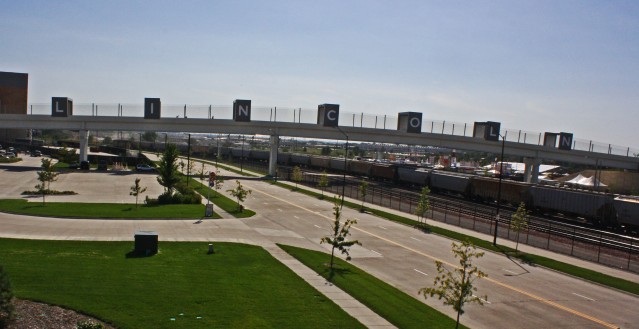
Lincoln

My books are on my shelves, my violin is tuned, and my spice rack is full. I’ve finally settled into Lincoln, Nebraska, with a few weeks before I start my first semester of graduate school. I spent yesterday exploring the city on foot, and a few sunburns and several hours later I returned to my apartment exhausted but satisfied.

Wandering alone in a big city is a new experience for me. I knew my former home of Flagstaff was relatively small, but getting lost in Lincoln proved to me that I am only one brick in the world’s framework. In my exploration, every corner I turned showed me a new organ in Lincoln’s body. I flew through decades into the Midwest’s past, into rustic red brick buildings, some dating back to the 1870s. I perused this place’s history, its survival on the plains, and those strange intersections where the past meets the present in the connective tissue of reinvigorated neighborhoods and gentrification.

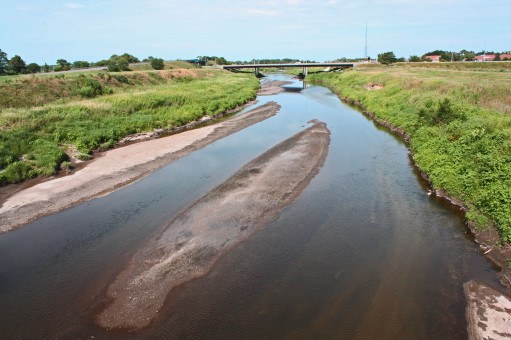
River

Although being in a big city should be overwhelming, for a writer it’s like being a kid in a candy store. I can use any one of a dozen metaphors to describe my place in the city, a cell in a body or a brick in a building, and all of them describe how I feel. They all express my belief that individuality is overrun by community, and I’m sure that Lincoln will organically change me as a person regardless of whether or not I want it to. But for a writer, a city is just one big candy store because it’s not made of bricks or cells, but of stories. There is street art, there is sewage, there are coffee shops, there are dimly lit bars, and right now all of it is new to me.

UNL

One day of exploration has already transformed me. Today, I’ll find a few good places to write on campus and around town, all of which are within walking distance of my apartment. But for the moment, I am still freefalling through Lincoln’s grid of stories, hardly able to contain my excitement.

-jk

P.S. A surprisingly fitting song to have stuck in one’s head while wandering around lost in a new city is H.S.K.T by Sylvan Esso. I also find it suitable for writing about cities.

My Last Letter to Flagstaff

Dear Flagstaff,

autumn forest

There’s no easy way to say this, but I have to say goodbye.

Northern Arizona University

It’s not that I don’t like you. On the contrary, you’re the finest community I’ll ever know. Never mind that you’re the only community I’ve ever known. Having lived in Flagstaff for twenty years and with no actual memories of my life in Pocatello, Idaho, before moving to you, it might be unfair to future communities, but I mean it, Flagstaff. Where else can I see a herd of deer pass in front of my car just uphill from my high school? Where else can I have a mountain for a backyard? Where else will I be an hour from the Grand Canyon and Sedona?

Flagstaff

You’ve been great to me, Flagstaff, but it would be naive to say it was all fountains of chocolate. I mean, you are in Arizona, after all. The snow was nice, but driving downhill on an icy road to a stop light was a little scary. I appreciated the dog food factory, but the smell was a little overwhelming sometimes.

Macy's

Everything good and bad that has ever happened to me, with a few exceptions (Ireland, Montana, Minneapolis), has happened to me in Flagstaff: failed orchestra concerts, a broken arm, publication, falling in love for the first time, crippling self-doubt, hangovers in church, learning to play the violin, becoming an Eagle Scout, rejections from journals, writing my first good poem, writing my first bad poem, saying goodbye at the train station to the woman I loved. I’ve had colds and stage fright, I’ve had frog dissections and marching band performances, I’ve had reader’s theater and photography gigs. I lurched through high school and college in Flagstaff. Spending two decades in a place allows for the accumulation of immeasurable joy and bitterness, and leaving you, Flagstaff, is a tough decision, perhaps the toughest I’ll ever have to make. Sticking around is quite tempting.

Train Station Bench

But I need to see other cities, other states, other countries. I need to travel. I need to study and write and learn. I’ll start by going to graduate school in Lincoln, Nebraska. Lincoln may be the opposite of you, Flagstaff, but everything is packed, and I’ll be out the door by the time you read this. After graduate school, I’ll traverse shores yet untarnished by my footprints.

Duck Pond

Even if I fall for Lincoln, I’ll always miss you, Flagstaff. You were the rough draft of a misshapen side character dropped into the world; you were a place of enlightenment in the saints’ cult of writers; you were the architect of this backpack stuffed with art and questions that I am honored to call my soul.

Christmas in Flagstaff

I owe you more than I’ve given, and you’ve given me more than I deserve, Flagstaff. Perhaps I’ll come back to you someday. I would like to see you at least once more before I die. If I do make it back, I hope you have not changed except to become more beautiful, but I cannot, for the life of me, imagine a more beautiful city.

Pipeline Trail

I’ll miss the hippies and cowboys and geriatric motorcyclists. I’ll miss the perpetual smell of pine trees and incense and dog food. My memories of Flagstaff are like photographs in a gallery hung at random. No real structure binds these moments, and it’s more breathtaking that way. With that, I say goodbye Flagstaff. Wish me luck.

Appalachia

Sincerely,

jk

Midwest by Northeast

The Map

For someone who grew up safe in the Southwest, the idea of the Midwest is just a scary story, no more real than werewolves or zombies or werezombies. But soon, all the stories may be proven true. I may wake up one day no longer a Southwesterner but a Midwesterner.

We’ve all heard tales of the Midwest. We’ve seen them in movies like A Christmas Story, Field of Dreams, even children’s movies like Fargo. We’ve heard Garrison Keillor’s weekly horror stories about allegedly growing up in the Midwest. I myself didn’t believe the stories, but soon I’ll immerse myself in the region, in the cornfields and endless piles of Lutherans.

I’ll have to disguise myself to fit in. I’m already quiet, so maybe they won’t recognize that I’m an Arizonan. I’ll have to start eating German and Scandinavian food instead of Mexican. But will I really become one of them? One of those smiling, dry-humor-loving, flat-land-roaming, hotdish-cooking huskers? I’m a fully-fledged American Westerner. My ancestors traversed the Rocky Mountains, settled in the potato fields of Idaho and the great Bitterroot Valley. I have family scattered across Arizona, Utah, Idaho, California, Oregon, Washington, and Montana. Will I transmute into a Midwesterner? Or will I be like the lone survivor of a zombie apocalypse, wandering the fields among the throngs of polka-dancing tundra folk?

I’m sure I’ll end up enjoying life in the Midwest, even if resistance is futile and I start eating hotdish and corn. Or I’ll discover that the Midwest and Southwest aren’t that different, and I’ll fit in just fine, because as important as regional identity is, we should dismantle every wall we allow it to build between us. We’re all in this sinking ship together, after all, and life’s too short to let our differences confine us.

In any case, I’ve lived in Arizona for twenty years: Arizona is a dystopian oligarchy whose capital city, which is a violation of basic human rights by its very existence, is run by a deranged sheriff, and about thirty percent of the population qualifies as a heavily armed militia that wants to improve upon the concept of walls with barbed wire and snipers. If I can survive in Arizona, I can survive anywhere.

-jk