
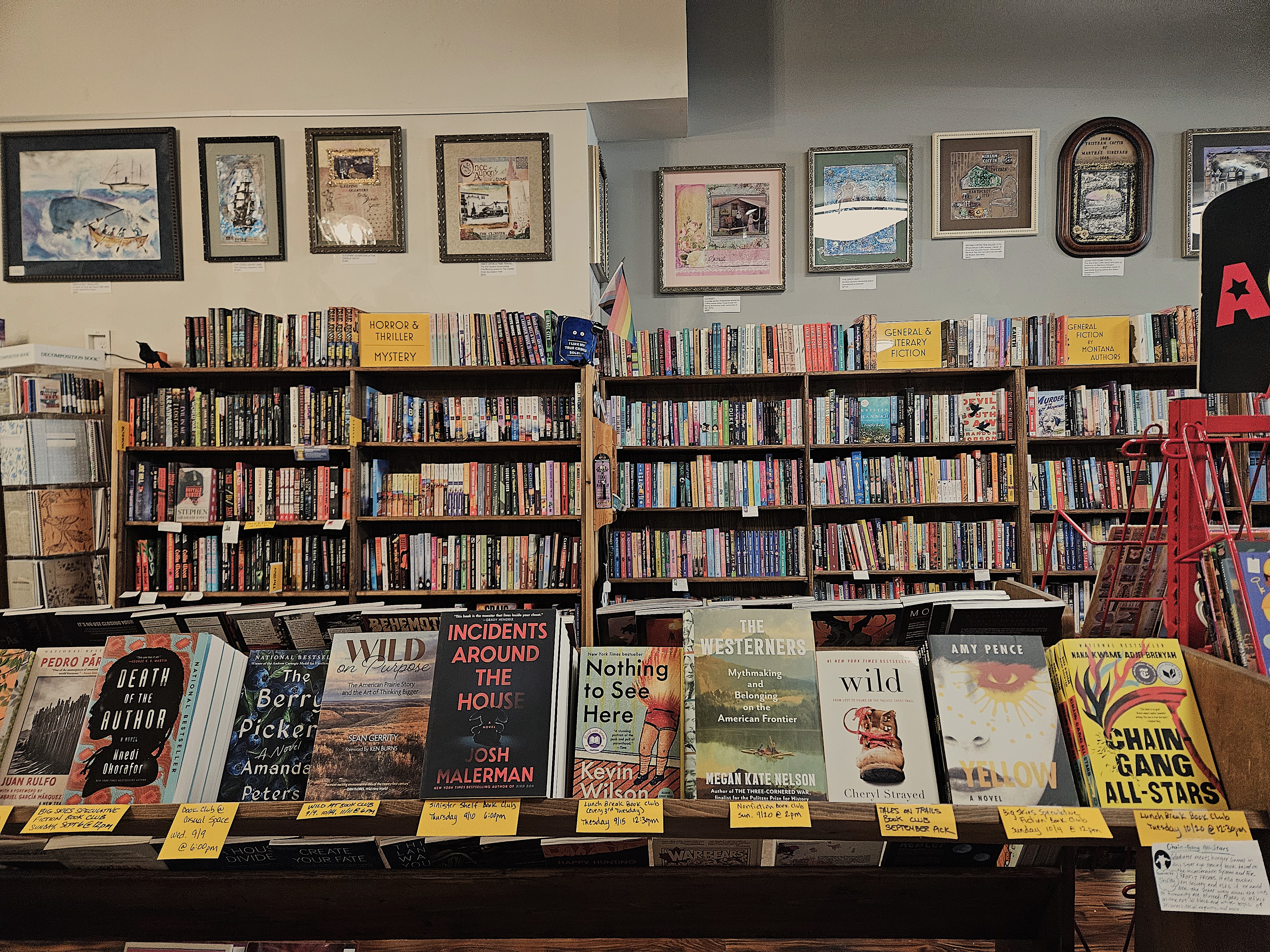
Technically, I bought a membership in my local bookstore’s co-op, thus becoming a co-owner of This House of Books along with many, many other bookstore patrons and regional writers, but that’s not as interesting a title.
I’ve been involved in the literary community for fourteen years. I’ve been writing for a while longer, but I only started submitting my work (and accruing submission fees) since 2012. I’ve seen presses go under and seen others grow into reliable institutions. I’ve volunteered for journals that have persisted at a steady pace and others that have tried and failed to act like ’80s business ventures.
I don’t know what the right model is for sustainable literary institutions, and submission fees remain especially touchy. What I do know is that good writing needs investment, of some form or another, by the people who value it. Not all investment is financial. It can be time (reading, volunteering) or interpersonal (sharing pieces online or with others, talking up authors whose work is good, requesting books at local libraries). But every garden needs a gardener.
The same is true of journalism. I rewatched All the President’s Men recently and felt deeply depressed by the end knowing that today, groundbreaking stories are inconsequential to the powerful because of elite capture and because sellouts who don’t believe in anything keep finding their way to the top.
But still, independent worker-owned publications are popping up, and I’m hoping they can carve out successful alternatives. Here in the West, High Country News successfully unionized. Leah Sottile co-founded The Western Edge to cover Northwest regional stories. Fellow UI alum Alexandra Duggan was on the ground in Spokane during last month’s wildfires for The Spokesman-Review. Food writers who were laid off after a recent media merger formed Ravenous, a worker-owned publication that has covered some of the most interesting food stories I’ve read in years, like the popularity of disgusting LLM-generated restaurant ads. Bolts has done some extraordinary work covering elections this year and Heatmap covers climate policy just as thoroughly. There are a lot of sellouts, but there are many more dedicated writers who are trying new ways of getting their work into the world without selling out.
If I shill out five dollars a month to a comedy podcast about funny mayors so I have something to listen to while working out on Thursday mornings, I can offer the same to Literary Hub and n+1, two venues I read often and sometimes use in teaching. I don’t have a good compromise to the costliness of running these institutions, but the institutions themselves are valuable enough that I’m determined to trust the writers and editors behind them to keep trying.
The bookstore I can now legally brag about owning is named for Ivan Doig’s This House of Sky, which I will read eventually (like all books). In another Ivan Doig book I read last month, The Bartender’s Tale, an exchange between two characters summed up why I care so much about literary institutions.
As he drove, he evidently was still bothered by the events competing with the Mudjacks Reunion. “What is this play that’s so vitally important?” he asked peevishly. “Something by someone local?”
“Oscar Wilde.”
Oh.”
I figured it was my turn. “What’s ‘bobbasheely’ mean?”
“Mmm, something like moseying along.”
“Then why not just say ‘moseying along’?”
“You wouldn’t want vanilla to be the only flavor of ice cream, would you?” He had me there (174).
Bookstores and libraries offer variety. New publications offer new perspectives shaped by new approaches to media and modality. Language is as dexterous and evolving and diverse as the people who use it, and the more robust literary institutions are, the better we are as readers. This is, of course, the opposite of the vanilla prose style that LLM-generated writing defaults to even when performing benign tasks like polishing prose for professional audiences.
Bookstores are valuable. Libraries are valuable. They both require different degrees of upkeep and both are under attack, though libraries are more vulnerable to the whims of wannabe tech leaders who want the world to be smaller and duller and more vanilla. Even the late Dolly Parton‘s Imagination Library was a target of such funding cuts.
I dislike the phrase nothing is sacred because these institutions, libraries and bookstores and archives, remain sacred even when people violate that sanctity. But it’s increasingly difficult to imagine pooling together the resources necessary to build a good, decent world that encourages imagination and compassion. There’s supposedly not enough money in the budget to give children books, but the money that goes toward dropping bombs on schoolchildren will apparently never run dry.
So I invested a fraction of my money into a bookstore, which is probably immaterial to their funding, but that’s not really the point. In the 2000s, post-9/11 culture had a sneering aversion to earnestness. It was ridiculous to care about anything, let alone other people. For a while that changed in the late 2010s, and perhaps the culture became too earnest in some regards, but that’s preferable to being treated like the punchline of an insult comic too insecure to ever direct his ridicule onto himself. That’s what these last few years have felt like: the commercialized, gratingly smug pessimism of the early aughts.
Unfortunately, I think that Neil Postman’s prediction has come true. In Amusing Ourselves to Death, he saw a more likely dystopia in Aldous Huxley’s Brave New World (a book I will also read eventually, like every book). “Big Brother does not watch us, by his choice,” writes Postman. “We watch him, by ours. There is no need for wardens or gates or Ministries of Truth. When a population becomes distracted by trivia, when cultural life is redefined as a perpetual round of entertainments, when serious public conversation becomes a form of baby-talk, when, in short, a people become an audience and their public business a vaudeville act, then a nation finds itself at risk” (155-156). His critique is about TV from another era defined by its sneering pessimism and commercial sellouts, the 1980s, but it haunts this era just as much.
We are worse off without widely available, diverse books by numerous authors who have unique perspectives to offer. I’m tired of being told I’m better off being a sellout, that the world defaults to time-efficient vanilla stories and utilitarian, forgettable syntax that delivers the same message the same way in every sentence, otherwise known as “content.”
I’m not optimistic, but I am, I think, determined to keep trying. If anything, you should come visit my bookstore. They have a lot of good books, all of which I’ll get around to reading eventually.
Doig, Ivan. The Bartender’s Tale. Riverhead Books, 2012.
Postman, Neil. Amusing Ourselves to Death. Viking Penguin, 1985.
