

“Where exactly do people think they are going? A life can be significant without having a goal, just as a work of art can be. What is the purpose of having children or wearing shocking pink tights? Works of fiction like Tristram Shandy, Heart of Darkness, Ulysses, and Mrs. Dalloway can serve to free us from seeing human life as goal-driven, logically unfolding and rigorously coherent. As such, they can help us to enjoy it more.” -Terry Eagleton (114).
This Christmas, I asked my dad if I had too many books. It was hardly a joke for how obvious the answer was. If anything, what I need are more shelves for the books I will inevitably accumulate.
My family never misses a chance browse a used bookstore. We locate them like churches, make plans for visits while on the road. The more obscure titles, the more chaos among the shelves, the better.
Among the stacks, there’s a randomness that can’t be replicated by any algorithm. It would take a whole biography to explain how a book came to appear on a shelf, whose hands produced, gifted, read, bought, lost, or relinquished it. Buying books secondhand (or thirdhand or forty-seventhhand) is a way of picking up where someone left off, gambling with time well spent.
Years ago, when I visited my uncle in Appleton, Wisconsin, one of the first things we did was go to a local used bookstore. I don’t remember the name of the bookstore now, but I remember how sunny it was inside, how the outside looked more like a hunting cabin. I remember how familiar my uncle was with the owner, chatting about new artifacts, Indigenous authors, sharing ideas they had read about, both of them listening to each other. How easy he made it look.
I remember buying a paperback novel about, or from, the Cold War, and thinking about a story one of my history professors told me about stumbling across the one manuscript he needed in the trunk of a car near a book fair in Oman.
The first thing I did when I learned that my uncle passed away last month was to go downstairs and stand in front of my bookshelf, scanning the titles, until the sun went down. I’m not really sure why, but it was the only thing I could do that made any sense. I looked at the titles, the books my uncle had given me as gifts, the ones I’d wanted to suggest back.
Since moving to Indiana, I’ve mostly been going to the library for books. The stacks are more curated; there’s less chaos, maybe something I’ve needed. After finishing grad school, I cobbled together a year’s life with odd jobs at a restaurant, a state park, freelancing, and, for a few months, working in a library. That was when the second used bookstore in my Idaho college town closed its doors. The owner and I actually did get to know each other a little. She was talkative and curious, with a thick Boston accent and a penchant for obscure political treatises, the kind you could never find in a library.
The pace of the library is pleasant, though. I was tempted to earmark and underline the copy of Terry Eagleton’s How to Read Literature that I checked out three weeks ago, but instead I resorted to taking photos of paragraphs with my phone. It’s a simple but thoughtful and extremely British text, erudite in the way that’s difficult not to read in Stephen Fry’s voice. I appreciated his generosity with the purpose of literature, how flexible he lets the form be.
Can books help make life more enjoyable? Eagleton contends that books “do not so much contain meaning as produce it” (144). This, too, cannot be replicated algorithmically.
Two Christmases ago, in a bookstore in Missoula, my brother handed me a book he’d found by chance, The True Subject, a collection of lectures writers have given at conferences and workshops. I never would have found it otherwise. In one lecture, Mary Clearman Blew writes of memoir that “any story depends upon its shape. In arranging the scraps that have been passed down to me, which are to be selected? Which are to be discarded? The boundaries of creative nonfiction will always be as fluid as water” (Blew 62).
This month, I’ve been all scraps and no story. For years, I’ve only been able to write in fragments and braids and collages. Some writer friends agree. It’s just where our heads are at these days.
Blew, Mary Clearman. “The Art of Memoir,” in The True Subject, edited by Kurt Brown. Graywolf Press, 1993, pp. 59-63.
Eagleton, Terry. How to Read Literature. Yale University Press, 2019.
 I have a lot of books that I’ve started, but for many different reasons never got around to finishing. Many of them are Christmas presents that I started during the holiday break but put down again shortly after the semester started because schoolwork and teaching overwhelmed my schedule. There are short story collections with dogeared pages where I stopped, and novels with a bookmark still stuck at Chapter Six, and poetry collections with coffee stains where I left off.
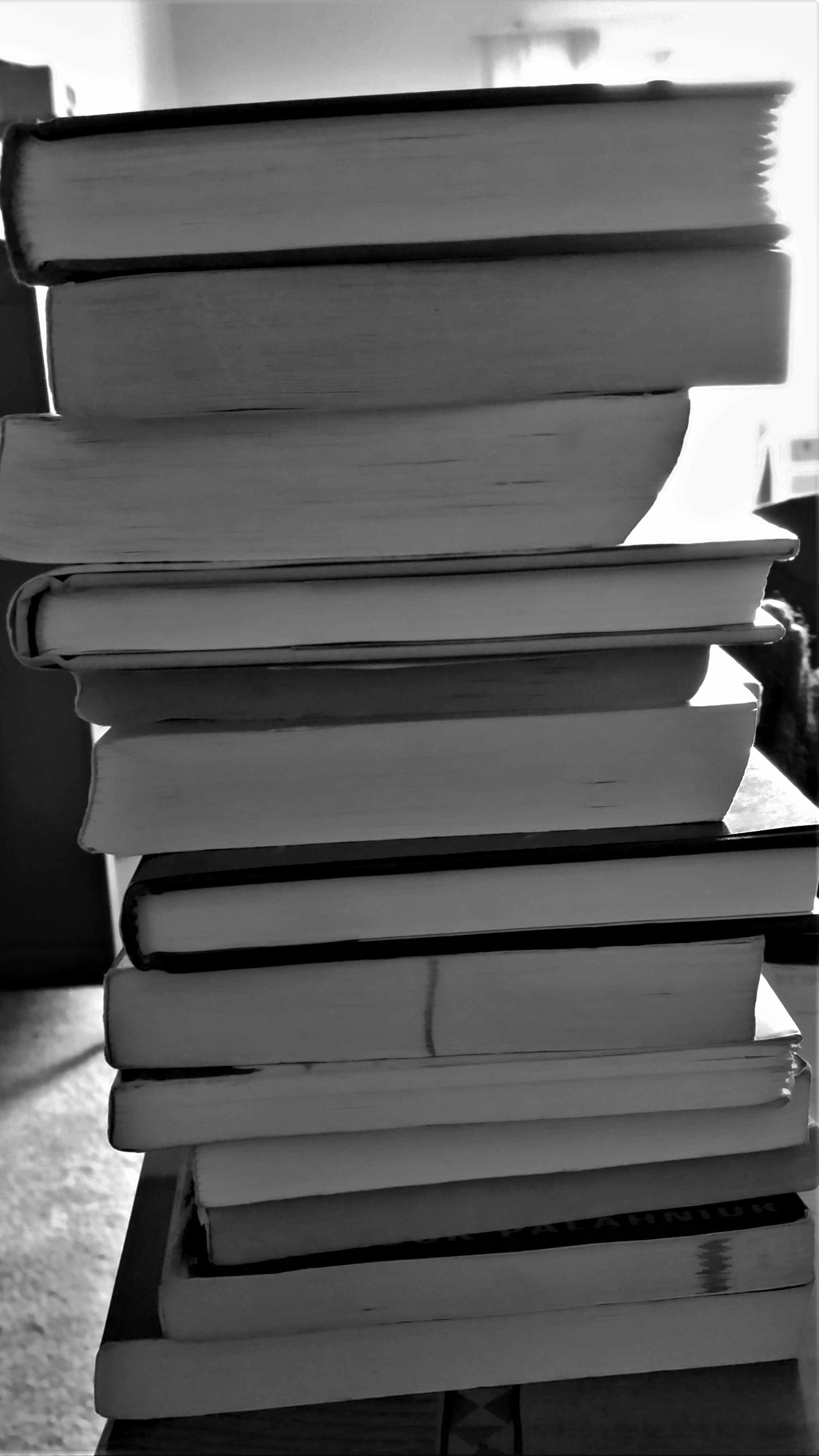 You can never have too many books, unless you have too few bookshelves. Recently, I’ve accumulated about three dozen more books than I had at the beginning of the year, but I’m not ready to get a new bookshelf. I don’t have room for one in my apartment, unless I put a small bookshelf in the shower or above the toilet or next to the heaters, and all of those options have their pitfalls (water, fire, weird smells).
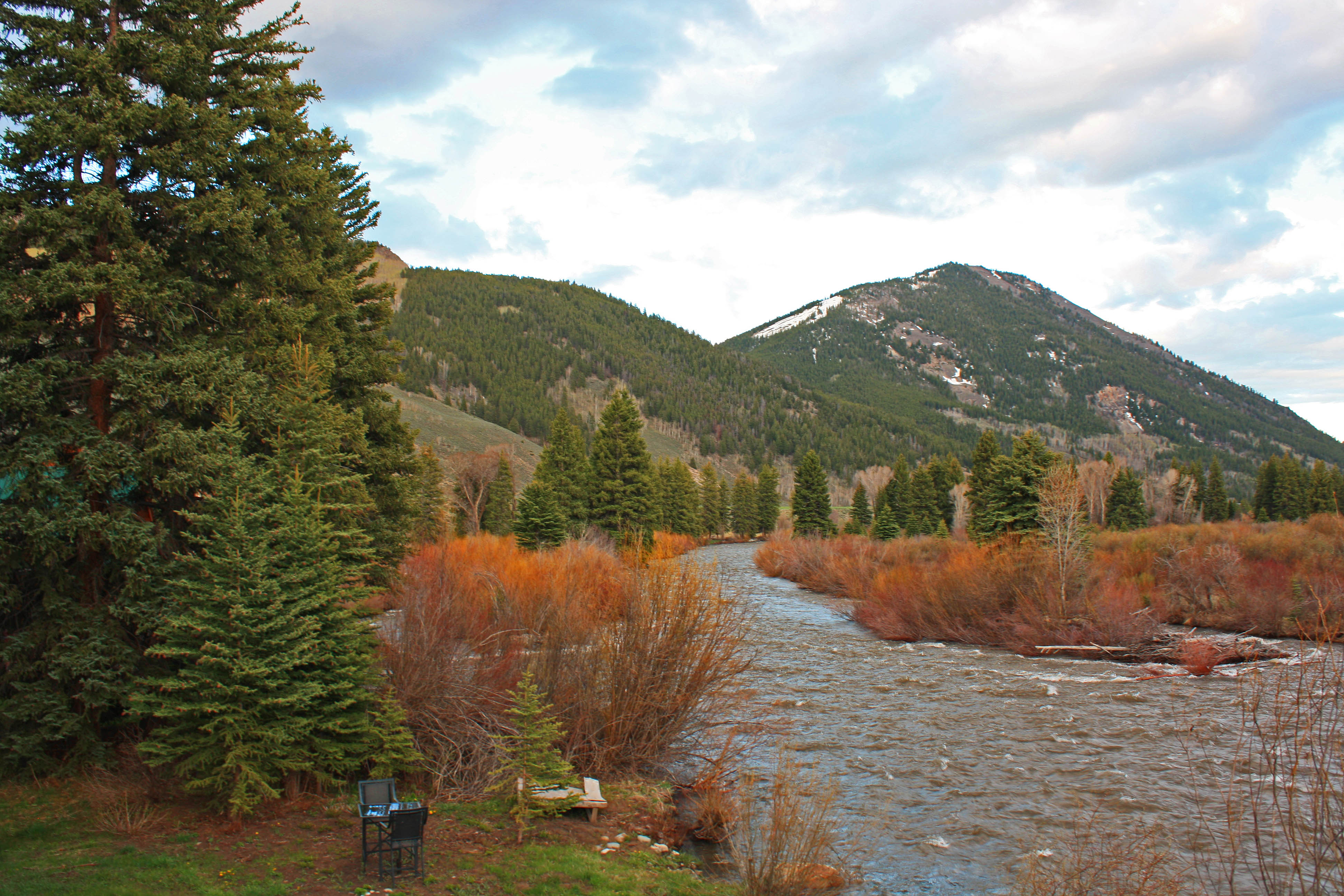 Two weeks ago, I graduated from UNL with a Master’s degree in English. It is the result of two years of reading, writing, and writing about what I read. More importantly, I had the pleasure of spending time with the friends and colleagues I worked with this past year. To celebrate the end of the semester and our program, several folks in my graduate cohort took a vacation by driving from Lincoln, Nebraska, to Crested Butte, Colorado, for a weekend next to a river. Soon, we will scatter and go our separate ways, and the slice of time we gave one another without responsibility, without the need to work for someone else, without tasks to fulfill, was a small slice of heaven (which is, as we all know, a place on Earth).
 WordPress reminded me that today is my two-year blogiversary. I missed last year’s for the obvious reasons (grad school applications, Macbeth, mud wrestling, etc.). Today, though, I slide two years into the past when I was surrounded by the mess of my education: Beloved, essays on the Holocaust, a textbook on linguistics, The Outlaw Bible of American Poetry, and drafts of my own poetry. The liberal arts defined my life, but lacked definition; in a confused fervor I wrote


 Keene Short