Tag Archives: Revision

Fixing Hearts or Dying

A trail in south-central Indiana.

Ancient alchemy, as Erin Vachon described it to a handful of writers over Zoom for a workshop through SmokeLong Quarterly, began with a process of decomposition called Melanosis. Transformation is a long procedure in this sense, and it begins with fragmentation. For writers, as Erin put it, this extends to our understanding of the assumed form and content of what we seek to revise. This could be as simple as writing from the perspective of another character. For nonfiction writers, this might be an exercise in empathy. As they walked us through this workshop built on the esoteric, I understood what they meant as I found myself writing from the perspective of Irish bog bodies looking up from the water, scolding the living.

Somewhere in my notes, I wrote the word subcutaneous to describe the underlying thematic concerns in a story, which are baked into the language at the sentence level. The story I selected to revise was an older work from almost a decade ago, and the prose was embarrassingly self-explanatory. This realization would have been mortifying were it not for the necessarily destructive first step. Like water from a sponge, I compressed the story to see what meaning would drip out between the lines.
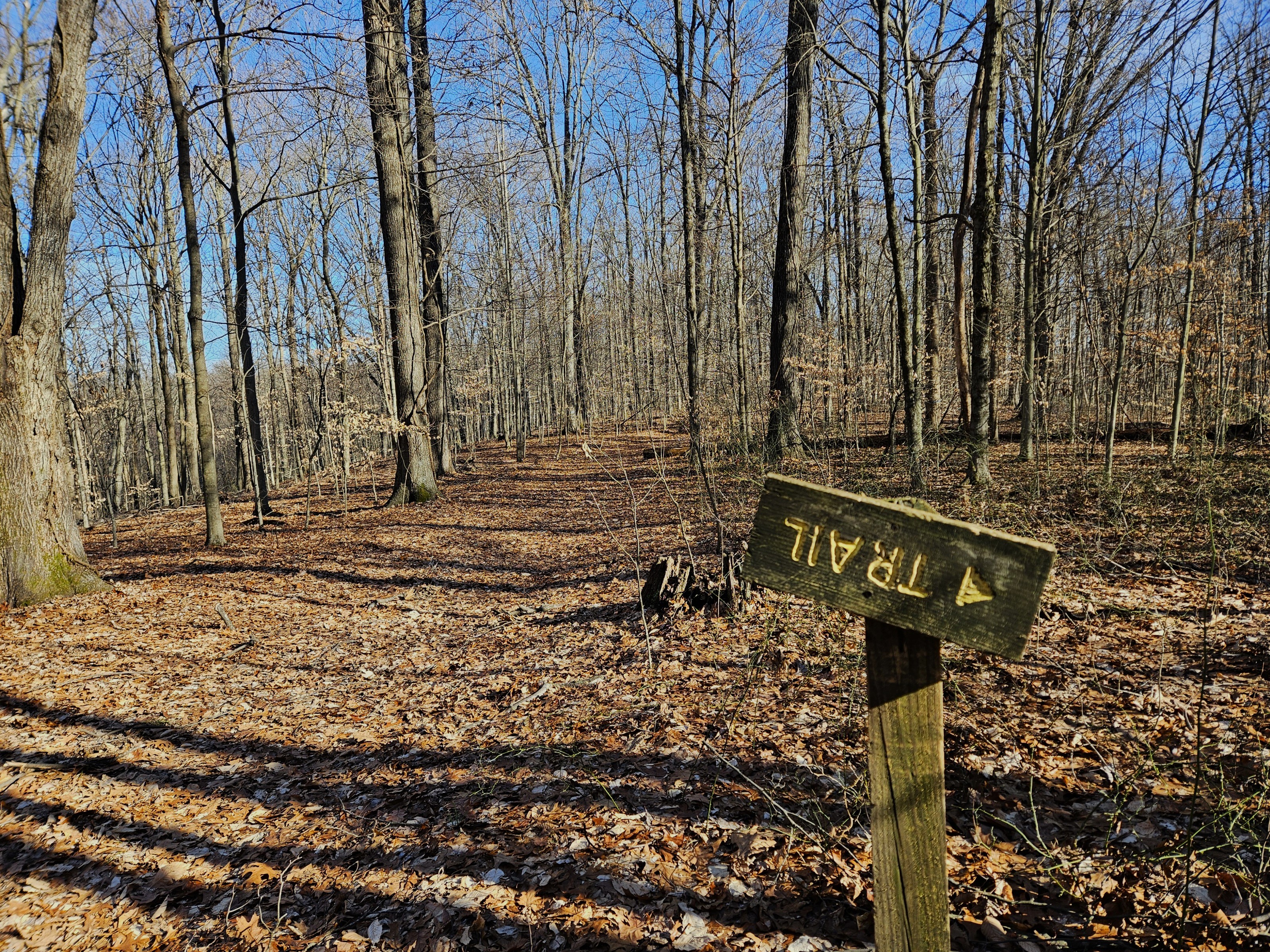
The further along I walked, the more decrepit the signposts became.

I’ve been working to revise the story so much that it has become something else entirely. Maybe this means the loss of one story, and maybe it means the creation of something new, but if the logic of alchemy holds, the transformation is more of a visible realignment of what appears on the surface. The energy is the same, but metabolized differently.

I have not written anything new in a long time. I have been stuck in a revision-spiral reexamining my work, squeezing it, seeing what I can extract from it and then losing sleep over not writing anything new.

But I did have the pleasure of seeing an interview I conducted with another writer friend, Cavar, be published in Archer Magazine. Describing their process for writing a speculative, dystopian novel, they said something that has stuck with me: “I realised that part of writing a book like this means writing up to the very point at which I don’t know enough to write anymore, which is why you see so many crumbling syntactical moves and blanknesses in the novel.” The narrator in Failure to Comply gets around the challenges inherent to their world by dodging the inevitably limited power of language to convey meaning. Even if everything is knowable, it is certainly not all expressible.

After this point, the trail vanished beneath overgrowth and fallen trees.

Blankness and absence are confronting when they lack a clear explanation, when language offers nothing to describe what isn’t there. Shouldn’t it be obvious what needs to be said? Shouldn’t the words be abundant?

As much as I try not to lean too hard into esoteric mysticism in describing writing, there’s comfort in being able to attribute its power to something obscure. The late David Lynch described his own process similarly: “A film or TV show is like a magic act,” he said in 2018, “and magicians don’t tell how they did a thing.”

In grad school, colleagues told me my writing style was intentional and precise, which I attributed to the dry but grounded historians I read so much. Lately, to help me sleep or because I have rotted and decomposed into my elements through melanosis, I have been reading Vladislav M. Zubok’s Collapse: The Fall of the Soviet Union before bed, which I got over a year ago after seeing that Noah Kulwin, of the podcast Blowback, recommended it. The language in historical writing is intentionally unambiguous, which is a false comfort. Writing against ambiguity is like eating to never be hungry again.

The mystical veers uncomfortably close to the diagnostic. I discourage my students from thinking of revision as a way of “fixing” their writing, but I’m susceptible to that language, too. It suggests a wrongness, and more wrongly, it suggests that the removal of that wrongness is all that good writing needs. But fixing is more urgent than alchemy. Heaters and plumbing and bigots need to be fixed. Writing is in a constant and gradual state of change.

Because there is no “correct” form that a piece of writing will take, there is no predictable future for an artistic vision. What I want to write could become anything, and it takes confidence to give up so much control that I might constrict what my writing can become.

Creative Writing and Creative Revising

moose

There is some way this moose blanket connects to revision, but that’s on you to figure out.

When I first started writing, I thought the process was simple: First, I sit down and write a bad rough draft over the course of a few winter months, possibly in a snowed-in haunted Colorado hotel. Then, I read through it again and make extensive revisions. Then, I read through it a third and final time to make smaller, cosmetic revisions. Then, the final draft goes out to editors and journals for just shy of an eternity. Writing is almost always discussed as primary, and revision as the after-hours, secondary work. Or, the other way around, revision is portrayed as tedious, noncreative work, challenging only because it is time-consuming, as opposed to writing, which is the entire creative process.

Now that I have dissected, deleted, severed, multiplied, and brutalized a few dozen story drafts in the after-writing process of revision, I have realized how messy these two tasks, writing and revision, actually are. Writers talk about writing as if the best stories we can produce are done with as little revision as possible. We say “I wrote this essay, and here’s my process.” We say “While I was writing this.” We say “I am a writer.” We never say “I am a reviser,” even though we (should) spend the bulk of our creative time revising our work.

It’s easy to say that writing and revision are synonymous because they are part and parcel. But I think there is a subtle difference. We write for the present but revise for the future. We write in the moment, but revise across time. We work under the assumption that the hardest part of the process is finding inspiration and then typing it up, and the rest is smooth but tedious polishing. But I think the opposite is true. The hardest part of writing is revising. Ideas come and build up, and when they don’t, we have forty thousand writing exercises and freewriting prompts to help with that.

What if we used the same language to talk about revision? What if we had entire workshops devoted to revision exercises, revision prompts, and revision craft talks?  Creative revising is a much more useful and accurate description of the process.

Revision, at least, should be discussed as more than an afterthought. It is the bulk of the work involved, and we should discuss it with the same sense of working pleasure we use when talking about writing. Revision requires as much, if not more, creativity.

Writing is the discovery of a crime, and revision is the entire investigation, arrest, and legal proceedings, not to mention the healing process that follows. We lose nothing by placing revision at the forefront of our discussions about writing. The only thing we have to lose is our notion that revision is secondary.

-jk


The Life and Times of a Short Story

short-story-draftThe young short story begins with a bang as the author manages to write six thousand words in several non-continuous sittings over the course of two weeks, though the author will later describe it in workshop as a single moment of creative pure truth. The short story matures with each passing workshop, experiencing growing pains, expanding and then suddenly being cut by a thousand words repeatedly, and not just because Rick from workshop said it “felt a little novelish.”

Still young for a while, the short story has a weird look. The story has a lot of split endings and wears a tight title that leaves little to the reader’s imagination, which the author is unaware of for several weeks because the author is too busy trying to understand Rick’s workshop submission, which involves a duck and how great New York apparently is.

Eventually, the story graduates from college with a sense of completion: the story has a clear beginning and ending and a fitting title. The story is submitted to four small literary journals. Like many American short stories, this story waits confidently for six months while resting in the back of the author’s hard drive with several older, wiser short stories.

After the first four rejections, the short story wonders about getting a better title, or if there was something wrong with the cover letter. The author polishes the story a bit with a quick makeover and pedicure to work out the typos and plot holes, then sends the reinvigorated story out to five journals. The short story’s determination is palpable.

But palpable determination is not enough, because after five more rejections, the story spirals into a mid-life crisis and gets two new characters and a new ending and then loses five hundred words after going to the gym. The short story feels better and is sent off to seventeen journals, six of which have already rejected the story as politely as is possible in an email. Meanwhile, Rick from workshop has been coasting on his one probably accidental publication in The New Yorker.

Seventeen rejections later, the short story finally decides to retire out of frustration. The author sees the potential in the story, but understands the difficulty in publication and ultimately thinks that better stories are waiting to be written. The author could dwell on the story for ten more years, but several new ideas have emerged in the author’s imagination, so the short story quietly goes back into a file on the author’s computer, solemnly labeled “Short Stories,” and is never heard from again. But the story lives on quietly in the author’s memory, and the memory of Rick from workshop who said it was pretentious and overwritten, but his characters are all just watered down versions of himself, so he can go lick a brick.

-jk

Writer Seeks Characters

newspaper

March 3: Aspiring writer seeks three to four characters for minor literary endeavor, entitled Untitled Novel. Characters must be diverse, original, and snappy. Villains always appreciated.

March 9: Writer seeks one to two sympathetic protagonists to balance the fourteen unsympathetic villains who answered prior ad. One must be fluent in Russian. Quirks and comic relief are highly valued.

March 10: Fourteen unused unsympathetic villains seek good writer. Willing to die violently; highly skilled in diabolical laughter, fear, surprise, ruthless efficiency, etc.

March 15: Lonely protagonist seeks sidekick and/or love interest. Must have agency, thorough backstory, and moderate comic relief. Static characters strictly prohibited.

March 22: Writer seeks spare subplot involving a gun. Alternative subplots acceptable, but must end in the death of an unexpected love interest the writer doesn’t know what else to do with.

March 25: Postmodern short story seeks ironic resolution for a plot involving fourteen unsympathetic villains. Violent deaths are acceptable, but must be meaningless.

March 29: Writer has unused Chekhovian subplot available, after finding a stray Deus Ex Machina in the shed.

April 9: Hastily killed-off love interest seeks new story, preferably one with a less obviously Freudian subtext and better dialogue.

April 11: Writer has unused Freudian subtext available. Writer also requests to be given a break, Marsha, the dialogue wasn’t that bad.

April 15: Postmodernist writer seeks editor and agent for polished fourteen-villain ironic story.

April18: Protagonist seeks new writer who doesn’t kill off characters just to fill a few chapters.

April 20: Struggling writer seeks copyright lawyer for advice on a recently run-away protagonist.

April 25: Escaped protagonist looking for work, has experience with romantic subplots but prefers complex internal conflict.

April 30: Aspiring writer seeks runaway protagonist. Please come back, Harold.

May 1: Postmodernist writer seeks complex internal conflict for new protagonist.

May 16: Writer seeks runaway protagonist, promises to try harder this time, really he will.

May 18: Seriously, Harold, I created you. What am I supposed to do now?

May 23: Postmodernist writer seeks good journal for a metafictional buddy/love story entitled “Marsha, Harold, and the Writer.”

May 30: Writer seeks three to four characters to collaborate on revising an old plot; is willing to work with characters closely; is willing to let the characters move the plot along.

June 2: Unused plot devices, tropes, and schemes available, no charge.

-jk