“Nature reinvents itself over and over again. This process of constant creation leaves behind a track record of successes and failures, new life forms that live or die depending on their innate genetic flexibility, their ability to find and fit into their own niche. This learning to live with others may take seconds or years or millennia.” – Diana Beresford-Kroeger, Our Green Heart: The Soul and Science of Forests, 41
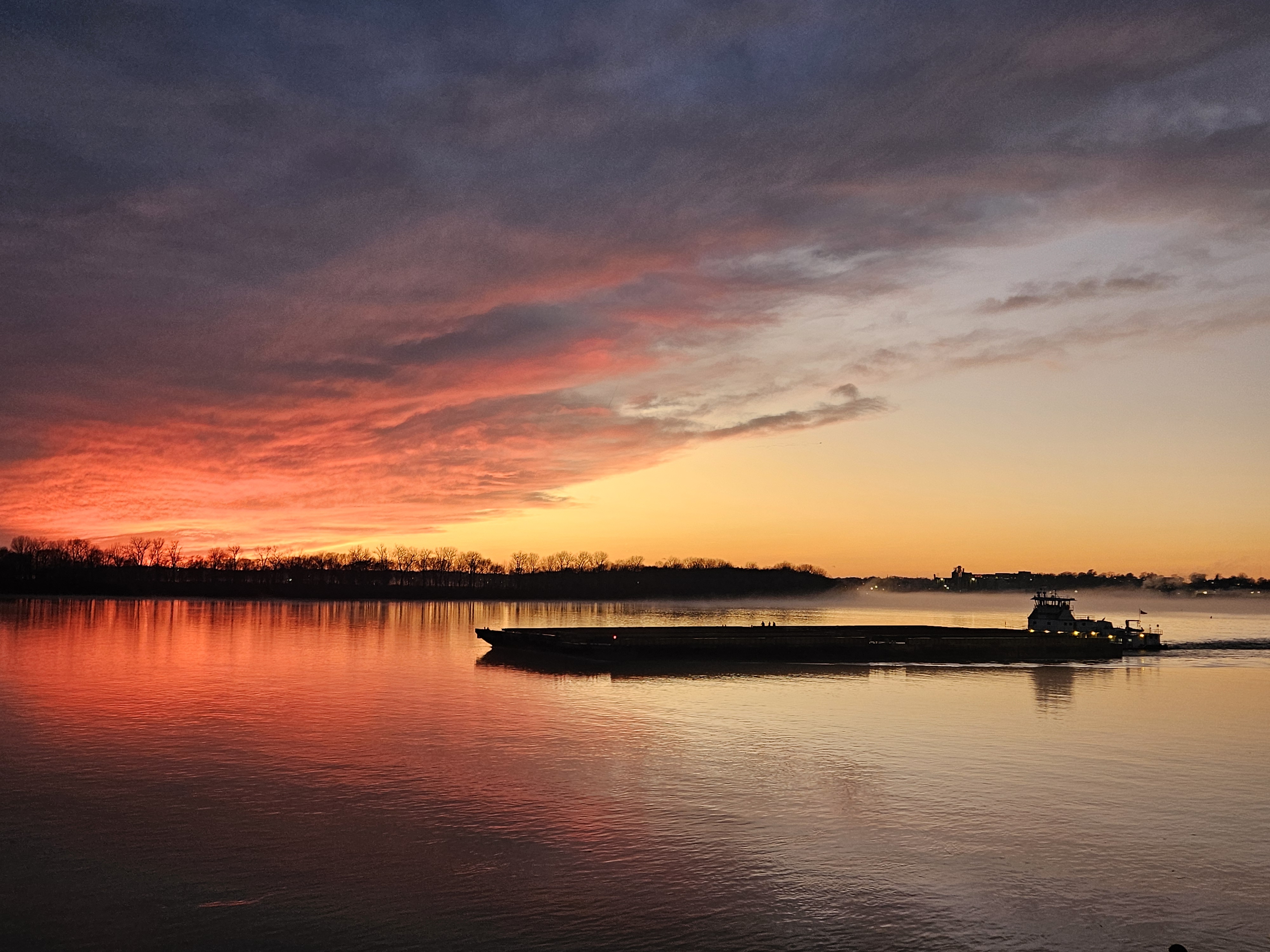
A second year in Indiana has not prepared me for how startling winter is in the forests, how completely the deciduous woodlands shed their leaves and transform into quiet, desolate fogs of spindly twigs. I am still too used to the coniferous evergreens of the west, where the ponderosas only shrug at the changing seasons.
I started 2024 with two goals in mind: To write more and to read more books. I didn’t keep track of these goals, of course. Famously, I dislike quantifying previous years. I’m more interested in qualitative reflections on the past. This has been a very difficult year for me for a lot of reasons; I know this year has been exceptionally horrifying for so many. A new year won’t change that. Instead, I want to attend to the quality of the days ahead, to the slowness of winter and what possibilities I can find in that slowness.
Maybe it was fitting, then, that the last book I read in 2024 was Our Green Heart, by Irish botanist Diana Beresford-Kroeger, about forest ecology, Celtic history, growth, and the strangeness of forest ecosystems.
I appreciate (and am jealous of) the sense of wonder in Beresford-Kroeger’s prose. Her description of seeds was particularly striking: “Most seeds,” she writes, “carry a dormancy factor, the proteins of their endosperm food supply coiled and folded into resting states that wait for a particular signal. These signals are a form of divination, an assurance strong enough that the seed bets its future on that message. They are not properly understood in science and have not been studied in great depth” (85). Here, there is poetry in unexplained biology. Some seeds evolved to sprout in reaction to heat from wildfires; others evolved to travel far distances, to be eaten and carried off by birds and rodents. Dormant seeds are hard and singular for months or years until the right external prompt cracks them open and they grow into roots, trunks, branches.
When I teach, I emphasize revision as the more important process in writing, more than drafting or research. Recently, I have brought in a novel-revising technique from Jane Smiley’s notion that sentences are either seeds or pebbles. Matt Bell elaborates on this idea in his craft book Refuse to be Done, writing that “If it’s a pebble, it’s just the next sentence and it sits there. But if it’s a seed it grows into something that becomes an important part of the life of the novel. The problem is, you can’t know ahead of time whether a sentence will be a seed or a pebble, or how important a seed is going to be” (Bell 77).
I’ve never before thought of this exercise as an exploration of dormancy. If a sentence, a paragraph, or even an unspoken idea is a seed, that means it is awaiting something external to activate it, to bring it out of its shell. This is not that far from artistic inspiration, almost all of which, I believe, comes from external experience: long walks, a healthy community, traveling someplace new, the changing seasons. At least, these are the things that put me in a writing mood. It’s true that when I’m writing, I never know which ideas will take root and grow. Maybe all writing is secretly fertile in this way.
This past year has felt thoroughly dormant, but this is also normal for me. I live in a shell that I rarely come out of, and for such painfully long periods of time that I think dormancy is my natural state. But I have also been rootless for a decade now, following grad school programs and jobs from town to town, leaving behind friends and family for other valleys. What spark am I waiting for? What divination will finally break me open?
Beresford-Kroeger also finds comfort in the secret and illegal hedge schools that existed in Ireland for “those five hundred years during which the Penal Laws made it illegal for the Irish to teach their children” (35). She describes one school as having been nestled in the wilderness, protected by the landscape. It is partly through these hedge schools that Irish language and culture were passed on from generation to generation, where old knowledge was stored, sustained, kept safe like the dormant trees preserved within seeds. These secret schools were a long-standing form of resistance to the occupying British colonists, who could not stamp out Irish identity through force or erasure, an important lesson for the coming year.
Maybe I’ll take this to heart: Dormancy is protective, not restrictive. In writing, this is true of the stories we want to tell and those that need more time.
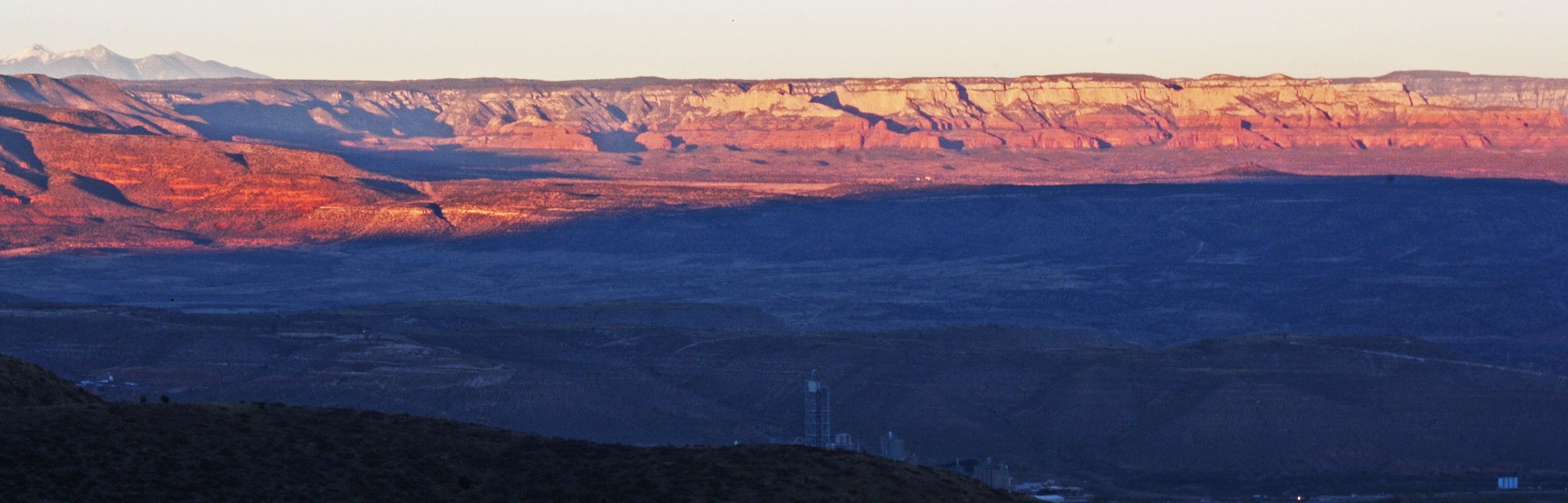
In the town I grew up, at a museum of regional history, there happened to be a poetry display I had the privilege of visiting last week. A local poet had her typewriter stationed there, along with post cards, paperclips, fancy paper. When she offered to write me a poem, the prompt I gave was full of the obvious cliches: a new year, getting back into a healthy routine, trying to break out of a sense of stagnation. The poem, of course, was much more thoughtful than my jumbled words. The museum display was full of poems commemorating the beauty of the Coconino National Forest, the huge and ancestral evergreens that loom over my hometown.
This year, I intend to slow down, take my time, pay attention. I don’t want to toss out any seeds thinking they’re only pebbles. I don’t think there’s a magical break between one year and the next, but I do think growth continues, even if that growth only takes the form of preservation. Eventually, once winter has stayed its welcome, the spindly, empty trees in Indiana will sprout their leaves again.
Bell, Matt. Refuse to Be Done: How to Write and Revise a Novel in Three Drafts. Soho Press, 2022.
Beresford-Kroeger, Diana. Our Green Heart: The Soul and Science of Forests. Random House Canada, 2024.


 I have a lot of books that I’ve started, but for many different reasons never got around to finishing. Many of them are Christmas presents that I started during the holiday break but put down again shortly after the semester started because schoolwork and teaching overwhelmed my schedule. There are short story collections with dogeared pages where I stopped, and novels with a bookmark still stuck at Chapter Six, and poetry collections with coffee stains where I left off.
 “Commensalism or mutual benefit is a constitutive premise of housesitting, or maybe an enabling fiction. The housesitter is apt to recognize the opportunity as a private windfall, and the pleasure is tandem: first in his own dis-habituation, and then in the adoption of a new readymade home, a vacated life to try on. With the extra keys on his chain, the housesitter leaves work on a different train or by a new road, becomes a local in the café or dogpark, creates or stars in fantasies grown out of his new neighbors’ notice.”
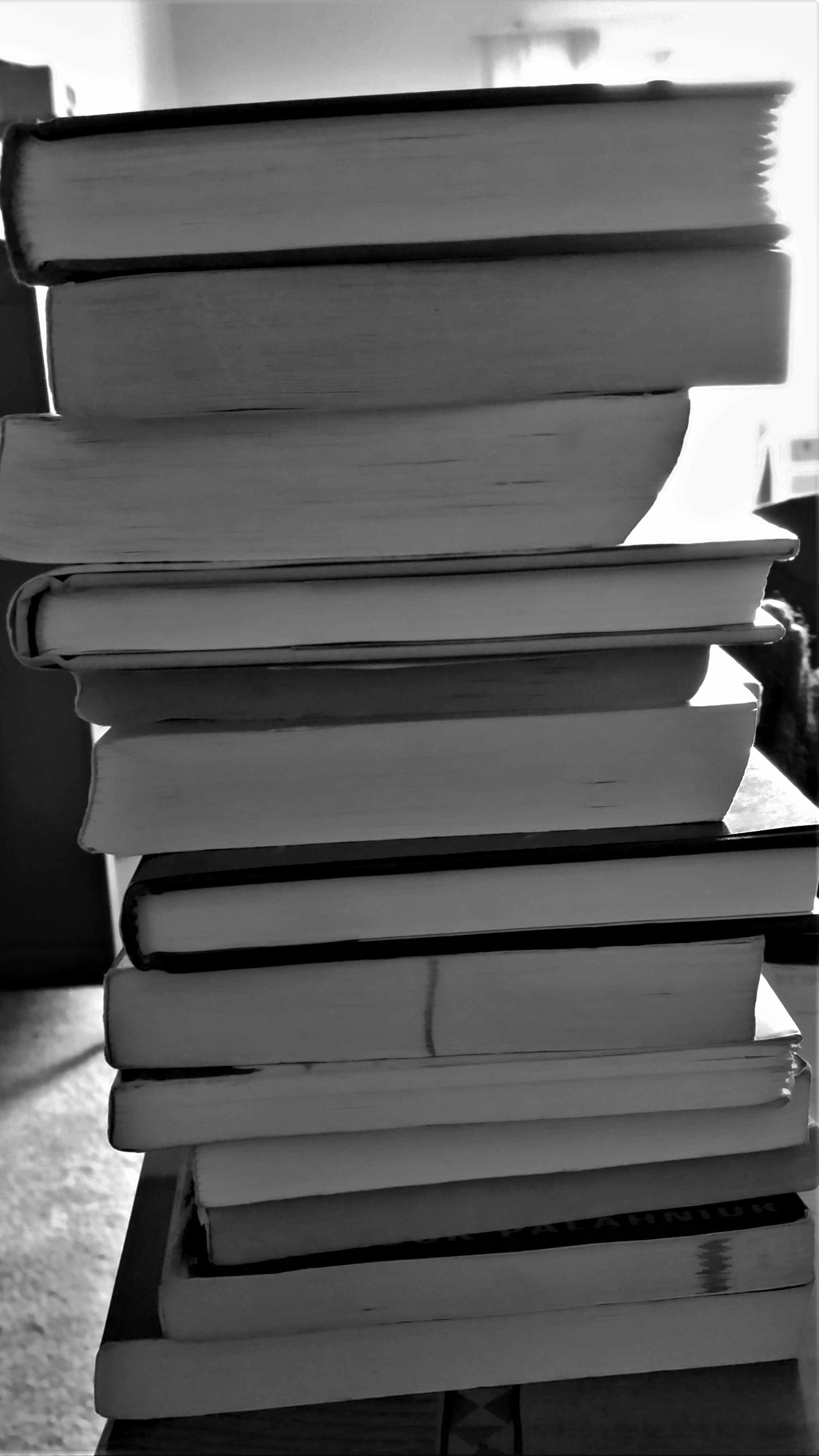 You can never have too many books, unless you have too few bookshelves. Recently, I’ve accumulated about three dozen more books than I had at the beginning of the year, but I’m not ready to get a new bookshelf. I don’t have room for one in my apartment, unless I put a small bookshelf in the shower or above the toilet or next to the heaters, and all of those options have their pitfalls (water, fire, weird smells).
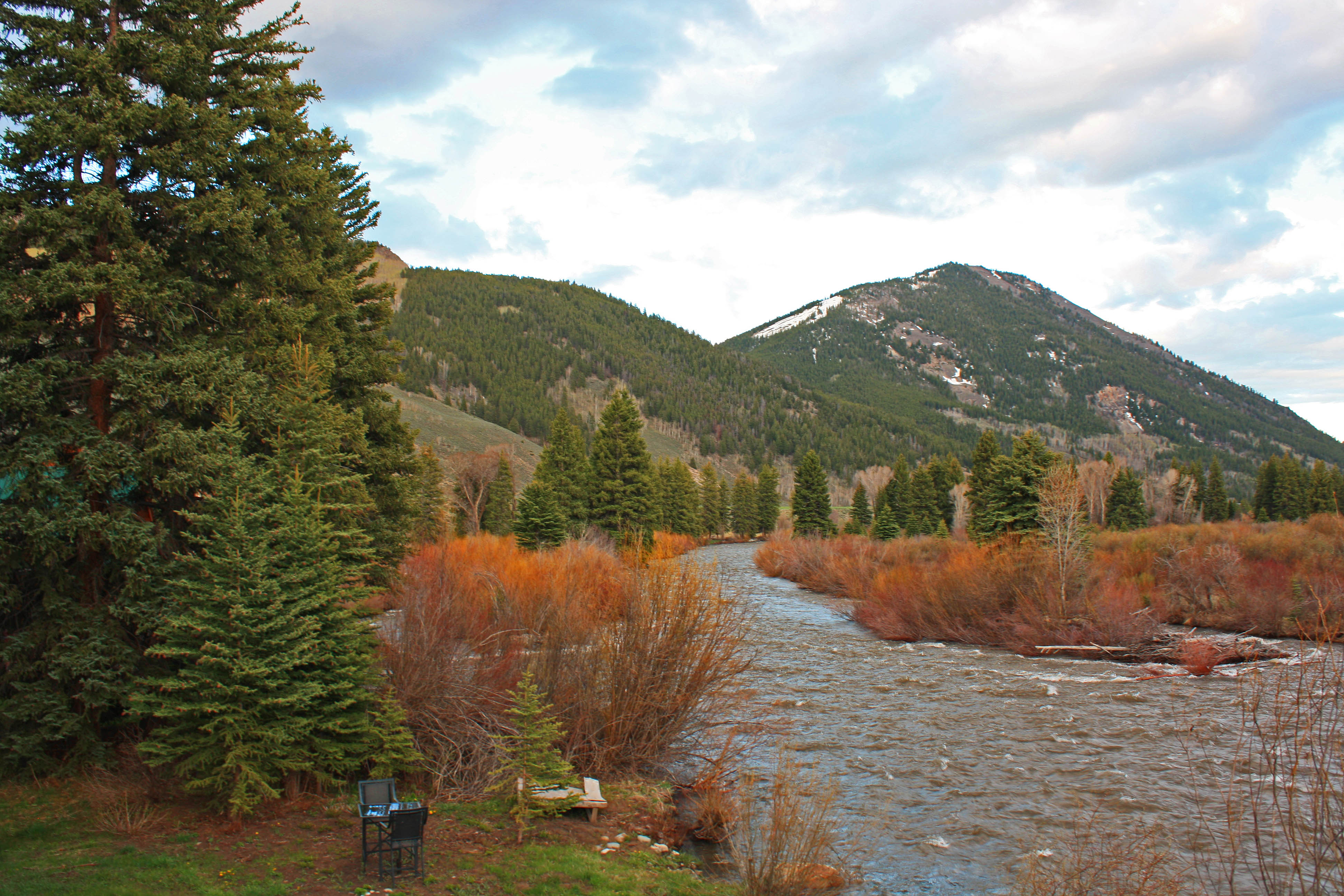 Two weeks ago, I graduated from UNL with a Master’s degree in English. It is the result of two years of reading, writing, and writing about what I read. More importantly, I had the pleasure of spending time with the friends and colleagues I worked with this past year. To celebrate the end of the semester and our program, several folks in my graduate cohort took a vacation by driving from Lincoln, Nebraska, to Crested Butte, Colorado, for a weekend next to a river. Soon, we will scatter and go our separate ways, and the slice of time we gave one another without responsibility, without the need to work for someone else, without tasks to fulfill, was a small slice of heaven (which is, as we all know, a place on Earth).
 Keene Short